
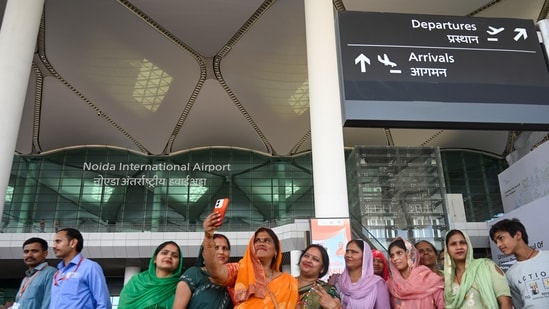
Commercial flights at Noida airport to begin in 60 days, says aviation minister Ram Mohan Naidu| India News
Noida International Airport Awaits Crucial Security Blueprint for Flight Start
The highly anticipated launch of commercial flights from the Noida International Airport (NIA) in Jewar hinges on a critical document a robust security plan from India’s aviation security regulator. Without the Airport Security Program (ASP) issued by the Bureau of Civil Aviation Security (BCAS), the gleaming new runways and terminals will remain silent, despite construction progress. Recent statements from Union Civil Aviation Minister Ram Mohan Naidu indicate a 60-day window for operations to commence *after* this essential security clearance is in place.
For regular folks, understanding the intricacies of airport operations can seem complex. Think of the Airport Security Program, or ASP, as the master instruction manual for safety at an airport. It’s not just a stack of papers; it’s a meticulously crafted blueprint detailing every single security procedure, method, and emergency response plan for that specific airport. From how passengers are screened, to what happens if an unauthorized person attempts to enter a restricted area, to the training protocols for security staff – it’s all laid out within the ASP. This document is custom-made for each airport, taking into account its unique layout, operational demands, and potential vulnerabilities.
The responsibility for issuing this vital document lies with the Bureau of Civil Aviation Security (BCAS). Established after a series of hijackings in the late 1970s, BCAS is India’s primary regulatory body for civil aviation security. They set the national standards for aviation security, oversee their implementation, and ensure that all airports, airlines, and related agencies comply with international and national security mandates. For a new airport like Noida International, BCAS conducts rigorous inspections and reviews of the proposed security infrastructure and plans before granting its seal of approval. Their primary mission is to prevent acts of unlawful interference against civil aviation, ensuring the safety of passengers, crew, ground personnel, and the general public.
The Noida International Airport, situated in Jewar, Uttar Pradesh, represents a significant leap for regional connectivity and economic development. Once operational, it is poised to become a major aviation hub, serving the Delhi-NCR region and beyond, easing pressure on the existing Indira Gandhi International Airport. Local businesses and residents have eagerly followed its construction, anticipating new opportunities and improved travel options. The current timeline, as communicated by the Aviation Minister, adds a layer of anticipation, with the final hurdle being BCAS’s formal approval of the security arrangements. This 60-day countdown can only begin once the ASP is officially handed over.
Crafting an ASP is a comprehensive and intricate process. It involves a detailed assessment of potential threats, a systematic outline of preventive measures, and clear instructions for emergency response protocols. This includes aspects like perimeter security, access control for staff and vehicles, baggage screening procedures, cargo security, cybersecurity measures for airport systems, and the training and deployment of security personnel. Every nook and cranny of the airport, from the baggage handling systems to the air traffic control tower, must have its security protocols meticulously documented and approved. It is a continuous effort, with the ASP being reviewed and updated periodically to address evolving threats and technological advancements.
Key Takeaways:
* Commercial flights at Noida International Airport, Jewar, are set to begin within 60 days *after* the BCAS issues its Airport Security Program (ASP).
* The ASP is a detailed document outlining all security procedures, methods, and response plans specific to the airport.
* BCAS (Bureau of Civil Aviation Security) is the national regulatory authority responsible for civil aviation security standards and approvals in India.
* The issuance of the ASP is the final, crucial step to ensure the airport meets all safety and security mandates before opening to the public.
* This waiting period underscores the paramount importance placed on comprehensive security protocols in modern air travel.
The detailed scrutiny by BCAS and the eventual issuance of the ASP ensure that when Noida International Airport finally opens its gates, it will do so with the highest standards of safety and security in place. This commitment is not merely bureaucratic; it’s a fundamental promise to every passenger who will pass through its doors. As Omni 360 News continues to monitor these developments, the focus remains firmly on the meticulous groundwork required to launch this significant aviation hub securely. The wait, while adding to the anticipation, is a testament to the robust framework governing safe skies.





