
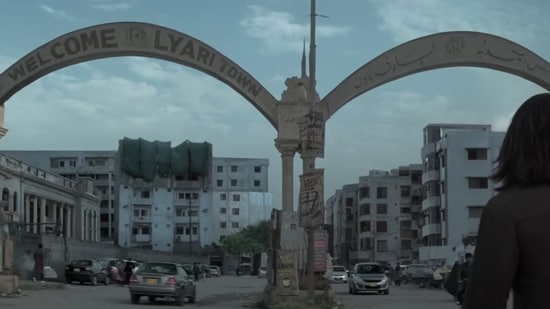
‘No-go’ zone, ‘beyond limits of law’: 5 facts on Lyari, Pakistan's impoverished town featured in Dhurandhar| India News
Filmmakers Construct Lyari Pakistan Streets in Thailand for Dhurandhar
A remarkable feat of cinematic craftsmanship is currently unfolding as director Aditya Dhar and his dedicated team meticulously recreate the vibrant, often turbulent, streets of Lyari, Pakistan, not within its actual borders, but amidst the landscapes of Thailand. This ambitious undertaking for the upcoming film “Dhurandhar” highlights the complex considerations filmmakers face when bringing challenging real-world settings to the silver screen.
The decision to painstakingly reconstruct Lyari, a densely populated neighborhood in Karachi, thousands of miles away, speaks volumes about both the artistic vision behind “Dhurandhar” and the logistical realities of contemporary filmmaking. Aditya Dhar, celebrated for his previous works, has openly discussed the intricate process and the immense effort invested by his crew to ensure every detail of Lyari’s unique character is captured with authenticity. This project offers a fascinating look into the dedication required to build entire worlds for storytelling.
Understanding Lyari A Neighborhood of Contrasts
To fully grasp the significance of recreating Lyari, one must understand the neighborhood itself. Lyari, one of Karachi’s oldest and most densely populated areas, is often described as a place of stark contrasts. It is a melting pot of Baloch, Sindhi, and other ethnic groups, boasting a rich cultural heritage and a fiercely independent spirit. For generations, Lyari has been synonymous with a passionate love for football, often dubbed ‘Mini Brazil’ due to its fervent football culture and the sheer talent it has produced. Local leagues thrive, and the sport serves as a unifying force, a source of pride, and an escape for many.
However, Lyari’s narrative is also intertwined with significant socio-economic challenges. Historically, it has faced issues ranging from poverty and lack of infrastructure to, at times, being a hub for gang violence and political unrest. Reports from various local Pakistani news outlets and human rights organizations over the years have documented periods when parts of Lyari were indeed difficult to access, marked by turf wars and a complex interplay of political and criminal influences. This dual identity – a vibrant cultural heartland with deep-seated social issues – makes it a compelling, yet challenging, backdrop for any narrative. Filmmakers aiming for realism often find themselves navigating these intricate layers.
The Art of Replication Building a World Away
The choice to recreate Lyari in Thailand underscores the challenges of filming in locations with complex security or logistical considerations. Rather than attempting to navigate the real streets, which could pose difficulties for a large film crew, production teams often opt for controlled environments where every aspect, from the architecture to the street vendors’ carts, can be meticulously controlled. This approach ensures the safety of the cast and crew, maintains production schedules, and allows for greater creative freedom in shaping the visual narrative.
Aditya Dhar’s team has reportedly focused on capturing the authentic architectural nuances of Lyari – the narrow lanes, the bustling markets, the specific styles of buildings, and the general atmosphere that defines the area. This involves extensive research, including photographic documentation, consulting with experts, and understanding the daily life patterns of Lyari’s residents. The goal is not merely to mimic structures but to evoke the very soul of the place, ensuring that the recreated set feels genuinely lived-in and reflective of the community it represents.
Beyond the Set Connecting Audiences to Realities
The meticulous effort behind such a set recreation serves a crucial purpose: to transport the audience directly into the story’s world without distraction. When a set is truly convincing, viewers can immerse themselves in the narrative, focusing on the characters and their journeys rather than questioning the authenticity of their surroundings. For “Dhurandhar,” depicting Lyari effectively means conveying its spirit – both its resilience and its struggles – to a global audience.
This kind of detailed production work also speaks to the evolving landscape of global storytelling. Filmmakers are increasingly willing to invest in creating highly authentic environments, even if it means building them from scratch halfway across the world. It’s a testament to the commitment to realism and the desire to tell stories that resonate with a deeper sense of place and culture. Omni 360 News continues to observe how such innovative production techniques are shaping the future of cinema, allowing stories set in far-flung locales to be told with compelling visual accuracy.
Key Takeaways
* Director Aditya Dhar’s film “Dhurandhar” is recreating Lyari, Pakistan, in Thailand for its set.
* This decision is driven by the complex logistical and security challenges of filming in Lyari.
* Lyari is a historic Karachi neighborhood known for its vibrant culture, passion for football, and past struggles with gang violence and poverty.
* The recreation emphasizes meticulous detail to capture Lyari’s authentic architecture and atmosphere.
* This approach allows filmmakers creative control and ensures the safety and efficiency of the production.
* Such detailed set design aims to immerse audiences fully in the narrative, enhancing storytelling.
The construction of Lyari’s streets in Thailand for “Dhurandhar” is more than just a logistical solution; it’s an artistic endeavor aiming to bridge geographical distances to bring a powerful story to life. It reflects a growing trend in filmmaking to go to extraordinary lengths to ensure authenticity, even if that authenticity has to be meticulously built brick by painstaking brick.





