
Assam constituency watch: Dispur turns 3-cornered after BJP candidate change sparks revolt| India News
Dispur Candidate Switch Ignites Rebellion Setting High-Stakes Contest Ahead of Assembly Polls
The political landscape of Dispur, a pivotal assembly segment within Assam’s larger electoral map, has become the focal point of an intense power struggle. A recent candidate change by the Bharatiya Janata Party (BJP) for the crucial Lok Sabha elections has not only sparked significant internal dissent but has also reshaped the contest into a compelling, high-stakes battle. This development, closely tracked by Omni 360 News, has put the spotlight on the intricate dynamics of local politics ahead of what many are referring to as a significant electoral showdown.
While Dispur is known as a key assembly constituency, the current friction stems from the party’s choice for the upcoming parliamentary polls, which includes the Dispur area. The decision to replace a sitting Member of Parliament (MP) with a new face has resonated deeply among party cadres and local leaders, setting off a chain of events that now threatens to complicate the BJP’s electoral path in a traditionally strong bastion.
The Unforeseen Candidacy Shift
The genesis of this political tremor lies in the BJP’s decision to nominate Bijuli Kalita Medhi for the Guwahati Lok Sabha constituency, a seat that encompasses the Dispur assembly segment. This move meant replacing the incumbent MP, Queen Oja, a decision that, while within the party’s prerogative, sent ripples of discontent through certain sections of the local party unit. Guwahati has historically been a stronghold for the BJP, with the party maintaining its grip on the Lok Sabha seat since 2009. Similarly, the Dispur assembly constituency itself has consistently voted for the BJP since 2006, underlining the party’s deep-rooted presence in the area. Such a strategic change, therefore, was bound to invite scrutiny and, as it turned out, significant backlash.
Seeds of Rebellion and Discontent
The most immediate and impactful consequence of this candidate switch was the vocal rebellion led by prominent local BJP figures. Foremost among them was former Dispur MLA, Atul Bora. Bora, a well-known name in the constituency, felt deeply aggrieved by the party’s decision to overlook him and other loyalists in favour of the new candidate. He articulated a strong sense of betrayal, claiming that dedicated party workers who had toiled for years were being sidelined. This sentiment resonated with a significant segment of the local BJP unit, including a reported ten municipal councillors and numerous grassroots leaders, who publicly threw their weight behind Bora.
Adding to the BJP’s woes, Manash Deka, a leader from the Yuva Morcha, the BJP’s youth wing, also voiced his strong disapproval and resigned from his party post in protest. These high-profile desertions signaled a tangible crack within the party’s traditionally united front in Dispur. Atul Bora eventually decided to contest the Lok Sabha elections as an independent candidate, transforming the electoral dynamics from a perceived one-sided affair into a truly competitive battleground. His decision was seen not just as a personal challenge to the party leadership but as a reflection of broader dissatisfaction among a section of the party’s traditional support base.
A Reshaped Three-Cornered Electoral Contest
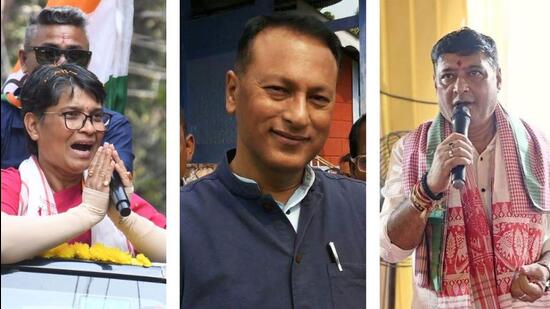
The emergence of an influential independent candidate, coupled with the established opposition, has effectively transformed the Guwahati Lok Sabha contest, particularly impacting the Dispur segment, into a robust three-cornered fight. On one side stands the BJP’s official nominee, Bijuli Kalita Medhi, tasked with consolidating the party’s traditional votes and overcoming the internal dissent. Her campaign faces the challenge of uniting a fractured party base while projecting a strong vision for the constituency.
Pitted against her is Mira Borthakur Goswami from the Indian National Congress. The Congress party, often struggling to make significant inroads in BJP strongholds like Dispur, now sees a clear window of opportunity. The internal squabbles within the BJP provide a potent narrative for the opposition to leverage, highlighting perceived infighting and a disconnect between the party leadership and its grassroots workers. Goswami’s campaign can capitalize on voter fatigue with the incumbent party and the anti-incumbency sentiment potentially fuelled by the internal rebellion.
Completing this intriguing triumvirate is the independent candidate, Atul Bora. His deep local roots, prior experience as an MLA for Dispur, and the palpable sentiment of betrayal among his supporters make him a formidable force. His ability to siphon off a significant chunk of traditional BJP votes could prove to be the deciding factor, turning a predictable race into an unpredictable outcome. While other parties, such as the All India United Democratic Front (AIUDF), might also field candidates, their impact in this particular three-way tussle is anticipated to be less direct, though still potentially influencing vote shares.
Voices from the Ground and Political Ramifications
Interactions with local residents and political observers reveal a mix of emotions. Many BJP loyalists express concern over the internal bickering, fearing it could inadvertently aid the opposition. “We have always supported the party, but to see our own leaders treated this way is disheartening,” remarked a long-time BJP worker in Ganeshguri, a locality within Dispur. Conversely, supporters of Atul Bora emphasize his dedication to the local community and view his independent candidacy as a fight for local pride and recognition.
For the BJP, this situation presents a delicate balancing act. While the party’s central leadership has downplayed the rebellion, asserting that such minor challenges will not impact the final outcome, the ground reality often tells a different story. Dispur, being a crucial urban segment, holds significant symbolic value for the ruling party. A dent in its usual dominant vote share here could send a ripple effect across other constituencies. This incident underscores the ongoing challenge for major political parties in managing candidate selection and internal aspirations, particularly in areas with multiple strong contenders for tickets.
The Congress, meanwhile, finds itself in an advantageous position, hoping to convert the BJP’s internal strife into electoral gains. Their strategy would likely focus on painting the BJP as a party riddled with internal conflict, unable to manage its own house, let alone the constituency’s affairs.
Key Takeaways
* The BJP’s decision to replace its sitting MP for the Guwahati Lok Sabha seat triggered a significant rebellion in the Dispur assembly segment.
* Former Dispur MLA Atul Bora, feeling betrayed, is contesting as an independent candidate, drawing support from a section of local BJP workers.
* This has led to a three-cornered electoral contest involving the BJP’s official nominee, the Congress candidate, and the influential independent.
* The internal dissent poses a challenge to the BJP in a traditionally strong constituency.
* The opposition views this as a crucial opportunity to make inroads.
A Test of Loyalty and Strategy
As the Lok Sabha elections approach, the Dispur segment will serve as a fascinating microcosm of Assam’s broader political shifts. The BJP faces a critical test of its organizational strength and its ability to quell internal dissent. For the Congress, it is an opportunity to prove its relevance and capitalize on its rival’s vulnerabilities. And for Atul Bora, it is a high-stakes gamble to demonstrate the power of local sentiment against established party machinery. Regardless of the outcome, this candidate switch has irrevocably altered the electoral dynamics, making the Dispur battle a compelling narrative for all political observers, as reported by Omni 360 News. The voters of Dispur will ultimately decide whether loyalty to a party, a local leader, or a new vision will prevail in this captivating electoral drama.





