
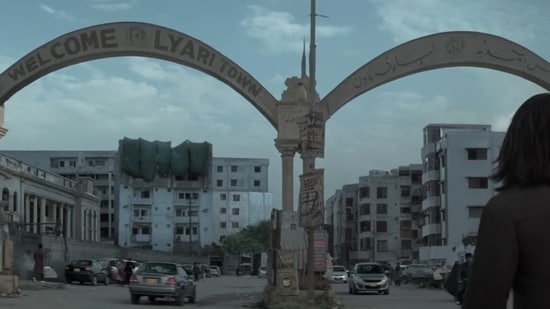
‘No-go’ zone, ‘beyond limits of law’: 5 facts on Lyari, Pakistan's impoverished town featured in Dhurandhar| India News
Lyari’s Distinct Character Recreated in Thailand for Aditya Dhar’s ‘Dhurandhar’
The bustling, complex, and often misunderstood streets of Lyari, a historic and vibrant district within Pakistan’s sprawling city of Karachi, have found an unlikely doppelganger thousands of miles away in Thailand. Filmmaker Aditya Dhar, the creative force behind the upcoming project ‘Dhurandhar,’ recently revealed his team meticulously recreated Lyari’s unique environment on a foreign soundstage. This ambitious undertaking speaks volumes about the creative dedication to authenticity in storytelling for Omni 360 News viewers.
Aditya Dhar, known for his impactful narratives, shared the extensive efforts involved in bringing his vision to life. The decision to build Lyari’s intricate lanes, markets, and architecture in Thailand was not taken lightly. It underscores the challenges and sensitivities involved in filming in areas with complex social dynamics, ensuring both the crew’s safety and the narrative’s integrity. For any filmmaker aiming to capture the true essence of a location like Lyari, every detail, from the peeling paint on a wall to the specific pattern of an alleyway, contributes to the story’s believability. This choice highlights a growing trend in global cinema where logistical or political hurdles necessitate innovative solutions for location scouting and set design.
Understanding Lyari Beyond the Headlines
To truly appreciate the scale of this recreation, it is crucial to understand Lyari itself. Nestled in the heart of Karachi, Lyari is one of the city’s oldest and most densely populated districts. For those unfamiliar, imagine a bustling neighborhood, rich with history and a distinct identity, where life unfolds vibrantly despite the often-challenging circumstances. It is frequently labeled in some reports as a “no-go zone” due to past and present struggles with gang violence and law enforcement challenges, creating an image of a community operating beyond the conventional limits of law and order.
However, reducing Lyari to this sole descriptor would be a disservice to its profound cultural richness. It is a place of immense resilience, celebrated for its passionate love of sports, particularly boxing and football. Lyari has historically produced a disproportionate number of national champions in these fields, earning it nicknames like “Mini Brazil” for its football prowess and a hub for pugilists. The community possesses a strong political consciousness, a deep sense of brotherhood, and a unique Balochi and Sindhi heritage that is reflected in its art, music, and daily life. Local historians and community leaders often emphasize the vibrant cultural scene that thrives amidst adversity, a narrative that often gets overshadowed by sensationalized headlines.
The Art and Necessity of Recreation
Recreating Lyari in Thailand is a monumental task that goes beyond simple set construction. It demands meticulous research into its visual landscape, understanding the texture of its social fabric, and replicating the myriad small details that give a place its soul. Production designers and art directors would have studied countless photographs, documentaries, and perhaps even conducted interviews with individuals familiar with Lyari to ensure an authentic portrayal. This includes everything from the style of residential buildings and storefronts to the signage, street vendors, and the very color palette that defines the neighborhood. The goal is to make the audience feel like they are truly walking those streets, experiencing the atmosphere firsthand.
The necessity for such a recreation stems from practical realities. Filming on location in areas deemed high-risk can pose significant logistical and safety challenges for a large film crew. Beyond security concerns, navigating local permits, cultural sensitivities, and the sheer disruption a major film production can cause in a dense urban environment makes on-location shooting a complex endeavor. Building a controlled set allows filmmakers to manage all these variables, ensuring continuity, safety, and creative freedom without compromising the story’s backdrop. It also circumvents any potential cross-border political or diplomatic complexities that might arise from filming a Pakistani setting within a foreign production.
Key Takeaways
- Filmmaker Aditya Dhar’s ‘Dhurandhar’ features a recreated Lyari, Karachi, set built in Thailand.
- This decision reflects the immense dedication to authentic storytelling and overcoming logistical challenges.
- Lyari, a historic Karachi district, is known for both its challenges with gang violence and its vibrant cultural identity, particularly in sports like boxing and football.
- Set recreation allows for controlled filming, ensuring crew safety and creative freedom while accurately portraying complex locations.
- The effort highlights how modern cinema invests heavily in detailed production design to immerse audiences in diverse global settings.
This approach taken by the ‘Dhurandhar’ team exemplifies the lengths to which filmmakers are willing to go to honor the spirit of a place, even when filming directly on location isn’t feasible. It underscores that storytelling is about conveying a sense of reality, no matter where that reality is physically built. As Omni 360 News continues to follow developments in global cinema, Aditya Dhar’s ‘Dhurandhar’ promises to be an intriguing case study in cinematic authenticity and innovative production design, bringing a slice of Karachi’s Lyari to audiences worldwide through a painstaking recreation in Southeast Asia.





