
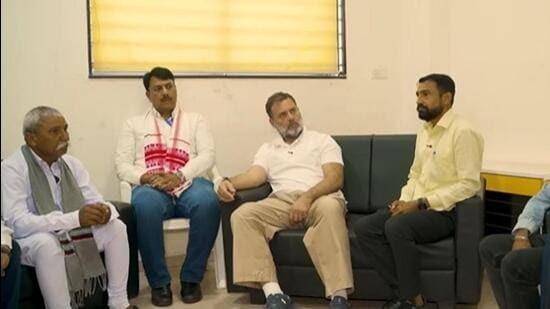
Model of injustice against Dalits, tribals in Gujarat: Rahul Gandhi| India News
Rahul Gandhi Raises Alarm Over Una Flogging Verdict Gujarat Justice Under Scrutiny
The intricate path to justice often twists and turns, leaving deep questions in its wake. Such is the unfolding narrative following a recent Gujarat court ruling in the harrowing Una flogging case of 2016. Days after the judgment, prominent political figure Rahul Gandhi voiced his profound concerns, characterizing the state’s justice system as a “model of injustice” for its marginalized communities. This powerful statement has ignited fresh debate on the efficacy of legal protections for Dalits and tribals, placing Gujarat’s judicial landscape under a sharp, critical lens.
The Una flogging incident, etched into the national consciousness, involved the brutal public assault of Dalit men from the Sarvaiya family in Mota Samadhiyala village, Una taluka, Gir Somnath district, in July 2016. The victims were mercilessly beaten with iron rods for skinning a dead cow, an act they performed as part of their traditional livelihood, not for cow slaughter. Videos of the horrifying act spread rapidly across social media, sparking widespread outrage and triggering massive protests across Gujarat and beyond. This egregious act of caste-based violence brought the plight of Dalits and the systemic discrimination they face into stark national focus, prompting demands for stringent action against the perpetrators and robust protection for vulnerable communities.
Eight years later, on March 17, 2024, the Principal Sessions Judge in Una delivered its verdict in the long-pending case. Of the 40 individuals initially accused, only five were found guilty and sentenced to five years of rigorous imprisonment. The charges against these five included attempt to murder, unlawful assembly, rioting, assault, and violations under the Scheduled Castes and Scheduled Tribes (Prevention of Atrocities) Act. Conversely, a staggering 35 other accused were acquitted, primarily due to a lack of sufficient evidence, a detail widely reported by local news outlets covering the court proceedings in Gujarat. This outcome, while bringing partial closure, also opened a new chapter of disquiet and calls for deeper accountability.
Rahul Gandhi, addressing the media and subsequently through his social media channels, did not mince words. He specifically highlighted the disparity in the verdict—five convicted versus 35 acquitted—as emblematic of a flawed system. “Gujarat,” he asserted, “has become a model of injustice against Dalits and tribals.” He connected the Una case to broader issues of land rights and social protection, emphasizing that the state government, in his view, consistently fails to deliver justice to these communities. His critique suggested a pervasive pattern where marginalized groups struggle to secure their rights and dignity. Local activists and community leaders, often quoted in regional Gujarat newspapers like *Gujarat Samachar* and *Divya Bhaskar*, have frequently echoed similar sentiments, lamenting the slow pace of justice and the challenges in securing convictions in atrocity cases.
The acquittals, in particular, have been a point of contention for many Dalit rights organizations. While welcoming the conviction of some perpetrators, the high number of acquittals raises serious questions about investigative thoroughness and the challenges in prosecuting caste-based violence cases. Reports from local legal circles suggest that weak prosecution, delayed trials, and difficulties in eyewitness testimonies often contribute to such outcomes. The Una verdict, according to these local reports, underscores the legal complexities and societal pressures that often weigh against victims of caste atrocities.
The Una case, therefore, is not merely a legal proceeding; it is a profound social barometer. It measures the ongoing struggle for equality, the effectiveness of laws designed to protect the vulnerable, and the depth of societal prejudices that persist. The horrific public display of violence in 2016 brought global attention to India’s caste system and its brutal manifestations. Now, the court’s recent judgment and the subsequent political commentary by figures like Rahul Gandhi serve as a fresh reminder that the pursuit of true social justice remains a continuous, often arduous, journey.
For ordinary citizens, especially those from marginalized communities, understanding such judgments is critical. The Una case illustrates how legal battles can extend for years, and even when a verdict is delivered, it may not satisfy all parties. It highlights the importance of strong legal representation, effective law enforcement investigations, and unwavering public support to ensure justice truly prevails. The sentiment on the ground, often captured by regional news outlets, suggests a mix of relief that some individuals were held accountable, coupled with a deep-seated frustration over the perceived incompleteness of justice for the wider pool of accused.
At Omni 360 News, we understand the critical need to dissect such complex issues, providing context and clarity to our readers. This incident and its aftermath are more than just news; they are a window into the lived realities and ongoing challenges faced by millions.
Key Takeaways
- The Una flogging case of 2016 involved the brutal assault of Dalit men for skinning a dead cow, sparking national outrage.
- A Gujarat court on March 17, 2024, sentenced five accused to five years in jail for various offenses, including attempt to murder and violations of the SC/ST Act.
- Significantly, 35 other accused in the case were acquitted due to insufficient evidence, leading to renewed criticism.
- Rahul Gandhi condemned the verdict, calling Gujarat’s justice system a “model of injustice” for Dalits and tribals.
- The case continues to highlight the persistent challenges in securing comprehensive justice for victims of caste-based atrocities and raises questions about investigative and prosecutorial effectiveness.





