
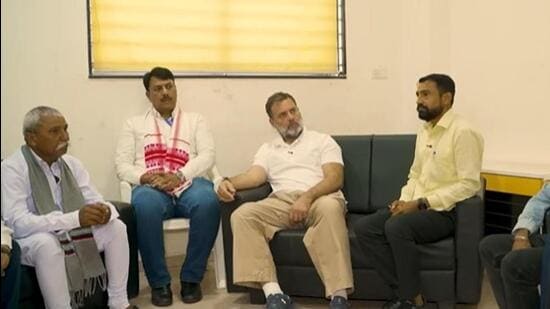
Model of injustice against Dalits, tribals in Gujarat: Rahul Gandhi| India News
Una Flogging Verdict Sparks Justice Dialogue for Marginalized Communities
The recent court ruling in Gujarat concerning the brutal Una flogging incident has reignited a crucial conversation about justice and equality for India’s marginalized communities. Days after a Gujarat court on March 17 sentenced five men to five years imprisonment in connection with the 2016 case, and acquitted 35 others, prominent voices, including former Congress president Rahul Gandhi, have weighed in, highlighting deeper concerns about the judicial process and its impact on Dalits and Tribals.
This verdict, delivered after years of legal proceedings, places a spotlight once again on the systemic challenges faced by those at the social fringes. For Omni 360 News, understanding the nuances of this case is vital to grasping the ongoing struggle for social justice in the nation.
The Una Incident A Painful Reminder
To truly understand the gravity of the recent verdict and the ensuing reactions, it is important to recall the chilling events of July 11, 2016. In the Mota Samadhiyala village of Una taluka, Gir Somnath district, Gujarat, four young Dalit men – Balubhai Sarvaiya, Ramesh Sarvaiya, Ashok Sarvaiya, and Vashram Sarvaiya – were publicly thrashed by a mob. Their alleged ‘crime’ was skinning a dead cow, a traditional occupation for many in their community, often perceived as ‘impure’ by some upper-caste groups. The attackers, self-proclaimed cow vigilantes, accused the men of cow slaughter, despite their pleas that the animal had died naturally. A video of the brutal assault, widely circulated, sparked nationwide outrage and triggered massive protests across Gujarat and other parts of India, bringing the issue of caste-based violence and discrimination to the forefront of national discourse.
The Verdict Unpacked
Fast forward to March 17, 2024. A special court in Ahmedabad delivered its judgment in the nearly eight-year-old case. Out of the 43 individuals accused, only five were found guilty and sentenced to five years in jail. Their convictions included charges related to attempt to murder, rioting, unlawful assembly, and assault. However, the court acquitted a significant number of accused – 35 individuals – citing insufficient evidence.
This outcome has naturally led to mixed reactions. While the conviction of some perpetrators offers a glimmer of hope for accountability, the large number of acquittals has raised questions among legal experts, social activists, and the affected communities themselves. For many, the high rate of acquittals signals persistent challenges in securing justice for victims of caste violence, despite compelling visual evidence that had gone viral.
Rahul Gandhi’s Strong Condemnation
Reacting to the verdict, Rahul Gandhi minced no words. He characterized the outcome as a “model of injustice” particularly targeting Dalits and Tribals in Gujarat. His comments underscored a broader critique of how the legal system often navigates cases involving marginalized communities. He suggested that such judicial outcomes deepen the sense of vulnerability and injustice among these sections of society, who frequently face discrimination and violence.
Gandhi’s statement reflects a long-standing concern among human rights advocates: that despite laws designed to protect Dalits and Tribals, the implementation of justice can often be slow, inadequate, or skewed. Such high-profile cases, therefore, become litmus tests for the commitment of the state and judicial institutions to uphold the rights and dignity of every citizen, irrespective of their caste or background.
Wider Implications and the Path Forward
The Una flogging case and its verdict transcend the immediate legal ramifications. It serves as a potent symbol in the ongoing national conversation about caste-based discrimination, social inequality, and the effectiveness of the justice delivery system. Local activists and community leaders have consistently pointed out that incidents like Una are not isolated; they represent a deep-seated prejudice that manifests in various forms of violence and oppression.
The acquittals, in particular, lead to important questions about police investigation, witness protection, and the challenges of prosecuting cases of caste-based violence effectively. Ensuring that such incidents are thoroughly investigated and perpetrators are brought to justice is crucial not only for the victims but also for sending a clear message that such acts will not be tolerated in a democratic society.
Discussions around the Una verdict highlight the need for continued vigilance and advocacy. It emphasizes the importance of a robust legal framework coupled with sensitive and efficient implementation to protect the rights of all citizens. As Omni 360 News continues to track developments, the Una case remains a poignant reminder that the pursuit of true equality and justice is a continuous journey.
Key Takeaways
* The Una flogging case involved the public assault of four Dalit men in 2016, sparking national outrage over caste-based violence.
* A Gujarat court on March 17, 2024, sentenced five individuals to five years imprisonment for their role in the incident, while acquitting 35 others.
* Rahul Gandhi critically labeled the verdict a “model of injustice” for Dalits and Tribals, raising concerns about systemic disparities in the justice system.
* The high number of acquittals has fueled debate on the efficacy of legal processes in protecting marginalized communities and ensuring accountability for hate crimes.
* The case underscores the ongoing need for stronger investigative mechanisms and judicial sensitivity to address caste discrimination and violence effectively.





