
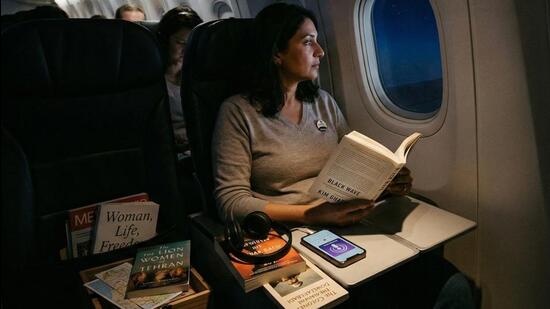
Book Box
Navigating West Asia Conflict Insights Through Reading and Listening Key Takeaways
In a world saturated with instant headlines, the intricate events unfolding in West Asia present a significant challenge for those seeking a true grasp of the situation. Amidst the rapid flow of information, and often, misinformation, a discernible shift is emerging in how individuals approach understanding this complex global issue. Readers and listeners are increasingly turning away from fleeting news snippets towards more enduring and deeply contextualized sources: books, podcasts, and even graphic narratives. This evolving trend reflects a widespread yearning for depth, historical perspective, and a nuanced understanding that quick reports seldom provide. As Omni 360 News has observed, this deliberate choice for deeper engagement is critical in fostering an informed global citizenry.
The current geopolitical landscape in West Asia is not merely a series of isolated incidents, but rather the culmination of centuries of history, diverse cultural narratives, and intricate political dynamics. For a 12th-standard student, imagine trying to understand a long, complicated family argument by only listening to the last few angry sentences. You’d miss all the background, the reasons why people feel the way they do, and the history that led to the present moment. Similarly, news headlines often capture only the “last few angry sentences” of a much larger, ongoing story in West Asia. This is precisely why many are seeking out resources that offer the “full family history.”
The Enduring Power of Books for Context
Books, both fiction and non-fiction, serve as cornerstones for comprehending the region’s complexities. Historical texts lay bare the foundations of modern conflicts, tracing colonial legacies, national aspirations, and the evolution of religious and ethnic identities. Works by scholars like Edward Said, whose seminal analyses explored the Western perception of the East, or Rashid Khalidi, who meticulously documented Palestinian history, provide essential frameworks. These authors challenge preconceived notions and offer meticulously researched insights that are vital for informed discourse.
Fiction, too, plays an indispensable role. Novels by authors such as Ahdaf Soueif or the poignant poetry of Mahmoud Darwish translate statistics and geopolitical analyses into human experiences. They transport readers into the daily lives, struggles, hopes, and sorrows of individuals living through these conflicts, fostering empathy and revealing the multifaceted impacts of war far beyond battlefield reports. This human element is often what resonates most deeply, making abstract geopolitical tensions feel personal and understandable. University library guides and independent book review sites frequently highlight these very authors as essential reading for anyone wishing to delve beyond surface-level reporting, underscoring their widely recognized value.
Podcasts Offering Diverse Voices
Beyond the printed page, podcasts have emerged as a dynamic medium for in-depth exploration. Unlike the rigid time constraints of broadcast news, podcasts allow for extended conversations, expert interviews, and nuanced debates. Programs like “The Palestine Podcast” or “Kerning Cultures” offer platforms for voices often marginalized in mainstream media, delivering firsthand accounts, historical analyses, and cultural perspectives from within the region itself. These audio narratives provide a sense of immediacy and intimacy, allowing listeners to absorb complex information at their own pace, often during commutes or daily routines. Educational platforms and community forums frequently recommend specific podcast series as valuable tools for staying current while gaining deeper historical and cultural insights, showcasing their utility in combating the echo chambers of rapid-fire news feeds.
Graphic Narratives Illuminating Complexities
Perhaps surprisingly, graphic narratives and comics are also gaining traction as powerful tools for understanding. Titles like Joe Sacco’s “Palestine” or Marjane Satrapi’s “Persepolis” use compelling visuals combined with accessible text to convey intricate historical events and personal testimonies. For a young student, these visual stories can make difficult or overwhelming subjects approachable, breaking down complex information into digestible, engaging segments. They offer a unique blend of personal experience and historical fact, making the human impact of conflict vividly clear and often more memorable than traditional prose alone. Local art and cultural centers often feature these works, recognizing their ability to bridge understanding gaps through a compelling visual medium.
Combating Misinformation and Fostering Informed Views
The driving force behind this shift towards deeper consumption is a palpable desire to navigate the treacherous waters of misinformation. In an era where social media algorithms can amplify biases and half-truths, actively seeking out well-researched, multi-perspective content becomes a form of intellectual self-defense. By engaging with a variety of sources that offer historical context, personal narratives, and diverse analytical frameworks, individuals can develop a more robust understanding. This allows them to critically evaluate incoming information, challenge simplistic narratives, and form opinions based on a broader, more accurate foundation. Reports from media literacy organizations across various regions consistently advocate for diverse reading and listening as a primary strategy to counter propaganda and foster critical thinking about global events.
Key Takeaways
- Deep Dive into History: Books provide essential historical context, allowing readers to understand the roots and evolution of the West Asia conflict beyond current events.
- Diverse Perspectives through Audio: Podcasts offer extended discussions, expert interviews, and firsthand accounts from varied viewpoints, enriching comprehension.
- Visual Storytelling for Accessibility: Graphic narratives make complex histories and personal experiences approachable and impactful through visual storytelling.
- Active Misinformation Defense: Engaging with these diverse, in-depth resources is a crucial strategy for separating facts from misinformation and developing nuanced, informed opinions.
- Fostering Empathy: Personal narratives in all three mediums humanize the conflict, building empathy and understanding for those affected.
As West Asia continues to be a focal point of global attention, the choice to delve into comprehensive narratives through books, podcasts, and graphic novels signifies a conscious move towards greater enlightenment. It is a testament to the idea that true understanding requires more than just headlines; it demands context, multiple perspectives, and a willingness to engage deeply with the stories that shape our world. This trend, reported by Omni 360 News, highlights a growing commitment among individuals to become truly informed participants in global conversations, equipped to discern truth amidst the noise.





