
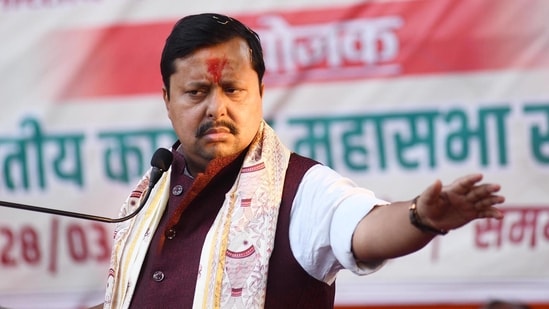
Nitin Nabin’s resignation from Assembly held up as BJP brainstorms next Bihar CM| India News
Nabin’s Dual Role Deadline Looms As Bihar Political Chessboard Shifts
The political landscape in Bihar remains a captivating tableau of strategy and crucial decisions. At its heart currently sits Nitin Nabin, a prominent leader of the Bharatiya Janata Party (BJP), facing a significant deadline. March 30 marks the day by which Nabin, having recently secured a seat in the Lok Sabha, India’s lower house of Parliament, must relinquish his existing membership in the Bihar State Assembly. This seemingly straightforward administrative matter has become intertwined with the intricate calculations of state politics, particularly the ongoing deliberations within the BJP regarding its future leadership in Bihar. For observers following the pulse of Indian democracy, this situation, closely monitored by Omni 360 News, offers a glimpse into the delicate balance between constitutional mandates and political maneuvering that often defines India’s vibrant political theatre.
Understanding the Dual Membership Quandary
To grasp the full weight of Nabin’s predicament, it is essential to understand the legal framework governing simultaneous membership in India’s legislative bodies. The Indian Constitution, specifically Article 101 for Parliament and Article 190 for state legislatures, clearly stipulates that an individual cannot concurrently hold membership in both the Parliament and a State Legislative Assembly. This fundamental provision is designed to ensure that elected representatives can fully dedicate their time and attention to one legislative body, preventing potential conflicts of interest and ensuring efficient governance for the people they represent.
When a person is elected to both houses—for instance, an existing Member of the Legislative Assembly (MLA) winning a seat in Parliament (MP)—they are given a specific timeframe to choose which seat they wish to retain. The law states that if an individual holds both a parliamentary and a state assembly seat, they must resign from one within a set period from the date of their election notification to the second house. Should they fail to make this choice and resign from one seat within the stipulated period, the law dictates that the seat they won earlier would automatically fall vacant. However, in Nabin’s specific scenario, if he does not resign from his Assembly membership by March 30, it is his newly acquired Lok Sabha seat from Patna Sahib that could be declared vacant. This outcome would not only be a personal setback for Nabin but also a notable challenge for the BJP, which would then need to fill a vacant parliamentary seat, adding an urgent and high-stakes dimension to the BJP’s strategic discussions in Bihar.
Nitin Nabin A Key Player in Bihar Politics
Nitin Nabin is not just any legislator; he is a seasoned politician with a strong base in Bihar and a significant presence within the state BJP unit. His political journey began years ago, building a reputation through consistent public service and active participation in party affairs. He has served multiple terms as an MLA from the Bankipore constituency in Patna, a traditional BJP stronghold. During his tenure as an MLA, he earned recognition as a diligent representative, articulate debater, and a reliable party voice, often entrusted with critical responsibilities.
His recent resounding victory in the Lok Sabha elections from the prestigious Patna Sahib constituency underscores his growing stature within the BJP and among the electorate. Patna Sahib is not just any constituency; it encompasses significant urban areas of the state capital, making it a symbolic and politically weighty win. Nabin’s rise from state politics to the national stage is a testament to his sustained political acumen, strong organizational skills, and appeal across various sections of society. Furthermore, as a prominent Bhumihar face—a numerically and politically influential upper caste community in Bihar—he represents a crucial demographic for the BJP. Maintaining the support of such communities is vital for any party’s electoral success in the state, making Nabin’s political trajectory particularly significant for the party’s statewide strategy and future ambitions. His continued involvement, whether in state or national politics, carries considerable weight for the BJP’s caste arithmetic and public image in Bihar.
The Political Gridlock Awaiting Resignation
The reason behind the protracted delay in Nabin’s resignation from the Bihar Assembly is rooted deeply in the BJP’s internal deliberations concerning the Chief Minister’s position in Bihar. Following the recent Lok Sabha election results, which saw a nuanced performance by the NDA coalition in Bihar, there has been considerable buzz within political circles about potential leadership changes within the National Democratic Alliance (NDA) government in the state. Speculation particularly hovers around the Chief Minister’s chair, despite incumbent Chief Minister Nitish Kumar continuing to lead the alliance. The BJP, as the dominant partner in the NDA at the national level, naturally seeks to assert its influence and strengthen its organizational footprint in a crucial state like Bihar.
Nabin is widely considered a strong candidate for a significant role in the state cabinet, possibly even a Deputy Chief Minister, given his experience, community representation, and proven electoral track record. By holding onto his MLA seat, the BJP keeps its options open. His resignation from the Assembly at this juncture would immediately trigger a by-election in Bankipore. While typically a party might want to avoid an unnecessary by-election, particularly one that could be seen as a litmus test of public sentiment, in this fluid political environment, the timing of such an event could be critical. The party might be waiting for absolute clarity on the state leadership structure and broader political alignments before making any moves that could pre-empt or prematurely influence those decisions. Local political analysts and sources close to party circles suggest that the delay is a conscious, strategic pause, allowing the central leadership to finalize its intricate blueprints for Bihar before Nabin formally steps down from his state role. This allows for greater flexibility in allocating responsibilities and crafting a cohesive strategy for the upcoming state assembly elections, whenever they may be held.
The Looming March 30 Deadline And Its Implications
The March 30 deadline is not merely a procedural formality; it carries substantial weight and critical implications for both Nitin Nabin and the BJP. If Nabin fails to tender his resignation from the Assembly by this date, the consequences could be severe and immediate. According to constitutional provisions and electoral laws, his newly acquired Lok Sabha membership could be declared void. This would mean he loses his Parliamentary seat, a significant personal setback and a major blow to his political career trajectory.
From the party’s perspective, such an outcome would be a minor embarrassment and would necessitate a by-election for the Patna Sahib Lok Sabha constituency. This would incur additional costs, effort, and political risk for the BJP, potentially diverting resources from other strategic objectives. The Election Commission of India rigorously enforces these provisions to uphold the integrity of the electoral process and prevent simultaneous representation, which could strain public resources and legislative efficiency. The party’s central command is fully aware of this deadline, indicating that the delay is a conscious, albeit high-stakes, political gamble rather than an oversight. The clock is ticking, and the decision on Nabin’s resignation will undoubtedly reflect the larger strategic vision the BJP has for its immediate future in Bihar and its long-term goals in the region. The resolution of this puzzle will offer insights into the power equations within the state unit and the national party’s priorities.
Key Takeaways
The situation surrounding Nitin Nabin’s dual legislative membership is more than a legal technicality; it’s a barometer of the intricate political currents flowing through Bihar and a reflection of the strategic thinking within the BJP.
* Constitutional Mandate: Indian law unequivocally prohibits simultaneous membership in Parliament and a State Assembly, requiring an elected representative to choose one within a prescribed period.
* The Critical Deadline: Nitin Nabin faces a non-negotiable deadline of March 30 to resign from his Bihar Assembly seat. Failure to do so would result in the forfeiture of his recently secured Lok Sabha seat, a significant political loss.
* Strategic Delay Explained: The current delay in his resignation is intricately linked to ongoing, high-level discussions within the BJP concerning the future leadership landscape of Bihar, particularly the Chief Minister’s position and the composition of the state cabinet.
* Nabin’s Importance in State Politics: As a senior Bhumihar leader and a well-established figure, Nabin is a crucial asset for the BJP in Bihar. His potential retention in state politics as a Deputy CM or a key minister is being carefully weighed against his national role, reflecting a desire to maximize his utility for the party.
* Broader Political Implications: The resolution of this issue will not only address a legal requirement but will also serve as a clear signal of the BJP’s immediate strategic approach for Bihar, affecting internal party dynamics, influencing public perception, and potentially setting the stage for future by-elections. This decision is poised to reveal significant clues about the direction of Bihar politics in the coming months.
As the deadline rapidly approaches, all eyes remain firmly fixed on the BJP’s central leadership and Nitin Nabin. His eventual decision, or the party’s ultimate directive, will not only resolve a constitutional dilemma but also provide a clearer and more definitive picture of the political landscape shaping up in Bihar. This narrative, as reported by Omni 360 News, is a testament to the fact that even seemingly minor administrative deadlines can hold profound political significance and ripple effects in the vibrant tapestry of Indian democracy.





