
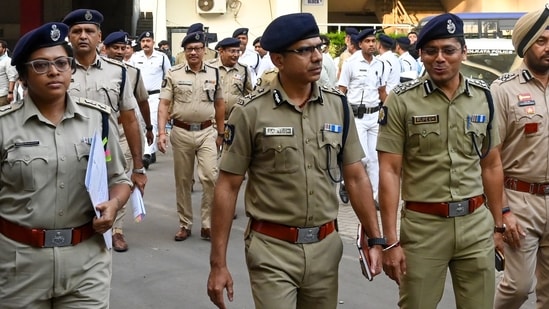
EC transfers 173 police station heads across Bengal ahead of Assembly polls| India News
West Bengal Polls Election Commission Reinforces Fair Play
As the vibrant democracy of West Bengal gears up for crucial assembly elections, the Election Commission of India (ECI) has once again stepped forward with decisive actions aimed at upholding the integrity of the electoral process. The polls for the 294-member West Bengal assembly are set to unfold in two significant phases, with voters casting their ballots on April 23 and April 29. Following these crucial dates, the anticipation will build towards May 4, when the votes will be meticulously counted, determining the state’s next government.
The run-up to any election in a state as politically charged and diverse as West Bengal is often met with intense scrutiny and a strong call for transparent conduct. Recognizing this, the Election Commission has taken proactive measures, including a significant reshuffle of police station heads across the state. This move underscores the EC’s unwavering commitment to ensuring a level playing field for all political parties and candidates, fostering an environment where every citizen can exercise their franchise without fear or undue influence.
For a 12th-standard student, understanding why such transfers are essential is straightforward. Imagine a football match where the referee might have a favorite team. To ensure fairness, the organizers might decide to bring in a completely neutral referee. In elections, police officers play a vital role in maintaining law and order, responding to complaints, and generally ensuring smooth proceedings. If there’s any perception that local police officials might be influenced by a particular political party or local strongman, it could undermine public trust in the election’s fairness. By transferring police station chiefs, the Election Commission aims to break any potential nexus, prevent bias, and ensure that law enforcement acts impartially throughout the election period. This creates a more secure and just environment for campaigning, polling, and vote counting.
The decision to transfer police station heads is not a new phenomenon; it’s a well-established practice by the Election Commission to enhance electoral integrity. These actions are designed to insulate the administrative machinery from any local political pressures. The objective is clear: to prevent any misuse of power or influence that could sway voters or disrupt the electoral process. Such preemptive measures are a testament to the EC’s dedication to conducting free and fair polls, a cornerstone of India’s democratic fabric.
Ensuring a transparent and unbiased election requires a meticulous approach, from the moment election dates are announced until the final results are declared. The Election Commission’s authority allows it to oversee and direct the civil administration and police forces specifically for election duties. This extensive power is crucial in a state like West Bengal, known for its passionate political landscape and intense electoral battles. The transfers, therefore, serve as a potent signal that the EC will not tolerate any attempts to compromise the democratic process. It sends a clear message to all stakeholders – political parties, candidates, and administrative officials – that strict adherence to the model code of conduct and election laws is paramount.
The local impact of these transfers is significant. A new police chief in a locality might bring a fresh perspective, free from pre-existing local affiliations or pressures. This change can immediately boost voter confidence, particularly in areas historically prone to electoral disturbances. When citizens feel secure and believe that the authorities are neutral, they are more likely to participate in large numbers, contributing to a more representative outcome. This reassertion of administrative neutrality is vital for strengthening the belief in the fairness of the entire exercise.
Beyond just transfers, the Election Commission employs a wide array of strategies to secure electoral integrity. This includes appointing special observers, deploying central armed police forces, stringent monitoring of election expenditure, and ensuring that all complaints are addressed swiftly and impartially. These steps collectively contribute to a robust oversight mechanism, crucial for a state with 294 assembly constituencies. The focus is not just on preventing misconduct but also on creating an environment where every citizen feels empowered to cast their vote freely, without intimidation or coercion.
The upcoming West Bengal assembly elections are more than just a political contest; they are a reaffirmation of democratic principles. The Election Commission’s assertive measures, particularly the strategic transfers of key administrative personnel, are a cornerstone of this effort. These actions are designed to guarantee that the mandate delivered on May 4 truly reflects the will of the people of West Bengal, free from any external influences. Omni 360 News continues to monitor these critical developments, bringing comprehensive coverage of the democratic journey.
Key Takeaways:
* The West Bengal assembly elections for 294 seats are scheduled for April 23 and April 29, with vote counting on May 4.
* The Election Commission has implemented significant transfers of police station heads to ensure impartial administration and prevent undue influence.
* These proactive measures are crucial for fostering voter confidence and maintaining a level playing field for all political participants.
* Such steps are a standard practice by the EC to uphold the integrity and fairness of the democratic process.
* The goal is to ensure free and fair polls where citizens can cast their votes without fear or bias, reflecting the true will of the electorate.





