
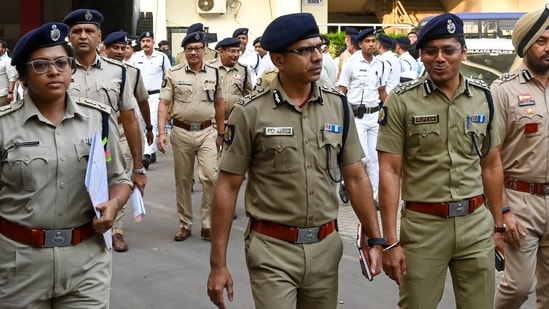
EC transfers 173 police station heads across Bengal ahead of Assembly polls| India News
Fair Elections in Focus West Bengal Polls EC Police Actions Key Takeaways
The political landscape of West Bengal has always drawn keen national attention, particularly during election cycles. When the elections for the 294-member West Bengal assembly were held, specifically across two phases on April 23 and 29, with votes counted on May 4, the Election Commission of India (ECI) once again demonstrated its firm resolve to ensure a level playing field. Omni 360 News meticulously followed these developments, noting the EC’s proactive measures, particularly its strategic transfers of police personnel, a recurring theme in the state’s electoral history.
Ensuring elections are free and fair remains the bedrock of India’s democracy. In West Bengal, where political contests are often intense, the Election Commission faces the significant task of maintaining law and order, preventing intimidation, and instilling voter confidence. A key strategy employed by the EC to achieve this is the transfer of police officials, particularly those in charge of police stations. This move is designed to dismantle any perceived local influence or political nexus, ensuring that law enforcement remains neutral and unbiased during the electoral process.
Ahead of the assembly polls, the EC undertook a substantial exercise, transferring numerous police station heads across the state. This action, while appearing administrative, carries profound implications for ground-level conduct. By rotating officials, the EC aims to prevent any single officer from becoming entrenched in local power dynamics, which could potentially sway election outcomes or lead to partisan actions. Such measures are crucial for the integrity of the polling process, ensuring that every citizen can cast their vote without fear or undue pressure. Local reports from districts highlighted the anticipation and discussions surrounding these transfers, with many viewing them as a necessary step towards maintaining impartiality.
For a 12th standard student, understanding this means realizing that elections are not just about casting votes, but also about the many steps taken behind the scenes to make sure the process is honest. Imagine a football match where the referee needs to be completely fair. If the referee knows one team very well or is from the same town as them, there might be doubts about their fairness. Transferring police officers is like changing the referee to ensure everyone believes the game will be fair for all players, or in this case, all voters and political parties. It’s about building trust and ensuring that rules are followed by everyone, especially those in positions of power. This proactive stance by the EC significantly impacts voter turnout and overall faith in democratic institutions.
Key Takeaways:
* The Election Commission consistently uses police transfers as a vital tool to uphold neutrality during elections in West Bengal.
* These transfers aim to prevent local political influence and ensure law enforcement acts impartially.
* Such proactive measures are essential for boosting voter confidence and fostering a free and fair electoral environment.
* The EC’s unwavering commitment underpins the integrity of the democratic process, particularly in politically charged regions.





