
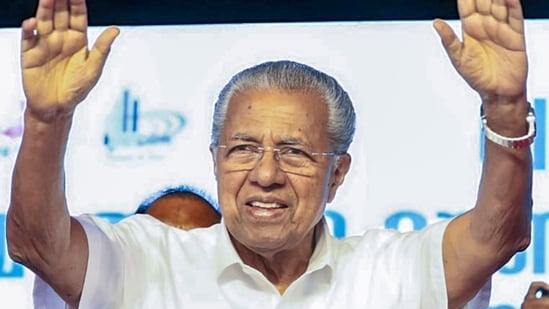
Can Pinarayi Vijayan sail through or will the ‘alternating power’ curse make a comeback in Kerala?| India News
Kerala’s Shifting Sands UDF Support for CPI(M) Independents Tests Pinarayi Vijayan
Kerala, a state known for its vibrant and often fiercely contested political landscape, finds itself at a fascinating crossroads. A recent development, quietly unfolding in the local body elections, has sent ripples through the established power structures, presenting an unexpected challenge to Chief Minister Pinarayi Vijayan and his ruling CPI(M)-led Left Democratic Front (LDF). The Opposition Congress-led United Democratic Front (UDF) has made a bold, strategic move by openly backing four independent candidates, all of whom emerged from the CPI(M)’s own ranks. This is no ordinary election skirmish; it’s a calculated gamble that could redefine local alliances and perhaps signal deeper shifts.
The heart of this intriguing political maneuvering lies in Kannur district, a traditional stronghold of the CPI(M). Here, in various local body wards, a handful of individuals, once loyal members of the Communist Party of India (Marxist), decided to contest as independents. Their reasons, according to local reports gathered by Omni 360 News, range from alleged neglect by party leadership to dissatisfaction with candidate selection and local developmental issues. Such internal dissent is not entirely new in any political party, but what makes this instance particularly noteworthy is the UDF’s swift and unequivocal decision to throw its weight behind these very CPI(M) rebels.
In places like Iritty, Payyannur, Taliparamba, and Koothuparamba, areas historically dominated by the Left, these independent candidates have become a focal point. For a voter, it might seem confusing: why would sworn rivals suddenly align? The UDF’s rationale appears clear: to exploit the existing fault lines within the CPI(M). By supporting disgruntled elements, the UDF aims to chip away at the Left’s grassroots support, create internal disarray, and demonstrate that even within its fortresses, the CPI(M) is not invincible. It’s a classic political strategy of divide and conquer, executed at the most fundamental level of local governance.
For Pinarayi Vijayan and the CPI(M) leadership, this development presents a complex problem. On one hand, they must denounce these independents as opportunists and the UDF’s move as an “unholy alliance” designed to destabilize the Left. On the other hand, they must address the underlying causes of dissent that led these members to break ranks in the first place. Dismissing them outright risks alienating a section of the cadre and local voters who might sympathize with the independents’ grievances. Local news outlets in Kannur have been buzzing with discussions among party workers, some expressing concern over the implications of such internal divisions becoming public and being leveraged by the opposition.
The situation is a testament to the fluid nature of local politics, where personal relationships, local issues, and individual aspirations often overshadow rigid party ideologies. A voter in a specific ward might be more concerned with a local drainage problem or a community project than with national political debates. When a local candidate, even one from a rival party, promises to address these immediate concerns, traditional party loyalties can sometimes waver. The UDF’s backing, therefore, offers these independents a stronger platform and a better chance against the well-oiled machinery of the CPI(M).
Historically, Kerala politics has often seen power alternate between the LDF and UDF every five years, a phenomenon sometimes dubbed the “alternating power curse” by incumbents. Pinarayi Vijayan’s government, by securing a second consecutive term in 2021, broke this decades-long pattern, a significant achievement. This current move by the UDF, while confined to local body elections, could be seen as an early attempt to disrupt the CPI(M)’s newfound confidence and to re-establish the narrative of a challenged incumbency. It’s a test of the CPI(M)’s grassroots strength and its ability to manage internal differences while facing an emboldened opposition.
The outcomes of these local contests will be keenly watched by political analysts and party strategists alike. Even a few wins for these UDF-backed CPI(M) independents could be interpreted as a significant moral victory for the opposition and a dent in the ruling party’s image, particularly in its heartland. It sends a message that the CPI(M) is not immune to internal challenges and that the UDF is willing to explore unconventional tactics to gain an advantage. Conversely, if the CPI(M) manages to successfully counter this move and secure victories, it would reaffirm its strong hold on its traditional bases.
This episode underscores that political battles are not always fought on grand stages or through national policy debates. Often, the most telling signs of shifting political currents emerge from the local panchayat wards and municipal councils. For Omni 360 News readers, understanding these micro-level dynamics is crucial to grasping the broader picture of Kerala’s ever-evolving political narrative. The current situation highlights the intricate dance of power, loyalty, and strategy that defines the democratic process at every level.
Key Takeaways:
* The UDF is actively supporting four independent candidates who are former CPI(M) members in local body elections, primarily in Kannur.
* This move aims to capitalize on internal dissent within the CPI(M) and weaken the ruling party from within its traditional strongholds.
* For Chief Minister Pinarayi Vijayan, it presents a challenge to party unity and grassroots control.
* The strategy reflects the fluidity of local politics, where specific grievances and tactical alliances can override traditional party lines.
* The outcome will be a significant indicator of the current political mood in Kerala and could influence future electoral strategies for both fronts.





