
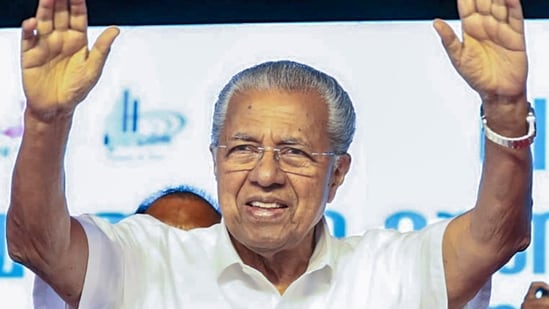
Can Pinarayi Vijayan sail through or will the ‘alternating power’ curse make a comeback in Kerala?| India News
Kerala’s Political Chessboard UDF’s Bold Move Against Pinarayi Vijayan’s LDF
The political landscape of Kerala, a state renowned for its vibrant and often unpredictable electoral contests, currently pulsates with a new dynamic. A significant challenge has emerged for Chief Minister Pinarayi Vijayan and the ruling Left Democratic Front (LDF), initiated by the Opposition Congress-led United Democratic Front (UDF). This intricate political manoeuvre involves the UDF extending its backing to independent candidates who, surprisingly, have ties to the Communist Party of India (Marxist) or CPI(M), the dominant force within the LDF. This strategic play by the opposition marks a notable escalation in political rivalry, pointing to deeper currents within the state’s electoral machinery.
Sources from local political circles indicate that the UDF has thrown its weight behind several individuals with CPI(M) backgrounds who have chosen to contest recent local body by-elections as independents, rather than under the official LDF banner. This move is far from arbitrary; it is a calculated gambit designed to exploit perceived internal dissent and factionalism within the CPI(M). By supporting these “rebel” candidates, the UDF aims to chip away at the LDF’s grassroots strength and undermine the perception of unity within the ruling front. This tactic is particularly potent in local contests, where individual popularity and community ties often outweigh rigid party allegiances.
For Chief Minister Pinarayi Vijayan, this development presents a multi-faceted test. As the undisputed leader of the CPI(M) and the LDF, maintaining party discipline and projecting a united front are paramount. The emergence of independent candidates from within his own party fold, especially with external support from the opposition, spotlights potential cracks. It raises questions about candidate selection processes, local leadership dynamics, and the overall cohesion of the party machinery. Such internal challenges can divert focus and resources, which are crucial as the state prepares for broader electoral battles. The narrative of a strong, unified LDF, essential for garnering public trust, faces scrutiny when its own members choose to defy the party line.
The UDF’s motivation behind this strategy is clear: to weaken the LDF from within. In Kerala’s closely fought political arena, where power has traditionally alternated between the two major fronts, every ward and panchayat election carries significant weight. A victory for a UDF-backed CPI(M) independent not only denies the LDF a seat but also sends a powerful message about internal dissatisfaction within the ruling party. This could potentially sway fence-sitters and even loyalists in future elections. Local news reports and political analysts often highlight how results in by-elections, though small in scale, serve as a barometer for the political mood and can influence broader electoral narratives.
This political manoeuvring underscores the inherently dynamic nature of Kerala’s political system. The state has a long history of competitive politics where no single front has managed to secure continuous dominance for extended periods. While the LDF achieved a rare consecutive term in the last assembly elections, the opposition is clearly employing every tool at its disposal to reverse this trend. The UDF’s support for these independent candidates can be seen as an attempt to leverage local grievances, unfulfilled ambitions of certain party workers, and micro-level electoral calculations. It reflects a sophisticated understanding of local body politics, where individual connections and local issues often overshadow broader ideological differences.
For Omni 360 News, monitoring these developments in Kerala provides crucial insights into the evolving strategies of political parties ahead of significant electoral cycles. The impact of such local contests often ripples upwards, influencing state-level perceptions and potentially shaping alliances. As the state moves forward, observers will be keenly watching how the CPI(M) and the LDF address these internal challenges and whether the UDF’s strategic backing of independents yields the desired political dividends. This intricate dance of defiance and support underscores that in Kerala, even the smallest election can hold significant political implications, reflecting the continuous battle for hearts and minds across its diverse communities.
Key Takeaways:
* The Opposition UDF has strategically backed independent candidates with CPI(M) ties in local by-elections, posing a direct challenge to the LDF.
* This move exposes potential internal dissent and factionalism within the ruling CPI(M), weakening the LDF’s perceived unity.
* For Chief Minister Pinarayi Vijayan, it represents a test of leadership and party discipline amidst brewing discontent.
* The UDF aims to capitalize on these internal rifts to gain local advantages and set a favourable tone for upcoming broader elections.
* This political gambit highlights the complex and often unpredictable nature of Kerala’s electoral landscape.





