
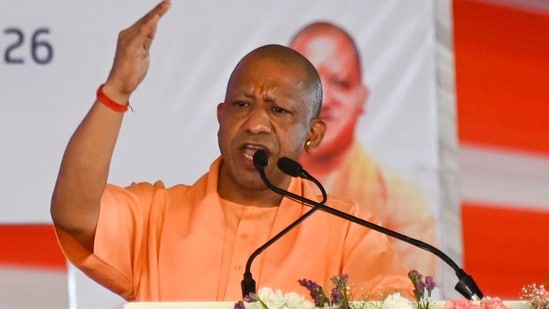
'Was told not to go to Noida': Yogi Adityanath recalls rejecting 'superstition' of losing CM seat| India News
UP Chief Minister Highlights Project Setbacks Under Previous State Leadership
In the dynamic political landscape of Uttar Pradesh, Chief Minister Yogi Adityanath recently cast a critical eye on the development record of previous administrations, specifically targeting the Akhilesh Yadav-led government. The Chief Minister’s remarks underscored a recurring theme in state politics, where ongoing projects and their completion become a significant point of contention and political messaging. The statements were made during an event, bringing into focus the alleged mismanagement and delays that, according to the current government, left many crucial projects unfinished.
The narrative from the Chief Minister often revolves around a perceived lack of foresight or execution from earlier regimes. These criticisms frequently touch upon infrastructure initiatives, urban development, and schemes aimed at improving public services. The implication is clear: while the current administration prides itself on accelerating development, it simultaneously points to a legacy of stalled progress inherited from its predecessors. This perspective is not merely about historical review but serves to highlight the differing approaches to governance and development priorities between political rivals.
A specific point of contention frequently brought up by CM Adityanath relates to the Noida region. For years, a peculiar superstition, dubbed the “Noida jinx,” suggested that any Chief Minister visiting Noida would lose their position. This belief reportedly led previous Chief Ministers, including Akhilesh Yadav, to largely avoid the city. This avoidance, according to the current administration, reflects a detachment that could contribute to project delays and a general lack of focus on the region’s development potential. CM Adityanath has consciously broken this superstition, making multiple visits to Noida and emphasizing his government’s commitment to the area.
Within this context of perceived neglect, the Chief Minister’s comments about “botched up” projects find resonance. While specific project names often vary in public discourse, the general sentiment points to a range of undertakings that either languished due to administrative hurdles, funding issues, or a change in political priorities. Local reports and public records over the years have occasionally highlighted instances of projects started but not finished, or those facing significant cost and time overruns. These include various road networks, public utility upgrades, and even initiatives in key industrial corridors that failed to gain momentum.
The current government, led by CM Adityanath, frequently positions itself as a catalyst for change, taking pride in reviving and completing many of these delayed projects. The Jewar Airport project in Noida, for instance, serves as a prominent example of a large-scale initiative that saw significant progress under the present regime, contrasted with what critics describe as slow or nonexistent movement earlier. This approach forms a core part of the ruling party’s developmental agenda, aiming to project an image of efficiency and result-oriented governance. Such contrasting narratives are fundamental in the political discourse of Uttar Pradesh, shaping public perception of governmental effectiveness.
For a student trying to understand this, imagine two different teams playing a big game. One coach (the previous government) might have started building a strong strategy, but perhaps didn’t finish some key plays or execute them well, leading to missed opportunities. Then, a new coach (the current government) comes in, looks at what was left undone, and tries to complete those plays or start new, more effective ones. The current coach will often point out the previous team’s unfinished business to show how their own methods are better. This is exactly what CM Adityanath’s statements represent: a strategic move to highlight perceived inefficiencies of the past while underscoring the current administration’s proactive stance on development. It’s about building trust and showcasing results to the citizens of Uttar Pradesh.
Key Takeaways:
The ongoing political exchange between Uttar Pradesh’s current and previous governments regarding project completion underscores fundamental differences in governance philosophy and execution. CM Adityanath’s criticism of the Akhilesh Yadav-led administration for “botched up” or incomplete projects, especially within the context of the Noida region and its historical “jinx,” serves to:
- Highlight Past Inaction: Frame the previous government as having stalled crucial development projects.
- Assert Current Government’s Efficiency: Position the present administration as a proactive force, dedicated to completing and initiating significant infrastructure and development works, such as the Jewar Airport.
- Challenge Political Superstitions: CM Adityanath’s consistent visits to Noida directly confront long-held beliefs, signifying a practical, results-oriented approach over traditional fears.
- Shape Public Perception: These statements are critical in influencing voters’ views on which government is more effective in delivering progress and development across the state.
This constant evaluation and re-evaluation of development projects form a crucial part of public accountability and political discourse, an ongoing story closely followed by Omni 360 News. The battle of narratives around development is set to continue as Uttar Pradesh moves forward, with each administration seeking to etch its own legacy of progress.





