
Fears of cable cuts in Red Sea, internet disruptions rise as US-Iran war escalates
Red Sea Undercurrents Threaten Global Internet Stability and India’s Digital Lifeline
The vital arteries of global internet connectivity, unseen beneath the waves, are facing unprecedented scrutiny. As tensions simmer and escalate daily between the United States and Iran, compounded by the Houthi movement’s aggressive actions in the Red Sea, a growing apprehension looms: the potential for severe internet outages. For a world deeply reliant on digital communication, this prospect is more than just an inconvenience; it represents a fundamental threat to commerce, communication, and daily life. Omni 360 News examines the intricate web of this escalating concern and its particular implications for India.
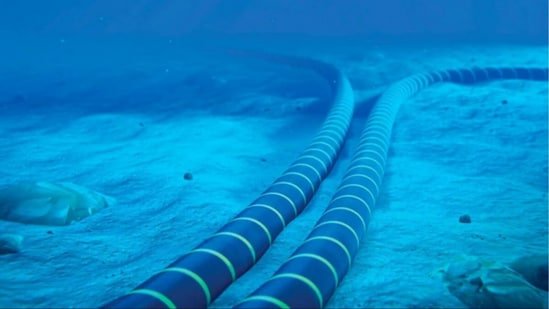
The Red Sea, a narrow waterway separating Africa from the Arabian Peninsula, serves as much more than just a shipping lane for physical goods. Beneath its surface lies a bustling digital highway a critical conduit for dozens of submarine internet cables that ferry vast amounts of data between Europe, Africa, and Asia. Imagine it as a super-expressway for information; if this road is blocked or damaged, traffic grinds to a halt. These fiber-optic cables are the backbone of our interconnected world, carrying everything from financial transactions and business communications to social media interactions and streaming entertainment. A significant portion of the world’s internet traffic, especially that linking major economic hubs in the East and West, travels through this strategic maritime choke point.
For decades, these cables have largely operated without major direct threats, save for occasional accidental cuts from ship anchors or natural events. However, the current geopolitical climate introduces a new and alarming dimension. The ongoing friction between global powers, intensified by the Houthi rebels’ attacks on commercial shipping in response to the Gaza conflict, casts a long shadow over this critical infrastructure. While the Houthis’ primary targets have been ships, the sheer volume of maritime traffic, coupled with the inherent risks of a conflict zone, significantly elevates the chance of accidental damage to these crucial underwater lines. A ship’s dragging anchor in distress, a misdirected explosive, or even debris from a conflict could sever these delicate but vital connections. Security analysts and maritime experts have voiced profound concerns over the increased risk profile of the region, noting that even an unintentional cut could have cascading effects.
India, a rapidly digitalizing nation with a booming tech sector and a vast online population, finds itself particularly exposed to these Red Sea vulnerabilities. A significant majority of India’s international internet traffic, particularly that connecting to Europe and the Americas, relies on cables passing directly through the Red Sea. While India does have eastern cable routes connecting it to Southeast Asia and beyond, these routes are not sufficient to handle the entire data load, nor do they provide the same low-latency connectivity to western destinations. Should multiple western-bound cables be simultaneously damaged or cut, the impact on India could be profound. Businesses relying on cloud services hosted abroad, financial institutions conducting international transactions, and individuals communicating with overseas contacts could face severe disruptions, ranging from slower speeds to complete outages.
The potential consequences of such widespread internet disruption are far-reaching. Economically, trade could falter, financial markets could react erratically, and businesses dependent on global connectivity could face substantial losses. Socially, communication with loved ones abroad could be hampered, access to information severely restricted, and emergency services potentially disrupted. It underscores just how deeply embedded the internet has become in every facet of modern existence.
Telecom operators and governments are not entirely unprepared for such eventualities. Redundancy is a core principle in network design, meaning that data often has multiple paths to reach its destination. If one cable is cut, traffic can theoretically be rerouted through others. However, the Red Sea’s unique concentration of cables means that a large-scale event, or simultaneous cuts, could overwhelm these backup systems. Efforts are continually underway to explore alternative routes, enhance network resilience, and develop faster repair mechanisms for damaged cables. Yet, deploying new transcontinental cables is a multi-year, multi-billion-dollar endeavor, and repairs in a conflict zone present their own set of grave challenges.
Local news outlets in various regions, mirroring global concerns, have highlighted the vulnerability of digital infrastructure. Maritime security firms regularly publish advisories detailing the heightened risks in the Red Sea. Telecommunication companies, while often reluctant to speak publicly about specific vulnerabilities, are undoubtedly working behind the scenes to bolster their networks and plan for contingencies. The consensus among experts is clear: the Red Sea crisis is not just a shipping problem; it is a profound threat to the integrity of the global internet.
Key Takeaways:
* The Red Sea is a crucial digital corridor for global internet traffic, hosting dozens of essential submarine cables.
* Escalating US-Iran tensions and Houthi actions significantly increase the risk of accidental or deliberate damage to these cables.
* India is particularly vulnerable due to its heavy reliance on Red Sea routes for Western internet connectivity.
* A major outage could severely impact global commerce, communication, and everyday digital life.
* While redundancy exists, widespread damage could overwhelm current backup systems, highlighting the need for enhanced resilience and alternative routes.
The world watches with bated breath as the situation in the Red Sea unfolds. The stakes are not just regional stability, but the seamless functioning of our global digital ecosystem. For Omni 360 News, monitoring these critical developments remains paramount.





