
Kartavya Bhavan to be ready by September 2026; Central Vista by April 2028| India News
India’s Administrative Core Set for Historic Transformation with New Secretariat Buildings
New Delhi stands on the precipice of a significant administrative overhaul, as India’s ambitious Central Vista redevelopment project continues to reshape the heart of its governance. At the core of this monumental undertaking are the Common Central Secretariat (CCS) buildings and the anticipated Kartavya Bhavan, which are poised to redefine the working landscape for numerous government ministries and departments. This grand initiative aims to consolidate operations, enhance efficiency, and provide modern infrastructure befitting a rapidly progressing nation.
The project, a cornerstone of the nation’s infrastructure modernization drive, envisions a streamlined future for Indian bureaucracy. According to recent reports, the new administrative nerve centers are progressing with a clear timeline. The much-anticipated Kartavya Bhavan, slated to house the Prime Minister’s Office (PMO) and the Cabinet Secretariat, is expected to reach completion by September 2026. This purpose-built facility represents a strategic move to centralize key decision-making bodies in a state-of-the-art environment.
A New Era for Government Functionality
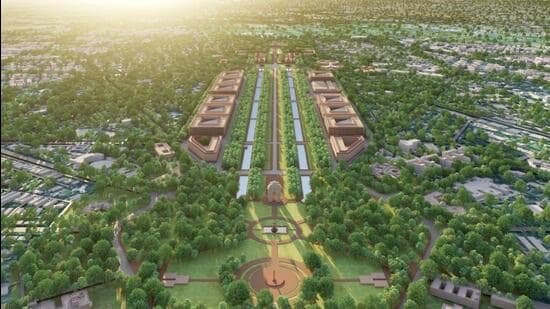
Beyond Kartavya Bhavan, the blueprint for the Central Vista includes the construction of ten new buildings designated as the Common Central Secretariat (CCS). These structures are designed to bring together various ministries currently scattered across the capital, thereby fostering better coordination and resource utilization. The comprehensive completion of all ten CCS buildings is projected for April 2028. This phased rollout underscores the meticulous planning involved in transitioning the vast governmental machinery.
The rationale behind these new constructions extends beyond mere space provision. The Central Vista redevelopment seeks to replace aging infrastructure, much of which dates back to the colonial era, with modern, energy-efficient, and technologically advanced workspaces. This move is expected to significantly boost productivity and create a conducive environment for governance in the 21st century. The vision is to craft a central administrative district that reflects India’s aspirations and capacity.
The Future of North and South Blocks
One of the most profound implications of the new CCS buildings and Kartavya Bhavan is the impending relocation of ministries from the iconic North and South Blocks. These architectural marvels, which have served as the seats of power for decades, housing critical ministries such as Finance, Home Affairs, External Affairs, and Defence, will undergo a historic transition.
Once their current occupants move into the modern facilities, the North and South Blocks are slated for repurposing. The current plan involves transforming these heritage buildings into accessible public museums. This strategic reimagining ensures that while the functional aspects of governance evolve, the historical and cultural significance of these landmarks is preserved and made available for public engagement. It’s a thoughtful blend of heritage conservation and administrative advancement, allowing future generations to connect with India’s rich political past. This approach, as observed by analysts at Omni 360 News, demonstrates a holistic vision for urban planning and national heritage.
Understanding the Central Vista Project
For a 12th standard student, think of the Central Vista project like building a brand new, super-efficient school campus for all the different government departments, which are like different classrooms or labs. Right now, many government offices are in older buildings, kind of like an old school building that might not have enough space or modern facilities.
The government is building a new, central area with many new buildings. One very important building is Kartavya Bhavan, which will be for the Prime Minister and the most important government decisions. This will be ready by 2026. Then there are ten other big buildings called the Common Central Secretariat (CCS) buildings, which will house many other government departments. All these will be ready by 2028.
The old, grand buildings, like the North and South Blocks, where many ministers work now, will become museums. So, instead of being offices, they will be places where everyone can visit and learn about India’s history. It’s like turning your old school building into a museum once the new, modern campus is ready. This whole project aims to make the government work smoother, more efficiently, and in buildings that are better equipped for today’s needs.
A Cohesive Administrative Hub
The overarching Central Vista redevelopment scheme encompasses more than just office spaces. It includes a new Parliament Building, which has already been inaugurated, and new residences for the Vice President and the Prime Minister, along with a revamped Central Vista Avenue. The project is a holistic reimagining of India’s ceremonial and administrative core, aiming to create a cohesive, functional, and aesthetically pleasing government quarter that reflects the nation’s democratic values and future aspirations.
The consolidation of ministries into the CCS buildings is expected to significantly reduce travel time between departments, foster inter-ministerial collaboration, and ultimately lead to quicker decision-making processes. This integrated approach to governance is a strategic step towards enhancing public service delivery and administrative effectiveness. The careful orchestration of these transitions, from construction to relocation, highlights a commitment to robust planning and execution. The new infrastructure is not just about buildings; it’s about building a more responsive and efficient system of governance for the world’s largest democracy.
Key Takeaways
- Kartavya Bhavan, housing the PMO and Cabinet Secretariat, is projected for completion by September 2026.
- Ten new Common Central Secretariat (CCS) buildings are planned, with all expected to be complete by April 2028.
- These new facilities aim to consolidate ministries, enhance efficiency, and provide modern infrastructure.
- The historic North and South Blocks will be vacated and repurposed as public museums once ministries relocate.
- The Central Vista project represents a comprehensive modernization of India’s administrative core, impacting governance for decades to come.





