
Bengali migrants in New Delhi rush home amid voter list fears ahead of West Bengal polls| India News
West Bengal Migrants Face Voter Roll Hurdles Ahead of Crucial Elections
A disquieting sense of uncertainty grips thousands of migrant workers from West Bengal, currently living and working in cities like New Delhi. Reports have emerged detailing widespread deletions and discrepancies in their electoral rolls following a recent revision exercise, casting a shadow over their fundamental right to vote in the upcoming West Bengal polls. This situation, as observed by Omni 360 News, highlights critical challenges in maintaining an inclusive electoral process for India’s vast migrant population.
The concerns began surfacing in earnest after the Election Commission conducted its periodic revision of voter lists. While this exercise is standard practice, designed to update records by removing deceased voters or those who have moved, it appears to have inadvertently caught many long-term migrant workers in its net. These individuals, whose livelihoods often depend on being away from their native villages for extended periods, are now confronting the very real possibility of being disenfranchised.
The Human Cost of Discrepancies
Imagine a family’s primary earner, toiling hundreds of kilometers away from home to send money back, suddenly discovering their name is missing from the voter list in their native village. This isn’t just an administrative glitch; it’s a profound blow to their sense of belonging and civic participation. Many West Bengal migrants in Delhi’s bustling industrial zones and construction sites are now faced with an agonizing choice: either lose their democratic voice or undertake an expensive and time-consuming journey back home.
Local news reports from various districts in West Bengal, particularly those with high rates of out-migration such as Murshidabad, Malda, and Purulia, paint a vivid picture of this dilemma. Families back home are frantically reaching out to their relatives in Delhi, informing them of the deletions. For a daily wage earner, a trip back to West Bengal means several days of lost income, travel costs, and the uncertainty of getting the issue resolved. This financial burden is not negligible, often amounting to thousands of rupees, which for many is a month’s savings.
Understanding the Electoral Roll Revision Process
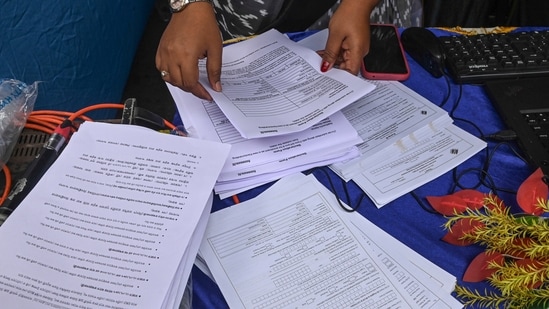
To understand the core issue, it’s helpful to grasp what an electoral roll revision entails. Simply put, it’s the process where election officials update the list of eligible voters. They add new eligible citizens, remove names of those who have passed away, and correct errors. Booth Level Officers (BLOs) are crucial here, tasked with physically verifying information. However, for migrants who are rarely at their registered address, this verification becomes challenging. If a BLO finds a house locked repeatedly or neighbors report someone has moved, a name might be marked for deletion. While there are safeguards, such as public notices and opportunities to appeal, awareness among migrant populations is often low.
Why Migrants Are Particularly Vulnerable
Migrant workers, by their very nature, lead transient lives. Their “permanent” address might be in their village, but their daily life unfolds in a different city. Updating voter details from afar is a complex process, often requiring physical presence or submission of documents that can be hard to procure while away from home. Furthermore, many are unaware of the revision schedules or the steps required to prevent deletion. This creates a systemic vulnerability where a mobile population can easily fall through the cracks of a system primarily designed for static residents.
Reports from community organizations working with migrant laborers in Delhi’s informal settlements indicate a lack of targeted awareness campaigns about voter registration and correction processes. While the Election Commission provides online portals and helpline numbers, digital literacy and access remain significant barriers for a segment of this population.
Official Response and Recourse
The Election Commission of India typically emphasizes that the revision process is transparent and opportunities for objection and rectification are provided. Citizens can check their names on the electoral rolls online or at local administrative offices. If a name is missing or incorrect, individuals can submit Form 6 for inclusion, Form 7 for objection to an inclusion, or Form 8 for corrections and transfers. However, the practical application of these solutions for a migrant population remains a hurdle.
Political parties in West Bengal have predictably weighed in, with some accusing rivals of deliberately engineering deletions to sway election outcomes. While such claims are common during election cycles, they underscore the sensitivity of voter list integrity. Regardless of intent, the impact on affected individuals is real. Authorities are urged to conduct special camps or facilitate online verification and correction processes more effectively for this demographic.
Ensuring Every Voice is Heard
As West Bengal gears up for its pivotal elections, the issue of migrant voter deletions stands as a stark reminder of the complexities inherent in safeguarding universal suffrage. For Omni 360 News, the goal is always to highlight stories that empower citizens. Ensuring every eligible citizen, regardless of their migratory status, can exercise their right to vote is fundamental to a robust democracy. This situation calls for enhanced outreach, simplified administrative procedures, and a deeper understanding of the unique challenges faced by India’s mobile workforce. The democratic spirit thrives when every voice can be heard at the ballot box.
Key Takeaways
- Thousands of West Bengal migrant workers report names missing or incorrect on electoral rolls.
- The issue stems from the recent Election Commission revision exercise.
- Migrants face significant financial and logistical burdens to travel home and rectify errors.
- Their transient lifestyle and low awareness of revision processes make them vulnerable to deletion.
- Authorities are urged to simplify voter registration and correction mechanisms for this demographic.
- Ensuring inclusive electoral rolls is crucial for fair and representative elections.





