
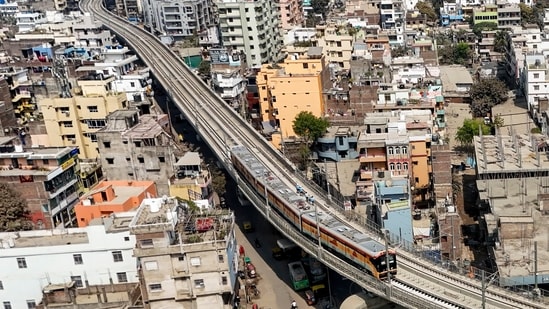
Smoking aboard metro may no longer be criminal. Also, if your pig wanders...
India’s Parliament Debates Bill To Decriminalise Minor Daily Offences
The wheels of justice in India are often seen as burdened, with countless minor infractions clogging up court dockets. But a significant legislative effort, the Jan Vishwas (Amendment of Provisions) Bill, 2023, aims to clear this logjam by decriminalising a wide array of everyday offences, transforming them from potential criminal charges into monetary penalties. This initiative, recently passed by both houses of Parliament and having received Presidential assent, marks a notable shift in the country’s legal approach, moving towards a more efficient and less punitive system for minor transgressions.
For decades, certain acts, often seemingly trivial, carried the weight of criminal proceedings, leading to unnecessary arrests, court appearances, and a strain on both the judiciary and individual citizens. The Jan Vishwas Bill seeks to amend 183 provisions across 42 central Acts, essentially converting imprisonment clauses and some severe fines into monetary penalties. This means that a simple mistake or minor non-compliance will no longer lead to a criminal record or jail time, but rather a financial consequence.
Why This Shift Now?
The rationale behind this comprehensive decriminalisation effort is multi-faceted. One of the primary drivers is the overwhelming burden on India’s judicial system. Courts across the country are swamped with cases, a significant portion of which are related to minor offences that could be resolved outside the criminal justice framework. By taking these cases out of the criminal realm, the government aims to free up judicial resources to focus on more serious crimes, thereby speeding up the overall justice delivery process.
Furthermore, this move aligns with the government’s broader agenda of enhancing “ease of living” and “ease of doing business.” For individuals, the fear of minor infractions escalating into criminal cases can be a source of constant anxiety. For businesses, especially small and medium-sized enterprises, technical or procedural non-compliances, even if unintentional, often carried disproportionately harsh penalties, including imprisonment. Decriminalisation fosters an environment where compliance is encouraged through proportionate penalties rather than fear of prosecution. It’s a step towards reducing what is often termed ‘compliance burden,’ making it simpler and less intimidating for citizens and businesses to operate within the legal framework.
Many of these laws, particularly those from the colonial era, were designed with a different societal context and often imposed severe penalties for minor transgressions. This bill is a recognition of the need to update these archaic provisions to suit contemporary societal norms and governance philosophies. Omni 360 News has consistently highlighted the need for such reforms to modernise legal frameworks.
What Offences Are Being Decriminalised?
The Jan Vishwas Bill touches upon a diverse range of central Acts, reflecting the broad scope of its intent. Some of the most notable examples of offences now facing only monetary penalties include:
* Public Nuisance and Hygiene Violations: Actions like “defecating in public” and instances of “pig trespass,” which might lead to public health concerns or minor property damage, will now attract fines rather than criminal charges. This shifts the enforcement from policing to public health and municipal authorities, streamlining the process.
* Minor Environmental Infractions: Provisions under the Environment (Protection) Act, 1986, and the Air (Prevention and Control of Pollution) Act, 1981, related to minor non-compliance by individuals or smaller entities, will see penalties revised. This allows authorities to address pollution issues effectively without immediately resorting to criminal proceedings for every minor violation.
* Railway Act Violations: Offences under the Indian Railways Act, 1989, such as littering on railway premises, minor trespass, or creating minor nuisances in public transport, are also being reconsidered. While the Hindustan Times article mentioned ‘smoking in metro’ and ‘dancing in public’ as examples of minor disruptions, the broad amendments in the bill aim to address general public order within transport systems through fines.
* Business and Industry Compliance: A significant portion of the bill focuses on amending acts that govern various industries, from the Agricultural Produce (Grading and Marking) Act, 1937, to the Pharmacy Act, 1948, and the Information Technology Act, 2000. Minor procedural lapses or technical non-compliances that previously carried criminal penalties will now face monetary fines. This eases the regulatory burden on businesses and encourages corrective action rather than punitive measures.
* Other Acts: The bill also amends the Indian Forest Act, Public Liability Insurance Act, and even some aspects of the Prevention of Money Laundering Act, focusing on minor procedural violations.
It is important to understand that decriminalisation does not mean legalising these acts. They remain illegal, but the method of punishment shifts from criminal prosecution (imprisonment, criminal record) to civil penalties (fines). The bill also introduces an adjudicating officer for determining the penalty, ensuring a structured approach. A key feature is the provision for an increase of 10% in the monetary penalties every three years, ensuring that the deterrent effect of the fines remains relevant over time.
Key Takeaways
* The Jan Vishwas (Amendment of Provisions) Bill, 2023, recently received Presidential assent, turning it into law.
* It amends 183 provisions across 42 central Acts, decriminalising minor offences by replacing imprisonment with monetary penalties.
* The aim is to reduce the burden on the judiciary, promote ease of living and doing business, and modernise outdated laws.
* Offences like minor public nuisance, environmental non-compliance, railway act violations, and various business-related procedural lapses will now primarily attract fines.
* Penalties will increase by 10% every three years to maintain their deterrent value.
This landmark legislation, as reported by Omni 360 News and various local outlets observing its passage, represents a pragmatic evolution in India’s legal framework. By distinguishing between genuine criminal intent and minor administrative or social misdemeanors, the government seeks to create a more responsive, less intimidating, and ultimately, more effective justice system for all. While some might express concerns about whether lower penalties could lead to increased non-compliance, the overarching goal is to foster a culture of civic responsibility through proportionate consequences, reserving the full force of criminal law for truly serious offenses.





