
BJP's 4th Bengal list: Union minister's wife, ex-Congress leader among 13 candidates| India News
BJP Nears Full West Bengal Candidate List Setting Stage for Intense Electoral Contest Omni 360 News
As the political fervor intensifies across West Bengal, the Bharatiya Janata Party has signaled its near-complete readiness for the upcoming state assembly elections, announcing its fourth list of candidates. With this latest declaration, the party has now named 287 individuals who will vie for seats in the 294-member state assembly. This comprehensive unveiling marks a crucial phase in their strategic preparations, bringing the picture of their electoral challenge into sharp focus.
Understanding the magnitude of this step is straightforward. Imagine a team needing 294 players for a big game, and they’ve now picked almost all of them. For the BJP, having nearly their full slate of candidates ready means they can now fully focus on campaigning and connecting with voters at every level. The remaining few seats will likely be finalized soon, perhaps reflecting very specific local adjustments or last-minute strategic decisions.
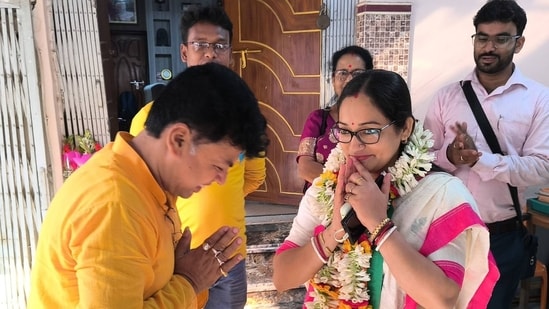
The latest list, comprising 13 names, offers a glimpse into the BJP’s careful planning and multifaceted approach. Among the notable selections is Anjana Barman, the wife of Union Minister Nisith Pramanik, who has been nominated to contest from Sitai. This choice underscores a strategy to leverage established political families and their regional influence. Interestingly, Union Minister Nisith Pramanik himself has been named as a candidate from Dinhata, showcasing the party’s willingness to field prominent national figures in crucial state-level contests to bolster its chances. Such moves often aim to consolidate support in specific regions, especially in districts where the party sees a strong opportunity for gains.
Another significant inclusion is Tapas Roy, slated for the Baranagar constituency. Roy recently transitioned from the Trinamool Congress to the BJP, a move that highlights the ongoing political realignments and the BJP’s efforts to attract experienced leaders from rival parties. Such defections can create ripples in local political dynamics, bringing with them both existing support bases and new challenges for integration within the new party structure. For voters, these shifts can mean a familiar face under a new banner, prompting considerations of loyalty and governance.
The list also reflects strategic adjustments, such as the nomination of Ashok Lahiri from Balurghat. Lahiri, a seasoned economist, was initially considered for Alipurduar but was later shifted. These reallocations are not uncommon in election strategy, often driven by a nuanced understanding of local demographics, the perceived strength of opponents, and the overall winnability factor of a candidate in a particular constituency. It illustrates the dynamic nature of candidate selection, where party leadership continuously assesses and adapts to optimize their electoral prospects.
The selection process for a state assembly election is far more intricate than simply picking popular faces. Parties meticulously consider various factors: the caste and community composition of a constituency, the candidate’s local connect and track record, their ability to mobilize grassroots support, and their alignment with the party’s broader ideological and developmental agenda. For instance, in West Bengal, where local issues and community sentiments often play a decisive role, a candidate’s deep roots in the area can be a significant advantage. The BJP’s near-complete list indicates a deliberate attempt to present a diverse array of candidates, blending experienced political figures with fresh faces and professionals, all aimed at building a robust challenge against the incumbent government.
The completion of most of its candidate slate empowers the BJP to transition fully into an intensive campaign mode. This includes organizing rallies, door-to-door canvassing, and communicating their vision for the state directly to the electorate. For observers and voters alike, this signals the formal commencement of a high-stakes electoral battle, where every candidate, every constituency, and every local issue will contribute to the eventual outcome. The focus now shifts from internal candidate selection to external voter persuasion, setting the stage for what promises to be a fiercely contested election in West Bengal.
Key Takeaways:
* The BJP has named 287 candidates for the 294-member West Bengal assembly, signaling near completion of its candidate list.
* The party’s strategy includes fielding prominent national figures and their family members, such as Union Minister Nisith Pramanik and his wife, Anjana Barman, to leverage influence.
* Defections from rival parties, like Tapas Roy from TMC, are being utilized to strengthen BJP’s candidate pool and disrupt existing political alignments.
* Strategic adjustments, like Ashok Lahiri’s constituency shift, highlight the party’s responsiveness to local factors and winnability calculations.
* The near-complete list allows the BJP to intensify its campaign, focusing on grassroots outreach and presenting its electoral vision to the voters.





