
Half of Odisha’s most vulnerable tribals cut off from welfare schemes: CAG report| India News
Odisha’s Most Vulnerable Face Scheme Exclusion Omni 360 News Audit Reveals Welfare Gaps
A recent audit by the Comptroller and Auditor General of India has cast a stark light on significant failures in reaching Odisha’s Particularly Vulnerable Tribal Groups (PVTGs) with essential welfare schemes. The findings highlight a troubling reality where over half of these most vulnerable communities remain excluded from crucial support, alongside a widespread inability of the Mahatma Gandhi National Rural Employment Guarantee Scheme (MGNREGS) to deliver its promise of 100 days of work. This detailed report, covering the period from 2017-18 to 2021-22, underscores systemic gaps that demand urgent attention for the state’s tribal population.
**Deep Dive into PVTG Exclusion**
The audit reveals that a staggering 54 percent of PVTG households across Odisha were effectively cut off from various welfare initiatives. These are not minor oversights; the excluded households missed out on fundamental support designed to uplift them from poverty and ensure basic human dignity. Schemes covering essential aspects like housing, access to safe drinking water, reliable electricity, social security benefits, and even foundational services such as education and health, failed to reach their intended beneficiaries.
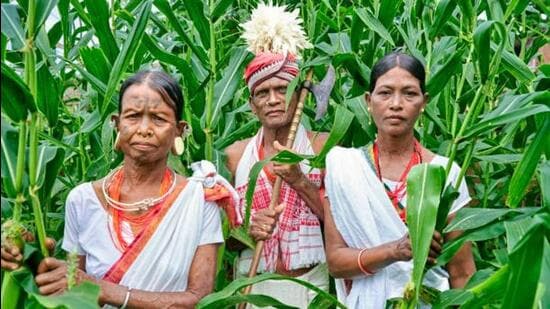
Odisha is home to 13 distinct PVTG communities, each facing unique challenges due to their isolation, traditional lifestyles, and often limited interaction with mainstream society. These groups, including the Bonda, Dongria Kondh, and Lanjia Saora, are among the most marginalized segments of India’s population. Their vulnerability stems from factors such as declining populations, pre-agricultural levels of technology, low literacy rates, and a subsistence-level economy. The very purpose of classifying them as PVTGs is to ensure targeted intervention and protection. Yet, the audit’s findings suggest a significant disconnect between policy intent and ground-level implementation.
The impact of such extensive exclusion is profound. Without proper housing, families endure precarious living conditions. Lack of access to clean water and sanitation perpetuates health crises. Absence of social security leaves elders and vulnerable individuals without a safety net. For children, missed educational opportunities trap generations in cycles of illiteracy and poverty. This exclusion not only violates their rights but also hinders their capacity to participate meaningfully in development.
**MGNREGS Fails to Deliver for Many**
Beyond the broad welfare scheme failures, the CAG report also pinpoints critical shortcomings in the implementation of MGNREGS within PVTG communities. The scheme, designed to guarantee 100 days of wage employment to rural households, aims to provide a vital safety net and stimulate rural economies. However, the audit found that a staggering 90 percent of PVTG households did not receive the promised 100 days of work.
To put this into perspective, only a meager 1.34 percent of eligible households within these communities actually secured the full 100 days of employment. This significant shortfall translates to a colossal loss of livelihood opportunities, estimated at 7.60 lakh person-days of work, costing an estimated Rs 11.20 crore in lost wages. For families living on the margins, 100 days of assured work can be the difference between bare survival and a semblance of stability. Without it, many are forced into distress migration, indebtedness, or greater reliance on dwindling natural resources.
The failure to provide consistent employment under MGNREGS not only deprives families of income but also undermines the scheme’s broader goals of asset creation and rural development. The audit implies that either demand for work was not adequately met, or there were bottlenecks in the administrative and financial mechanisms meant to facilitate it. Whatever the cause, the consequences are directly borne by the most vulnerable.
**The Call for Accountability and Action**
The Comptroller and Auditor General’s report serves as a critical mirror, reflecting the realities faced by Odisha’s PVTGs. As an independent constitutional authority, the CAG’s role is to ensure accountability in public spending and program implementation. Its recommendations are clear: there is an urgent need to identify and include all eligible PVTG households into relevant welfare programs. Furthermore, the state must address the systemic issues plaguing MGNREGS to ensure the mandated workdays are provided, thereby fulfilling its commitment to rural livelihoods.
For Omni 360 News, these findings underscore the persistent challenges in achieving inclusive development. It highlights that policies, however well-intentioned, can falter significantly without robust implementation, vigilant oversight, and genuine outreach to the most hard-to-reach populations. The welfare of Odisha’s PVTGs is not just a statistical concern; it is a fundamental human rights issue demanding immediate and sustained attention from all stakeholders.
**Key Takeaways**
* More than half of Odisha’s Particularly Vulnerable Tribal Groups are excluded from critical welfare programs like housing, social security, and health.
* The MGNREGS scheme has largely failed these communities, with 90 percent of PVTG households not receiving the guaranteed 100 days of work.
* This exclusion and livelihood deficit contribute significantly to poverty and vulnerability among these already marginalized groups.
* The audit calls for immediate action to identify and include all eligible households and to strengthen the implementation of welfare schemes and employment guarantees.
* The findings emphasize the critical need for improved governance and targeted efforts to ensure social justice for the most vulnerable.





