
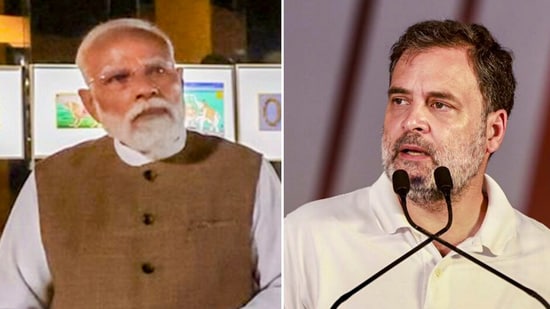
‘Political vultures’ vs ‘PM run by Trump’: Modi, Rahul exchange fire over West Asia war impact on India| India News
Kerala’s Gulf Connection A Looming Shadow Over Workers’ Futures
Recent remarks from Wayanad by Rahul Gandhi have brought into sharp focus the deep-seated anxieties gripping Kerala’s extensive diaspora in the Gulf region. Addressing a gathering that included many families intrinsically linked to Gulf economies, Gandhi’s candid admission, “You know better than me what is happening,” resonated deeply, acknowledging the palpable concerns about regional instability and its potential fallout on livelihoods back home. This statement, delivered in a state where the Gulf dream shapes countless destinies, underscores a critical economic and social issue. Omni 360 News delves into the layers of this vital concern.
Kerala, a vibrant state in India’s south, has for decades looked eastward to the Gulf Cooperation Council (GCC) countries for prosperity. From the oil boom of the 1970s onwards, millions of Keralites have sought opportunities in construction, healthcare, hospitality, and various other sectors across nations like the UAE, Saudi Arabia, Qatar, Kuwait, Bahrain, and Oman. This migration has forged an unbreakable economic lifeline, with remittances from these workers forming the backbone of Kerala’s economy. These funds are not merely statistics; they represent homes built, children educated, businesses started, and families sustained. When you walk through a town in Kerala, the impact of Gulf money is evident everywhere, from modern homes to bustling markets. It’s a delicate ecosystem where global events can have immediate, personal repercussions.
The situation in West Asia has historically been volatile, but recent escalations have amplified fears. For a 12th-grade student understanding this, imagine your family’s main source of income comes from a job far away. If that region becomes unstable due to conflicts, what happens to that job? Will it still exist? Can your family member safely stay there? Will the money they send home continue to flow reliably? These are the real, everyday questions Keralite families grapple with. The concerns range from job security and potential layoffs to travel restrictions and even the safety of their loved ones abroad. Any major conflict or economic downturn in the Gulf can trigger a wave of uncertainty, leading to job losses, wage cuts, and a significant drop in remittances.
The economic implications are profound. Remittances, often called “pocket money from abroad,” are crucial for India’s foreign exchange reserves but are existential for Kerala. A significant fall in these funds can lead to a contraction in local spending, impacting small businesses, real estate, and the overall economic vitality of the state. Families who rely on this income for daily expenses, medical care, and children’s education face severe hardship. Many have invested their life savings, and sometimes taken loans, to secure a job in the Gulf, hoping for a better future. When that future becomes uncertain, the strain on these families is immense.
Beyond the immediate financial concerns, there’s a human element that often gets overlooked. The emotional toll on families separated by thousands of miles, living with constant worry about the safety and stability of their loved ones, is immense. The mental health implications for both the workers abroad and their families in Kerala are significant. The prospect of having to return home without savings or prospects is a daunting one, creating a generation of “returnees” who may struggle to reintegrate into the local economy without adequate support.
Political leaders like Rahul Gandhi acknowledging these concerns is a step towards bringing this critical issue to the forefront of national discourse. It emphasizes the need for robust foreign policy strategies that prioritize the safety and economic well-being of India’s vast diaspora. It also calls for state-level initiatives to support returning migrants, provide skill development, and create alternative employment opportunities to reduce over-reliance on Gulf remittances. The intertwined global and local dynamics mean that what happens thousands of miles away can directly affect a village in Kerala.
Key Takeaways:
* Deep Economic Ties: Kerala’s economy heavily relies on remittances from Gulf workers.
* Regional Instability’s Impact: Conflicts in West Asia directly threaten job security and income for these workers.
* Human Cost: Beyond economics, families face immense emotional and mental stress.
* Governmental Focus: Acknowledging these concerns highlights the need for policies supporting the diaspora and alternative local opportunities.
The dialogue initiated by Gandhi’s statement in Wayanad serves as a potent reminder that for many in Kerala, global geopolitics is not an abstract concept but a tangible force shaping their very existence. As Omni 360 News continues to monitor these developments, the future of Kerala’s Gulf connection remains a story of resilience, hope, and vulnerability, keenly watching the horizon for signs of calm or further storm.





