
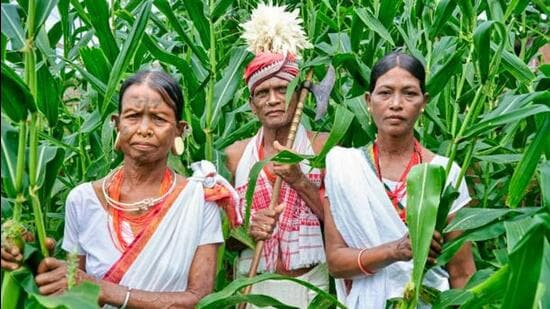
Half of Odisha’s most vulnerable tribals cut off from welfare schemes: CAG report| India News
Stark Realities Odisha’s PVTGs Excluded From Welfare MGNREGS Falters Key takeaways
A recent audit by the Comptroller and Auditor General (CAG) has cast a concerning light on the delivery of welfare schemes in Odisha, revealing that more than half of the state’s Particularly Vulnerable Tribal Groups (PVTGs) are being left out. The audit, covering the period from 2018 to 2022, also exposed significant failings in the Mahatma Gandhi National Rural Employment Guarantee Scheme (MGNREGS), where a vast majority of eligible households did not receive the promised 100 days of work. This detailed report comes from Omni 360 News, sifting through local insights and official disclosures.
The audit examined 13 out of Odisha’s 18 PVTG communities, encompassing 7,532 households. Its findings are stark: 54% of these families were excluded from at least one essential welfare scheme they were entitled to. These vital programs include basic necessities like the Public Distribution System (PDS) for food, pensions for the elderly and vulnerable, housing assistance, healthcare, and educational support. This means thousands of individuals, already living on the fringes, are deprived of critical lifelines designed to uplift them. Only 46% of the surveyed PVTG households were found to be fully covered by all eligible schemes.
Adding to these woes is the dismal performance of MGNREGS, a scheme meant to provide a safety net of rural employment. The CAG report highlighted that a staggering 90% of eligible households did not receive the mandated 100 days of work. Instead, the average number of workdays per household hovered between a meager 34 to 40 days. This shortfall directly impacts the financial stability and food security of countless rural families, pushing them further into economic hardship. When families can’t secure guaranteed work, their ability to meet daily needs like food, education for children, and basic healthcare suffers immensely.
The audit pointed to several systemic issues contributing to these failures. A key problem is the lack of a comprehensive, updated database for PVTG households, making it difficult to accurately identify beneficiaries and ensure their inclusion. Furthermore, the report noted instances of unspent funds allocated for PVTG development and, in some cases, the diversion of these funds. These administrative gaps and a lack of robust monitoring mechanisms mean that welfare intentions do not translate into tangible benefits for those who need them most. The state’s planning and implementation machinery appears to be struggling to effectively reach these extremely vulnerable groups.
For communities like the PVTGs, who often reside in remote, difficult-to-access areas and face unique socio-economic challenges, access to welfare schemes is not just about development; it’s about survival and dignity. The audit’s findings underscore a critical need for immediate, targeted interventions and a thorough overhaul of welfare delivery systems in Odisha. Ensuring every eligible PVTG family receives their entitlements and that MGNREGS genuinely provides work for 100 days is paramount for fostering equitable growth and human well-being.
Key takeaways:
* Over half of Odisha’s vulnerable tribal families are excluded from essential welfare programs.
* 90% of MGNREGS-eligible households in Odisha did not receive 100 days of work.
* Lack of accurate data and unspent funds are major roadblocks to effective welfare delivery.
* These exclusions have profound negative impacts on the socio-economic well-being of the most vulnerable.
* Urgent administrative reforms and targeted efforts are crucial for improvement.





