
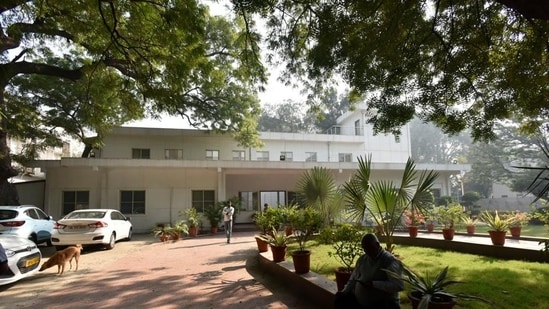
‘Jinxed’ Delhi CM bungalow, largely vacant for decades, set to be demolished
Delhi’s ‘Jinxed’ CM Bungalow at Flagstaff Road Faces Demolition After Decades of Disuse
For years, a sprawling bungalow nestled in Delhi’s historic Civil Lines area has stood largely silent, a mute witness to changing administrations but rarely housing its intended occupant. The property at 6 Flagstaff Road, designated as the official residence for the Chief Minister of Delhi, is now slated for demolition. What makes this story particularly intriguing, and a topic of local discussion, is the persistent belief among many—including, implicitly, city officials—that the building carries a “jinx,” leading to its significant underutilization over several decades.
This sentiment, often dismissed as mere superstition, has played a tangible role in keeping the property vacant, according to statements by local government officials. The long-standing reputation of misfortune associated with the address has, ironically, contributed to its practical obsolescence, paving the way for its eventual dismantling. This development is not just about a building but reflects a unique intersection of local lore, administrative pragmatism, and the efficient management of public assets.
A History of Vacancy and Reputation
The bungalow, located in the prestigious Civil Lines neighborhood, was envisioned as a fitting home for Delhi’s top political leader. However, records and local reports indicate that it has seen very little occupancy since its designation. While former Chief Minister Sheila Dikshit briefly resided there, it has largely remained empty. The current Chief Minister, Arvind Kejriwal, has never taken up residence at 6 Flagstaff Road, opting instead for a different arrangement. This pattern of avoidance has only fueled the narrative surrounding the property.
Local journalists and long-time residents have often recounted stories suggesting that leaders who occupied the bungalow faced political setbacks or personal misfortunes. While these tales lack scientific basis, their repeated narration within political and social circles has solidified the building’s reputation as “unlucky.” This deeply ingrained perception, rather than any structural deficiency or strategic inconvenience, is cited by officials as a significant contributor to its disuse. The human element of belief, even when seemingly irrational, can profoundly impact practical decisions.
Officials Weigh In Acknowledging Public Perception
Speaking to local media outlets, officials have acknowledged the challenge posed by the bungalow’s reputation. It isn’t explicitly about endorsing the “jinx,” but rather recognizing that this public and political perception actively deterred potential occupants. “The building’s long-standing reputation contributed to its underutilisation,” one official reportedly stated, highlighting that maintaining a large, prime property that remains vacant is an inefficient use of public funds. Such properties incur substantial maintenance costs, from security to upkeep, without serving their intended purpose.
For the Delhi government, the decision to demolish stems from a practical assessment. An old, unused building, regardless of its storied past, represents a drain on resources. The cost of renovating it to modern standards, coupled with the likely continued reluctance of future CMs to reside there, makes demolition a more logical, long-term solution. This move signals a pragmatic approach to urban planning and asset management, aiming to replace a dormant asset with something more functional and aligned with contemporary needs. Omni 360 News understands that governments often grapple with balancing historical legacy with current operational demands.
What Lies Ahead for Flagstaff Road
With demolition on the horizon, the focus now shifts to what will replace the ‘jinxed’ bungalow. While specific plans are still emerging, the move opens up possibilities for more efficient use of the prime Civil Lines land. It could potentially house a new, purpose-built official residence designed with modern security requirements and amenities, or perhaps another vital government facility. This strategic redevelopment aims to optimize a valuable piece of Delhi’s real estate, ensuring it serves a tangible public interest rather than remaining a historical footnote shadowed by superstition.
The decision underscores a broader trend in urban governance: the constant evaluation of existing infrastructure to ensure it meets the evolving needs of a rapidly growing city. Old buildings, even those with character or a peculiar reputation, must ultimately serve a functional purpose. The demolition of the 6 Flagstaff Road bungalow, therefore, represents not just the end of an era for a specific building, but also a step towards more rational and effective management of Delhi’s public assets. It’s a reminder that sometimes, even in governance, the intangible influence of human belief can precipitate very tangible outcomes.
Key Takeaways
* The bungalow at 6 Flagstaff Road, designated for the Delhi Chief Minister, has been largely vacant for decades.
* A persistent local belief that the property is ‘jinxed’ significantly contributed to its underutilization, as acknowledged by officials.
* The high cost of maintaining a large, unused property is a key driver for the decision to demolish it.
* Demolition will allow for more efficient use of prime government land, potentially for a new official residence or other facility.
* This move highlights how public perception and the practical management of public assets intertwine in urban governance.





