
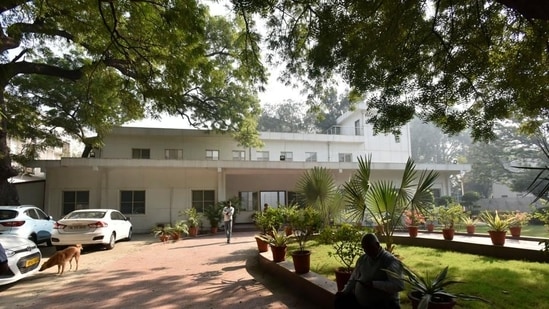
‘Jinxed’ Delhi CM bungalow, largely vacant for decades, set to be demolished
**Delhi’s Long Vacant CM Bungalow Faces Demolition A Look at its Enduring Reputation**
For decades, an imposing bungalow at 6 Flagstaff Road in Delhi has stood largely vacant, a silent testament to a belief deeply rooted in local lore and political whispers. This particular property, once slated as an official residence for the Chief Minister, is now on the brink of demolition, a decision that underscores a fascinating intersection of administrative pragmatism and persistent popular sentiment. Omni 360 News delves into the story behind this structure’s unusual fate.
The Public Works Department (PWD) has confirmed plans to dismantle the bungalow, paving the way for a modern complex designed to house Members of the Legislative Assembly. While the official line points to structural upgrades and optimizing land use, local reports and discussions with officials familiar with the matter highlight another significant factor: the bungalow’s long-standing reputation. This perception, often described as a “jinx,” contributed directly to its underutilization, turning a prime piece of real estate into a costly, unproductive asset.
A History Shrouded in Political Misfortune
The story of 6 Flagstaff Road began innocently enough, intended as a suitable dwelling for Delhi’s top elected official. However, a pattern of political misfortune among its occupants slowly began to weave a narrative of ill omen. Chaudhary Brahm Prakash, Delhi’s first Chief Minister, reportedly lived there, and his tenure ended relatively quickly. Subsequent occupants or those associated with the bungalow faced their own set of challenges, leading to a pervasive belief that the house brought bad luck to its residents.
For instance, when Madan Lal Khurana became Chief Minister in the mid-1990s, he resided at the bungalow. His tenure was cut short due to political circumstances. Similarly, his successor, Sahib Singh Verma, also faced a swift exit from the top post after occupying the premises. This sequence of events, while perhaps coincidental in a political landscape often prone to instability, cemented the bungalow’s “jinxed” status in the public imagination and among political circles.
Even prominent figures like Sushma Swaraj, who served a brief stint as Chief Minister, found their political fortunes shifting, further fueling the whispers. Though she did not reside at 6 Flagstaff Road, the prevailing sentiment around the office and its designated abode lingered. Later, Sheila Dikshit, Delhi’s longest-serving Chief Minister, actively chose not to live in the bungalow, a decision widely interpreted as an acknowledgment of the prevailing sentiment, opting instead for an alternative official residence. This choice by a seasoned politician undeniably amplified the bungalow’s notorious reputation.
The Impact of Perception on Policy
Officials, while often reluctant to publicly endorse such supernatural beliefs, privately acknowledge the tangible impact of these perceptions. As one senior PWD official, speaking on condition of anonymity to local reporters, put it, “It became nearly impossible to allocate the bungalow for its intended purpose. No Chief Minister wanted to live there. It was simply a waste of a valuable asset, costing the exchequer for maintenance without serving its primary function.” This candid admission confirms that the “jinxed” tag translated into real-world underutilization, costing taxpayers money for a property that could not fulfill its designated role.
The bungalow stood largely empty for decades, occasionally used for minor administrative purposes or as temporary accommodation, but never as the permanent, prestigious residence it was built to be. This prolonged vacancy, driven by a deeply ingrained cultural and political belief, eventually necessitated a more drastic solution.
The Path to Demolition and Future Plans
The decision to demolish is not merely about addressing a superstition; it is also a practical administrative move. The bungalow, like many older government properties, likely requires significant structural overhahauls to meet modern standards. Rather than investing heavily in renovating a property with a historical cloud hanging over it, the administration has opted for a fresh start.
The PWD’s plan to construct a new, modern complex for MLAs in its place suggests a forward-looking approach, aiming to optimize space and provide better facilities for elected representatives. This development signals a pragmatic step to repurpose valuable land that was effectively paralyzed by its past reputation.
Key Takeaways
The story of 6 Flagstaff Road is a unique example of how deeply held societal beliefs, even those considered superstitious, can influence governmental decisions and land use.
The bungalow’s “jinxed” reputation led directly to its underutilization for decades, making it a costly asset for the city.
The demolition represents a move towards practical asset management and modernizing government infrastructure, while also subtly acknowledging and resolving the enduring public perception surrounding the property.
This event highlights the intricate dance between tradition, belief, and practical governance in a bustling metropolis like Delhi.
The eventual demolition of the 6 Flagstaff Road bungalow marks the end of an era for a building that inadvertently became a symbol of political folklore. As the new complex rises, it will not only provide modern facilities but also symbolically clear the slate, offering a fresh start on a site once defined by its enigmatic reputation.





