
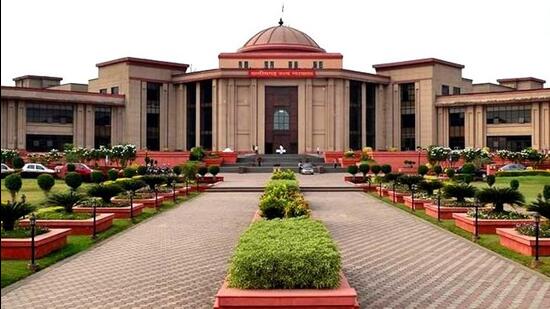
No prior nod needed for home prayer meetings if law not violated: Chhattisgarh HC| India News
Chhattisgarh Court Affirms Private Home Prayer Freedom
The right to gather for prayer within the confines of one’s home without needing prior state permission has received a significant endorsement from the Chhattisgarh High Court. This pivotal ruling clarifies the boundaries of religious freedom and governmental interference, offering crucial protection for individual civil rights across the region and beyond, as covered by Omni 360 News.
A single bench of Justice Naresh Kumar Chandravanshi recently delivered a notable judgment that quashed police notices issued to two petitioners, Amar Nath Yadav and Suresh Kumar Singh. The petitioners, residents of Kawardha district in Chhattisgarh, faced police action for allegedly conducting prayer meetings at their private residences. Police had invoked Section 107 of the Criminal Procedure Code, a provision typically used to prevent a breach of peace, against them. However, the High Court’s observation firmly stated that mere prayer meetings held at home, provided they do not disturb public order or violate any existing law, do not necessitate prior approval from authorities.
Understanding the Core Issue for a 12th Grader
Imagine you want to have a small prayer gathering with your family and a few friends at your house. Maybe you sing hymns, read from a religious book, or just pray together. The police, based on some information, send you a notice, saying you can’t do this without their permission. This is exactly what happened to Mr. Yadav and Mr. Singh.
The High Court looked at this situation and essentially said, “Wait a minute. India’s Constitution gives everyone the right to practice their religion freely (Article 25). If you’re just praying quietly in your own home, not causing any trouble, not blocking roads, or making excessive noise that bothers neighbors, why would you need police permission?” The judge made it clear that practicing your religion at home is a personal right, and the police can’t just step in unless there’s a real threat to public peace or a law is being broken. In this case, there was no evidence that the home prayers were causing any disturbance or illegal activity.
The Court’s Clear Directives
Justice Chandravanshi’s order emphasized that the authorities were directed not to interfere with the petitioners’ civil rights. This means that individuals have the fundamental liberty to observe their faith within their private space without unwarranted police intervention. The notices issued by the police, which cited concerns based on “intelligence reports” primarily about alleged religious conversions, were deemed an overreach of authority in the absence of concrete evidence of public disturbance or unlawful activity. While the issue of religious conversions remains a sensitive topic in many parts of India, the court’s ruling distinctively focused on the legality and constitutional protection of private worship, separating it from broader political or social debates.
Local news outlets in Chhattisgarh and legal journals have highlighted this judgment as a significant moment for religious liberties. It underscores the judiciary’s role in safeguarding constitutional provisions against potential administrative excesses. This ruling serves as a vital reminder that the exercise of religious freedom, particularly in private settings, is a protected civil right that cannot be curtailed without just cause, such as a genuine threat to public order or a violation of specific laws.
Broader Implications and Key Takeaways
This decision holds considerable weight for religious communities, especially minority groups, who often face scrutiny regarding their private gatherings. It reinforces the principle that suspicion alone is not a sufficient basis for curtailing fundamental rights. The Chhattisgarh High Court’s stance sends a clear message to law enforcement agencies across the state and potentially the nation: interventions in private religious practices must be backed by concrete evidence of wrongdoing, not mere apprehension or speculation.
Key Takeaways:
- Constitutional Protection: The ruling reaffirms Article 25, protecting the freedom to practice religion privately.
- No Prior Permission for Home Prayers: Individuals do not need police approval for private religious meetings in their homes, provided peace and law are maintained.
- Limits on Police Authority: The court clarified that police cannot interfere with civil rights without concrete evidence of law violation or public disturbance.
- Safeguarding Liberties: This decision strengthens civil liberties and religious freedom for all citizens, especially in areas where such gatherings might face scrutiny.
The Chhattisgarh High Court has thus drawn a crucial line, ensuring that the sanctity of private worship remains unassailable as long as it aligns with the nation’s laws and doesn’t infringe upon the rights or peace of others. This stands as a beacon for individual freedoms in the intricate tapestry of Indian society.





