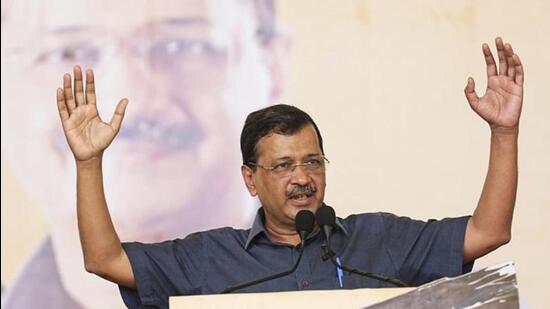
Excise policy: Delhi HC notice to Kejriwal on ED plea over acquittal in summons cases| India News
Delhi High Court Examines ED’s Challenge Against Kejriwal Acquittal in Summons Case
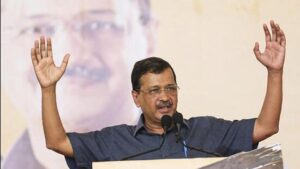
New Delhi The Delhi High Court has sought a response from Chief Minister Arvind Kejriwal regarding a petition filed by the Enforcement Directorate ED challenging his acquittal in cases concerning non-compliance with summons. This legal development marks another pivotal moment in the ongoing Delhi excise policy investigation, drawing keen attention from legal circles and the public alike. The next hearing in the matter is scheduled for April 29. Omni 360 News continues to follow these critical legal proceedings closely.
A Deep Dive into the Legal Challenge
The heart of this latest High Court intervention lies in a specific order issued by an Additional Chief Metropolitan Magistrate ACMM on January 22. In that ruling, the ACMM had acquitted Mr. Kejriwal in two distinct complaints lodged by the ED. These complaints were not directly about the alleged excise policy irregularities themselves, but rather about Mr. Kejriwal’s failure to appear before the investigative agency despite multiple summons issued under the Prevention of Money Laundering Act PMLA.
The ACMM’s decision to acquit Mr. Kejriwal rested on a particular legal interpretation. The magistrate found that the ED’s complaints regarding non-compliance were not legally sustainable because, at the time these complaints were filed, Mr. Kejriwal was not formally listed as an “accused” in the broader money laundering case related to the excise policy. This distinction became the basis for the lower court’s acquittal.
However, the Enforcement Directorate has vehemently contested this interpretation, labelling the ACMM’s January 22 order as “perverse” and “bad in law.” The ED’s petition to the Delhi High Court argues that the magistrate erred in concluding that a person needs to be an accused in the main PMLA case for complaints related to non-compliance with summons to be maintainable. The agency’s stance typically emphasizes the mandatory nature of summons under PMLA and the importance of cooperation during investigations, irrespective of one’s formal status as an accused at that specific juncture.
The Broader Context The Delhi Excise Policy Case
To fully grasp the significance of this development, it is essential to understand the overarching Delhi excise policy money laundering case. This investigation centers on allegations of irregularities and corruption in the formulation and implementation of the Delhi Excise Policy for 2021-22, which was later scrapped. The ED, along with the Central Bureau of Investigation CBI, claims that the policy facilitated illicit gains for liquor traders, distributors, and politicians, with alleged kickbacks being used to fund election campaigns.
The case has seen several prominent figures, including Delhi’s former Deputy Chief Minister Manish Sisodia, arrested and investigated. Mr. Kejriwal himself was subsequently arrested by the ED on March 21, following multiple skipped summons and the agency’s assertion of his direct involvement in the alleged scheme. His arrest came after the High Court refused to grant him interim protection from coercive action by the ED.
The current petition in the Delhi High Court, presided over by Justice Swarana Kanta Sharma, specifically addresses the *earlier* instances of non-compliance with summons, which predated Mr. Kejriwal’s eventual arrest in the main case. It highlights the ED’s persistent efforts to compel cooperation from those it suspects of involvement in the alleged money laundering scheme.
What This Means for the Future
The Delhi High Court’s issuance of a notice to Mr. Kejriwal indicates that the court will now hear arguments from both sides before deciding on the validity of the ED’s challenge. This is not merely a procedural step; it signifies a judicial review of a lower court’s interpretation of a critical aspect of PMLA enforcement. The outcome could have implications for how summons and non-compliance are treated in high-profile investigations going forward.
Mr. Kejriwal’s legal team will now prepare its response to the ED’s petition, likely reiterating arguments presented before the ACMM or introducing new legal grounds. The proceedings on April 29 will be crucial as the court delves deeper into the legal nuances surrounding the power of summons and the obligations of individuals during an ongoing investigation. This particular facet of the excise policy case adds another layer of complexity to the already intricate legal battle surrounding the Delhi Chief Minister.
Key Takeaways
- The Delhi High Court has issued a notice to Arvind Kejriwal concerning the ED’s challenge against his acquittal in two summons non-compliance cases.
- The ED disputes a lower court’s January 22 order, which acquitted Kejriwal, arguing it was “perverse” and “bad in law.”
- The lower court’s reasoning for acquittal was that Kejriwal was not a formal “accused” in the main PMLA case when the summons complaints were filed.
- The case is part of the larger Delhi excise policy money laundering investigation.
- The next High Court hearing, where Mr. Kejriwal’s response will be considered, is scheduled for April 29.
Omni 360 News will continue to provide timely updates as this significant legal case progresses through the Indian judicial system.