
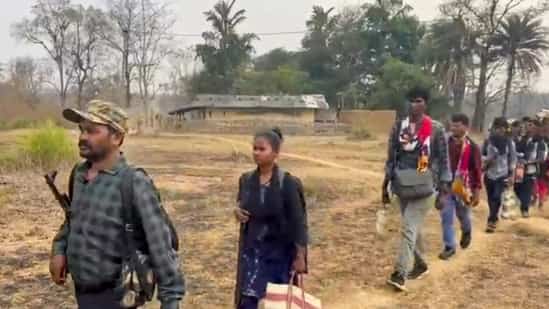
Chhattisgarh: Bijapur looks to future without Maoist shadow| India News
Bijapur’s New Dawn After Decades of Maoist Control Key Takeaways
For generations, the shadow of Maoist insurgency stretched long and dark across parts of India, particularly in the dense forests and remote villages of Chhattisgarh’s Bastar division. The region, with its rich natural resources and predominantly tribal population, became a battleground, often isolating its people from the mainstream and halting any semblance of progress. Now, a profound shift is unfolding, offering a flicker of hope that promises to illuminate a future once considered unattainable. For the first time in over six decades, areas like Bijapur, long considered a stronghold of the rebels, appear to be emerging from the grip of Maoist control. This significant development marks a pivotal moment for the nation and its most vulnerable communities.
The transformation in Bijapur and its surrounding areas is a testament to a sustained and integrated approach by security forces and the government. At the heart of this success lies a multi-pronged strategy that combines robust security operations with an aggressive push for infrastructure and social development. Over the past five years, a remarkable feat has been achieved with the establishment of over 150 new security camps deep within the Bastar division. These forward operating bases, strategically placed in previously inaccessible territories, have been instrumental in reclaiming vital ground from the Maoists.
Consider the stark contrast to past decades. Villages like Pamed, Usoor, and Basaguda, once synonymous with Maoist influence and fear, are now witnessing the slow but steady return of normalcy. These areas, which once saw government presence only sporadically and under heavy escort, now host permanent security establishments. This continuous presence has not only constricted the operational space of the rebels but has also instilled a newfound confidence among local residents. The once routine sight of Maoist ‘jan adalats’ or kangaroo courts, enforcing their arbitrary laws and extorting villagers, is now becoming a distant memory.
The improved security environment has unlocked the door for a wave of development initiatives that were previously unthinkable. Road construction, the very lifeline of progress, is now gaining momentum, connecting remote hamlets to district centers. For years, the absence of proper roads meant villagers were cut off from markets, healthcare, and education. Today, these vital arteries are being laid, paving the way for goods, services, and opportunities to reach the doorsteps of tribal communities. Along with roads, communication infrastructure, particularly mobile towers, is being erected, bringing these isolated regions into the digital age. This connectivity not only aids security forces in intelligence gathering but also empowers locals with information and access to government schemes.
Healthcare, a fundamental right, is also seeing significant improvements. Previously, serious ailments often meant arduous journeys to distant towns, or worse, succumbing to preventable diseases due to lack of medical attention. With camps come medical facilities, offering immediate relief and primary care. Similarly, schools, once shuttered or operating in dilapidated conditions, are now being reopened and revitalized. Children, who previously faced the grim choice of joining rebel ranks or living in constant fear, now have the chance to pursue education and dream of a brighter future.
The human element of this change is perhaps the most compelling. Locals, mostly tribal communities who have borne the brunt of the conflict, are expressing cautious optimism. They speak of the freedom to move about without fear of Maoist intimidation or forced conscription. Farmers can now cultivate their lands without paying levies to the rebels. Traders can conduct business more freely. The very fabric of daily life, once dictated by the insurgents, is slowly being rewoven with threads of peace and prosperity. These voices, gathered through diligent reporting by Omni 360 News and local journalists, underscore the profound impact of this shift on individual lives and community spirit.
It’s important to understand that while the visible presence of Maoists has receded significantly, the challenges are far from over. Vigilance remains paramount to prevent any resurgence. The government’s dual strategy of maintaining security pressure while accelerating development must continue unabated. Ensuring that the fruits of progress reach everyone, especially the most marginalized, will be key to solidifying this newfound peace. Addressing long-standing grievances related to land rights, forest produce, and equitable resource distribution will be crucial in ensuring that communities do not fall prey to extremist ideologies again.
Key Takeaways
- Decades of Maoist Control Waning: For the first time in over 60 years, regions like Bijapur in Chhattisgarh are largely free from Maoist influence.
- Strategic Security Expansion: Over 150 new security camps have been established in Bastar in five years, reclaiming formerly inaccessible areas.
- Development Follows Security: Improved security has enabled significant infrastructure development, including roads, mobile towers, health facilities, and schools.
- Empowering Local Communities: Tribal residents now experience greater freedom, access to services, and opportunities for education and livelihood.
- Continued Vigilance Required: While a major victory, sustaining peace necessitates ongoing security presence and equitable development to prevent any resurgence of insurgency.
The receding shadow of Maoist control in Bijapur and other parts of Chhattisgarh signifies a powerful turning point. It’s a testament to the resilience of the human spirit and the potential for positive change when concerted efforts are made. The journey ahead will require continued dedication, but the dawn over Bijapur promises a brighter future for a generation that has only known conflict.





