
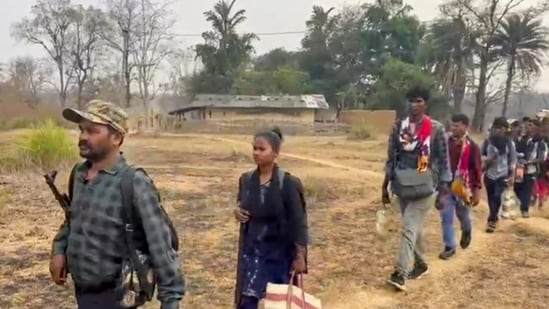
Chhattisgarh: Bijapur looks to future without Maoist shadow| India News
Bijapur Emerges from Decades of Maoist Grip A New Dawn in Chhattisgarh
For decades, the mention of Bijapur in Chhattisgarh evoked images of dense forests, remote villages, and the persistent shadow of Maoist insurgency. It was a region where state authority often struggled to penetrate, and local communities lived under a constant threat of violence and ideological control. Yet, a remarkable shift has occurred. For the first time in over six decades, there is a tangible sense that the area is shaking off the grip of Maoist influence, ushering in an era of unprecedented peace and development. This transformation, deeply rooted in sustained efforts and community engagement, marks a pivotal moment for the state and its people.
The change isn’t merely a claim from officialdom; it’s a lived reality for the residents of Bijapur. Through diligent reporting by local news outlets and direct observations, a clear picture emerges. Areas once considered no-go zones are now seeing the construction of roads, the establishment of schools, and the return of a semblance of normal life. This progress has been largely attributed to a strategic, multi-pronged approach by security forces and the civil administration.
A Strategic Shift on the Ground
The most significant factor in this turnaround has been the establishment of numerous new security camps deep within previously inaccessible territories. These camps, often located in the heartland of former Maoist strongholds like the Abujhmad region, serve as vital outposts for law and order. Local reports highlight how these forward operating bases have disrupted the supply lines and command structures of Maoist groups, severely limiting their movement and operational capacity. The presence of these camps not only brings security but also acts as a bridge for government services to reach isolated populations.
Alongside enhanced security, there has been a concerted push for community engagement. Police and paramilitary forces are not just seen as combatants but as facilitators of welfare initiatives. Medical camps, skill development programs, and distribution of essential supplies are frequently organized by these forces, building trust with the local tribal communities who were often caught between the state and the insurgents. This nuanced approach has encouraged many disillusioned cadres to surrender, further weakening the Maoist network.
Voices of Hope and Progress
For generations, the people of Bijapur, particularly those in remote villages, experienced life through the lens of fear. Going to school or accessing basic healthcare was a perilous journey, often blocked by the Maoists. Local journalists have chronicled villagers expressing newfound freedom. Farmers can now cultivate their lands without fear of extortion or intimidation. Children are attending schools built in their own villages, some for the very first time. Women are able to travel to markets, opening up new avenues for trade and economic activity.
Road construction, once a prime target for Maoist attacks, is now proceeding at an unprecedented pace. These vital arteries are connecting previously cut-off hamlets to district headquarters, enabling faster movement of goods, services, and people. This infrastructure boom is a tangible symbol of the state’s reclaiming of its territory and its commitment to integrating these remote regions into the national mainstream.
Development Takes Root in Fertile Ground
The reduction in Maoist influence has created fertile ground for development initiatives to truly take hold. Government schemes for livelihood generation, education, and health, which often struggled to penetrate these areas, are now being implemented with greater efficacy. For example, local schools that were once empty or non-functional due to fear are now bustling with children. Health centers are being staffed, bringing essential medical services closer to communities that previously relied on traditional healers or undertook arduous journeys for basic care.
The district administration, working in tandem with security forces, is focusing on creating sustainable economic opportunities. This includes promoting local agricultural produce, supporting forest-based livelihoods, and imparting vocational training to the youth. Such efforts are crucial not only for economic upliftment but also for weaning away young people from the path of insurgency by offering them viable alternatives. This holistic approach underpins the long-term strategy for sustained peace and progress, reported extensively by Omni 360 News.
The Road Ahead Sustaining the Peace
While Bijapur and other parts of Chhattisgarh appear to be enjoying a significant respite from Maoist violence, the journey towards complete normalcy requires continued vigilance and commitment. The challenges remain substantial. Decades of neglect and conflict have left deep scars, both infrastructural and psychological. Rehabilitation of former Maoists, ensuring equitable distribution of resources, and addressing historical grievances are crucial for preventing any resurgence of unrest.
The focus must now shift from merely establishing control to fostering sustainable development and inclusive governance. This means ensuring that the benefits of peace reach every household, that local institutions are strengthened, and that the voices of the people, especially the tribal communities, are heard and respected in decision-making processes.
Key Takeaways
* Bijapur in Chhattisgarh is experiencing unprecedented peace after over six decades of significant Maoist control, thanks to sustained security operations and community-centric approaches.
* The establishment of new security camps in remote areas has been crucial in disrupting Maoist activities and bringing government presence closer to the people.
* Improved security has paved the way for vital infrastructure development, including roads, schools, and health facilities, benefiting previously isolated communities.
* Local residents are reporting a palpable shift from fear to hope, with increased access to education, healthcare, and economic opportunities.
* While significant progress has been made, continuous efforts in sustainable development, inclusive governance, and addressing socio-economic disparities are essential for long-term peace.





