
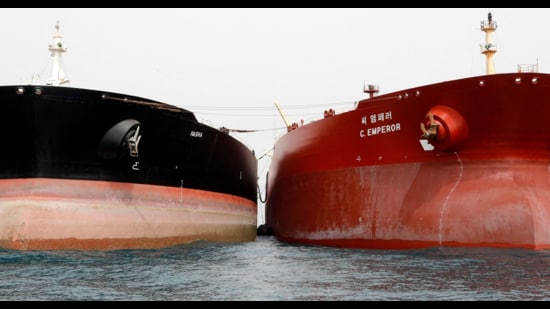
West Asia war: World Bank, IMF, IEA announce coordination group amid energy crises| India News
Global Economic Strain War’s Heavy Toll on Energy Importers and Vulnerable Nations Omni 360 News
Omni 360 News The echoes of conflict reverberate far beyond the battlefield, casting a long shadow over the global economy. A recent stark assessment from the World Bank highlighted the “substantial” economic fallout, with net energy importing nations and the world’s lowest-income countries bearing the heaviest burden. This isn’t merely about rising fuel costs; it’s a complex web of economic pressures threatening stability and development across continents.
The World Bank’s findings underscore a deteriorating global economic landscape, driven by persistent geopolitical tensions. For countries reliant on importing oil, gas, and other energy resources, the immediate impact is a surge in import bills. This drains national treasuries, strains trade balances, and weakens local currencies. It’s a domino effect: higher energy costs translate into increased production expenses for industries, inflated transportation costs, and ultimately, higher prices for everyday goods, hitting the pockets of ordinary citizens hardest.
Consider a nation in Sub-Saharan Africa or Southeast Asia, already grappling with development challenges and external debt. A sudden spike in the price of crude oil—the lifeblood of modern economies—means less money available for essential services like healthcare, education, or infrastructure projects. Their capacity to invest in long-term growth is severely hampered, trapping them in a cycle of economic vulnerability.
Further exacerbating this predicament, the International Monetary Fund (IMF) has consistently warned about the escalating debt levels in many developing countries. With interest rates on the rise globally, servicing existing debt becomes an even heavier burden. This combination of increased import costs and higher debt repayments creates a precarious fiscal situation, leaving little room for governments to implement stimulus measures or social safety nets to protect their populations from rising inflation.
The International Energy Agency (IEA), a key voice in global energy markets, has also sounded alarms. Their analyses frequently point to the volatility and uncertainty introduced by geopolitical conflicts. Disruptions to crucial shipping lanes, threats to energy infrastructure, and shifts in global supply patterns contribute to price spikes and market instability. This isn’t just about the immediate crisis; it also impacts long-term investment in energy infrastructure, potentially delaying transitions to cleaner energy sources as countries scramble to secure immediate supply.
Responding to this multifaceted crisis, the World Bank, IMF, and IEA have initiated a coordinated effort to address the unfolding energy challenges. This collaboration aims to stabilize markets, provide technical assistance, and mobilize financial support for countries most at risk. It’s an acknowledgement that no single institution can tackle the breadth of these interconnected problems alone. This joint approach focuses on sharing information, aligning policy recommendations, and working towards more resilient global energy and financial systems. The emphasis is on practical solutions, from enhancing energy efficiency to exploring diversified supply routes.
Beyond energy, the ripple effects extend to food security. Energy is a significant input in agricultural production, from powering farm machinery to manufacturing fertilizers and transporting produce. Higher energy prices mean costlier food, disproportionately affecting low-income households where a larger percentage of income is spent on sustenance. This can lead to increased hunger, malnutrition, and even social unrest, as seen in various regions struggling with food inflation.
For a 12th standard student, think of it this way: Imagine your family budget. If the price of essential items like electricity for your home or petrol for your school commute suddenly doubles, your family has less money left for other things like new books, clothes, or even healthy food. Now, imagine this happening to an entire country, where the “family budget” is the national economy, and essential items are energy imports and basic foodstuffs. The government, like your parents, has to make tough choices about where to cut back, and often it’s the most vulnerable who feel it first.
Local news reports from emerging economies frequently highlight the immediate consequences: small businesses struggling with utility bills, farmers facing prohibitively expensive fuel for tractors, and families cutting back on daily essentials. These granular accounts paint a vivid picture of the global economic statements materializing into tangible hardships for communities.
Key Takeaways:
- Ongoing global conflicts impose “substantial” economic costs, hitting net energy importers and low-income countries hardest.
- Soaring energy prices lead to higher import bills, strained national budgets, and increased inflation across economies.
- Low-income nations face a double whammy of rising costs and escalating debt burdens, limiting their ability to respond effectively.
- The World Bank, IMF, and IEA have formed a coordination group to jointly tackle the global energy crisis and support vulnerable nations.
- The economic ripple effects extend beyond energy, exacerbating food insecurity and potentially hindering long-term development goals.
Looking ahead, the outlook remains challenging. Experts from various economic forums predict sustained inflationary pressures and slower global growth if conflicts persist. The imperative for international cooperation, sound fiscal management, and strategic investments in diversified energy sources has never been more critical. As reported by Omni 360 News, the warnings from the World Bank serve as a stark reminder of the interconnectedness of global peace and economic prosperity.





