
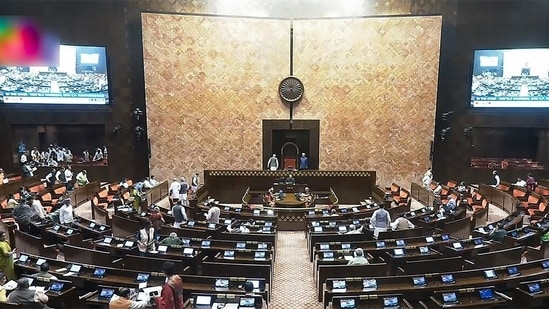
Parliament clears Amaravati as Andhra capital; Jan Vishwas, CAPF bills also passed| India News
**Parliamentary Action Shapes Andhra’s Future, Reforms Forces**
Recent legislative developments in India’s Parliament have drawn significant attention, particularly the clearance of six crucial bills. Among these, two stand out for their widespread impact: one solidifying Amaravati as Andhra Pradesh’s sole capital and another addressing officer quotas within the Central Armed Police Forces (CAPF). These legislative moves, reported by various local news outlets and covered broadly, mark important shifts in governance and internal security.
**Amaravati Designated Andhra’s Singular Capital**
For Andhra Pradesh, the passing of the legislation confirming Amaravati as its sole capital brings a measure of clarity after years of uncertainty. The state had previously grappled with a three-capital proposal, which included Visakhapatnam as the executive capital, Kurnool as the judicial capital, and Amaravati as the legislative capital. This multi-capital approach, though intended to ensure regional equity, faced significant legal challenges and public outcry, particularly from farmers and residents in the Amaravati region who had given up land under the initial premise of a singular, grand capital city.
With both Houses of Parliament clearing the bill, the central government has now legislated to affirm Amaravati’s status as the only capital. This decision is expected to streamline governance, potentially ending the prolonged debate and providing a clearer direction for the state’s administrative and developmental future. Local reports from Vijayawada and Guntur indicate a mix of relief among proponents of a unified capital and ongoing concerns among those who supported the three-capital concept, particularly regarding regional development balance. Omni 360 News analysis suggests this move aims to create stability and attract investment by removing ambiguity.
**Reforming Officer Quotas in CAPF**
Another significant legislation cleared by Parliament focuses on fixing the quota for Indian Police Service (IPS) officers in higher posts within the CAPF. For years, a perceived imbalance has existed where a disproportionately high number of senior leadership roles in forces like the CRPF, BSF, ITBP, SSB, and CISF were occupied by IPS officers, often deputed from state cadres. This arrangement frequently left career CAPF officers with limited promotion opportunities to their own top ranks.
The new bill seeks to rectify this by establishing a clear quota, reserving a certain percentage of higher-level positions for officers who have risen through the ranks within the CAPF itself. This move is widely seen as a morale booster for the dedicated personnel serving in these forces, providing them with enhanced career progression prospects and recognition for their specialized experience. Insights from various police welfare associations highlighted in regional media suggest this reform could lead to a more merit-based and motivated leadership within India’s internal security apparatus.
**Other Key Legislative Approvals**
Beyond these two pivotal bills, Parliament also approved four other legislations. One notable bill is the Jan Vishwas Amendment of Provisions Bill. This legislation aims to decriminalize minor offenses across various laws, replacing imprisonment with monetary penalties. The objective is to reduce the burden on the judicial system, promote ease of doing business, and foster trust in governance by moving away from punitive measures for minor infringements.
**Key Takeaways**
* Amaravati Confirmed: Parliament has legislated to designate Amaravati as the sole capital of Andhra Pradesh, aiming to resolve long-standing ambiguity and facilitate stable governance.
* CAPF Officer Reforms: A new bill sets quotas for IPS officers in higher CAPF posts, creating better promotion avenues for internal CAPF cadres and boosting morale.
* Jan Vishwas Bill: This legislation seeks to decriminalize minor offenses across multiple acts, replacing jail terms with fines to ease judicial load and promote a trust-based governance approach.
* Legislative Momentum: The clearance of six bills underscores Parliament’s active role in shaping key policy areas, from state administration to internal security and legal reforms.
These parliamentary decisions reflect a proactive approach to addressing complex issues and setting the course for various sectors across the nation, as closely observed by Omni 360 News.





