
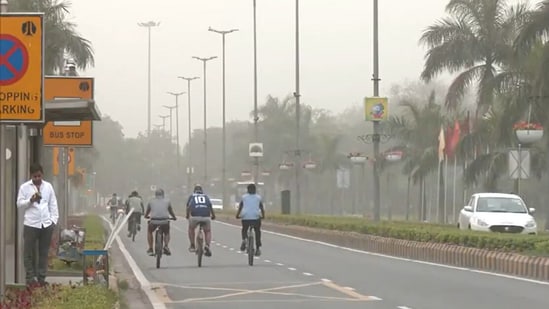
Visibility down, dust, cloudy skies take over Delhi; rain likely till tomorrow| India News
Delhi Anticipates April Showers and Thunderstorms
The national capital, Delhi, has been on alert as weather forecasts from the India Meteorological Department (IMD) pointed towards a spell of very light to light rainfall accompanied by thunderstorms around April 3 and 4. Residents have already experienced a prelude to this shift, with dusty winds sweeping across the region, bringing a temporary change in the atmospheric conditions. Omni 360 News has been closely monitoring the developments, ensuring citizens are well-informed about the evolving weather patterns.
The initial predictions from weather authorities highlighted a period where Delhi’s skies would turn cloudy, offering a brief respite from the steadily climbing temperatures typical for this time of year. While the intensity of the expected precipitation was described as minimal, the prospect of thunderstorms and associated strong surface winds, potentially gusting at 30-40 kilometers per hour, meant that a noticeable change was on the horizon for the bustling metropolis. These forecasts are crucial for a city like Delhi, where sudden weather shifts can impact everything from daily commutes to air quality.
Before the forecasted showers, the city witnessed a significant dust storm. This phenomenon occurred primarily during the late hours of April 2 and into the morning of April 3. Local reports and observations confirmed dust-laden winds making their presence felt across various parts of Delhi and the National Capital Region. Such dust events often precede a change in weather, clearing the atmosphere to some extent before rain, or being an indicator of atmospheric instability. This pre-rain dust activity added another layer to the city’s dynamic weather story.
The weather developments had a tangible effect on local conditions. Air quality, a perennial concern for Delhi residents, showed a positive trend. Following the dust storm and preceding the expected rainfall, the Air Quality Index (AQI) improved, moving into the ‘moderate’ category. An AQI of 141, as reported, brought a temporary breather to a city often grappling with poor air quality. For many, this improvement, however brief, was a welcome development amidst the usual challenges.
Temperatures also remained relatively stable in the wake of these atmospheric changes. The maximum temperature recorded hovered around 32.7 degrees Celsius, aligning closely with seasonal norms. Similarly, the minimum temperature at 17.5 degrees Celsius was also in line with typical conditions for early April. While not a dramatic dip, the cloudy skies and the promise of rain offered a feeling of cooler air compared to direct sunshine. This indicates a more balanced weather system at play, rather than extreme fluctuations.
The scientific explanation behind these weather phenomena often points to what meteorologists call a Western Disturbance. These are extra-tropical storms originating in the Mediterranean region that bring sudden winter rain to the northwestern parts of the Indian subcontinent. While typically associated with winter, residual effects or fresh disturbances can sometimes influence weather patterns in early spring, leading to unseasonal or transitional period rainfall and thunderstorms, as observed in Delhi’s case. Understanding these underlying mechanisms helps in appreciating the complexity of regional weather.
The impact of such weather events on the lives of ordinary Delhiites is multifaceted. While the light rain might not cause widespread disruption, the accompanying strong winds and potential thunderstorms could lead to temporary inconveniences. Commuters might face challenges with visibility or slippery roads. Local authorities usually issue advisories for these conditions, urging residents to exercise caution. Farmers in the surrounding rural areas, though less directly impacted by light urban showers, monitor such forecasts keenly for any implications on their crops.
Looking ahead, weather forecasts remain a crucial element of daily planning for millions. While the immediate outlook centered on April 3 and 4, the broader picture for April and the approaching summer months involves careful monitoring for further Western Disturbances or the onset of heatwaves. Omni 360 News continues its commitment to bringing verified, localized weather updates that directly impact the community, ensuring that information is both accessible and actionable.
Key Takeaways
* Forecasted Showers Delhi was slated for very light to light rainfall and thunderstorms around April 3 and 4.
* Preceding Dust Storm A dust storm swept through the capital on the night of April 2 into April 3, marking a shift in atmospheric conditions.
* Air Quality Improvement The Air Quality Index (AQI) improved to ‘moderate’ (141), offering a temporary relief from pollution.
* Stable Temperatures Maximum and minimum temperatures remained near seasonal norms, indicating a balanced weather pattern.
* Western Disturbance Influence These weather changes are often linked to the influence of Western Disturbances affecting North India.
* Local Impact While offering some relief from heat, strong winds and rain can cause minor disruptions for commuters.
The diligent reporting from various local news desks confirms the dynamic nature of Delhi’s weather, constantly influenced by regional and broader meteorological phenomena. Staying informed through reliable sources like Omni 360 News allows residents to prepare and adapt to these ever-changing conditions.





