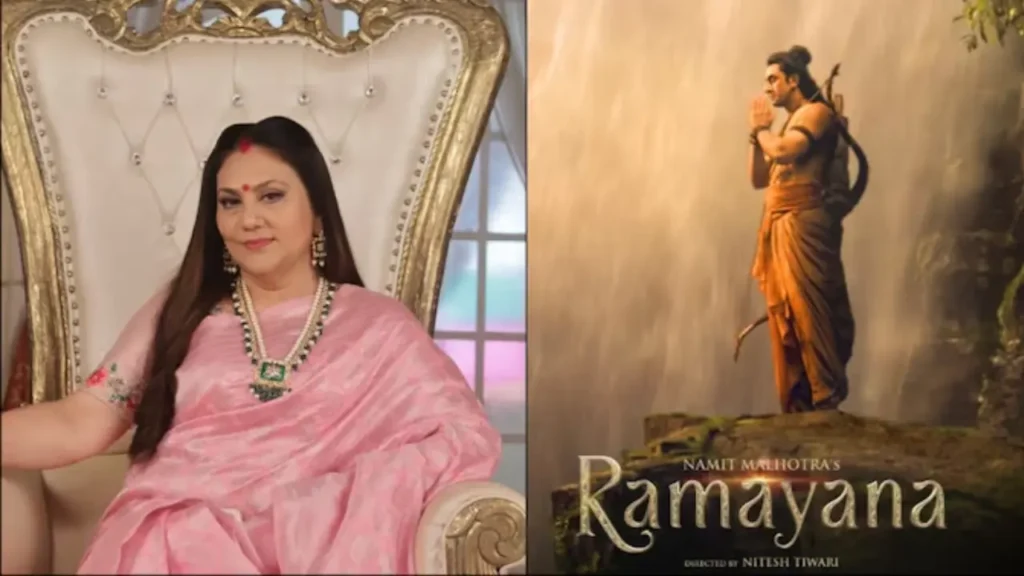
OG Sita aka Dipika Chikhlia changes tune on Ranbir Kapoor’s Ramayana after teaser
**Dipika Chikhlia Shifts Stance on Ranbir Kapoor Ramayana Vision**
The upcoming cinematic adaptation of the timeless epic Ramayana, spearheaded by director Nitesh Tiwari and featuring Ranbir Kapoor as Lord Ram, continues to capture significant public imagination. Adding a profound layer to this ongoing narrative, Dipika Chikhlia, whose portrayal of Sita in Ramanand Sagar’s iconic television series etched itself into the collective consciousness of a nation, has notably altered her initial perspective on the ambitious project. After viewing glimpses of the film’s early visuals, Chikhlia, once a voice of cautious observation regarding modern interpretations, now offers heartfelt commendation, describing the production as “very beautiful” and praising its immense scale. This shift is more than just a celebrity endorsement; it marks a significant cultural moment, as Omni 360 News observes.
For generations, the name Dipika Chikhlia has been inextricably linked with Sita, the revered goddess from the Hindu epic. Her performance in the late 1980s television series, which captivated millions and brought an entire country to a standstill, established a benchmark for devotion, grace, and cultural authenticity. Consequently, her views on any new portrayal of the Ramayana carry immense weight, often reflecting the sentiments of a public deeply protective of this cherished cultural heritage.
In the past, Chikhlia had expressed a measured skepticism concerning contemporary cinematic attempts to retell the sacred saga. Her reservations often stemmed from a concern that modern adaptations might sacrifice the spiritual essence and narrative integrity for spectacle or contemporary relevance. She had articulated the challenges inherent in recreating a narrative so deeply ingrained in the public psyche, emphasizing the need for reverence and meticulous attention to detail. These earlier statements were not criticisms but rather expressions of a profound respect for the source material and an understanding of the immense responsibility that comes with bringing such an epic to the screen. Her viewpoint resonated with many who felt a strong emotional connection to the traditional rendering of the story, making her an unofficial guardian of its legacy.
The new Ramayana project, helmed by Nitesh Tiwari, known for his sensitive storytelling in films like “Dangal,” has been generating considerable buzz, not least due to its star-studded cast including Ranbir Kapoor, Sai Pallavi, and Yash. While official teasers are yet to be widely released to the public, snippets, concept art, or early behind-the-scenes glimpses often circulate within industry circles, allowing certain prominent personalities access. It is after such an exposure that Chikhlia’s perspective took a noticeable turn.
Sources close to discussions indicate that Chikhlia was shown some preliminary visuals from the film. Her subsequent remarks, echoing through various local entertainment reports, signify a powerful validation. She reportedly found the initial glimpses profoundly impressive, specifically highlighting the “grand visuals” and the sheer “scale” of the production. Her declaration that the project appears “very beautiful” transcends mere aesthetic appreciation; it suggests an acknowledgment that Tiwari’s vision potentially marries grandeur with an appropriate sense of reverence, avoiding the pitfalls she might have previously feared.
What does this shift signify? For a project of such magnitude, an endorsement from a figure as iconic as Dipika Chikhlia is invaluable. It signals to a vast audience, particularly those who grew up with her portrayal, that the new adaptation might indeed be worthy of their attention and respect. Her initial concerns, now seemingly assuaged, lend credibility to the film’s approach. It suggests that the creators are not merely chasing commercial success but are also striving to honor the epic’s spiritual and cultural weight. Her changed stance effectively serves as a bridge, potentially easing public apprehension and fostering a more open reception for the film when it eventually hits the big screen.
This development underscores the delicate balance required when adapting a deeply revered narrative. Audiences, particularly in a culturally rich nation like India, expect not just entertainment but also a respectful engagement with stories that form the bedrock of their identity. The “Ramayana” is not merely a tale; it is a spiritual text, a moral guide, and a part of countless family traditions. Thus, any new interpretation faces intense scrutiny. Dipika Chikhlia’s journey from a cautious observer to an appreciative admirer highlights that Nitesh Tiwari’s team appears to be navigating this complex landscape with a vision that resonates even with the most iconic figures associated with the epic.
Key Takeaways:
- Dipika Chikhlia, the original Sita, initially harbored reservations about modern Ramayana adaptations.
- After viewing preliminary visuals of Nitesh Tiwari’s Ranbir Kapoor-starrer, her stance shifted significantly.
- Chikhlia now praises the project for its “grand visuals” and impressive “scale,” calling it “very beautiful.”
- Her endorsement is a crucial validation, potentially easing public apprehension and building anticipation for the film.
- The development underscores the importance of balancing spectacle with reverence when adapting cultural epics.
As production continues and more details emerge, Omni 360 News will be watching closely how this highly anticipated Ramayana adaptation unfolds. Dipika Chikhlia’s endorsement offers a powerful signal, suggesting that this new chapter in the epic’s long history might indeed be one that honors its past while captivating a new generation. The anticipation for witnessing this grand vision on the big screen has only intensified.