
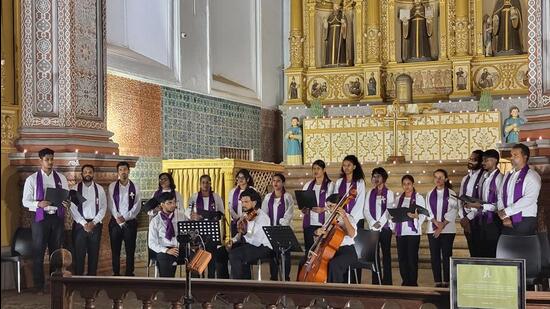
Centuries-old Renaissance sacred music echoes again in Goa churches| India News
Holy Week in Goa Echoes with Revived Ancient Motets
Goa, a land where history whispers through ancient cobblestones and the scent of the sea mingles with incense, is once again resonating with harmonies that span centuries. During this solemn period of Lent leading into Holy Week, churches across the vibrant state are experiencing a remarkable cultural and spiritual renaissance: the revival of centuries-old sacred motets. This initiative is carefully weaving Western classical compositions with the distinct tapestry of local traditions, offering a profound experience for both the faithful and cultural enthusiasts.
For generations, Goa has been a melting pot of cultures, its identity shaped by a rich blend of indigenous customs and influences from its colonial past. Among these legacies is a deep musical heritage, particularly in its churches. The motet, a form of polyphonic vocal music, meaning music with multiple independent vocal lines, originated in medieval Europe and flourished during the Renaissance. It arrived on Goan shores with European missionaries and settlers, becoming an integral part of church services for centuries. These intricate compositions, often performed without instrumental accompaniment, demand immense skill and devotion, their layered voices creating an ethereal soundscape designed to elevate spiritual contemplation.
However, like many ancient traditions, the practice of performing these complex motets gradually receded from common church practice over time, making way for simpler forms of devotional music. Yet, the seeds of this heritage lay dormant, preserved in dusty archives and the memories of a few dedicated scholars and musicians. Now, a concerted effort is breathing new life into these forgotten scores, transforming them from historical artifacts into living, breathing expressions of faith and culture.
At the heart of this revival lies institutions like the Rachol Seminary in South Goa, a historical bastion of theological and musical education. Here, dedicated priests and musicians have undertaken the painstaking work of unearthing, transcribing, and teaching these ancient compositions. Individuals such as Father Simon Diniz, a priest deeply committed to this cause, have become torchbearers, guiding new generations of choristers and musicians through the complexities of polyphonic singing. Their efforts are not merely an academic exercise but a vibrant re-engagement with a profound spiritual art form.
During Lent, and particularly as Holy Week approaches, the solemnity of the season provides a perfect backdrop for these sacred hymns. The motets, often Latin texts set to intricate melodies, are performed during liturgical services, enhancing the contemplative atmosphere of penance and reflection. They tell stories of sacrifice, redemption, and divine love, their timeless beauty transcending linguistic barriers and touching the hearts of listeners.
What makes this revival particularly compelling for Omni 360 News is its unique blend of the historical and the local. While the motets themselves are rooted in Western classical traditions, their performance within Goan churches, by local choirs, and for Goan congregations, infuses them with a distinct local flavour. The very act of Goan voices interpreting these European masterpieces creates a beautiful cultural dialogue. It’s about more than just singing notes; it’s about connecting with a shared heritage, appreciating the universal language of sacred music, and making it relevant for contemporary worshippers in Goa. This isn’t an isolated academic pursuit; it’s a community-driven spiritual and cultural reawakening.
The initiative extends beyond formal services. Special concerts and performances are also being organised, attracting not just devout parishioners but also music lovers and tourists interested in Goa’s rich cultural tapestry. These events serve as a platform to educate the wider public about this significant part of Goan heritage and to showcase the dedication and talent of the local musicians involved.
The impact of this revival stretches far beyond the church walls. It represents a vital act of cultural preservation, ensuring that a precious musical legacy is not lost to time but instead passed down to future generations. It fosters a deeper appreciation for the arts, promotes community engagement through choir participation, and adds another unique dimension to Goa’s identity as a place where ancient traditions continue to flourish in modern times. As the intricate melodies of these centuries-old motets fill the hallowed spaces of Goan churches this Holy Week, they remind everyone of the enduring power of music to connect us to our past, enrich our present, and inspire our future.
Key Takeaways:
* Goa is actively reviving centuries-old polyphonic motets, a form of Western sacred music.
* This revival is particularly prominent during the Lenten season and Holy Week, with performances in local churches.
* Institutions like Rachol Seminary and dedicated individuals are key to researching and teaching these historical compositions.
* The initiative seamlessly blends this ancient Western music with local Goan cultural traditions and community participation.
* It serves as a significant effort in cultural preservation, spiritual enrichment, and community engagement, offering a unique cultural experience for residents and visitors alike.





