
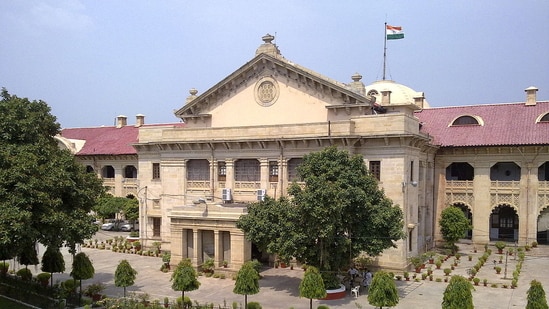
Allahabad HC seeks UP official's explanation for not mentioning 'Hon'ble' for Union minister in FIR| India News
Allahabad High Court Questions ‘Hon’ble’ Title Omission for Union Minister in UP FIR
The Allahabad High Court has recently put the Uttar Pradesh administration under sharp scrutiny, demanding a clear explanation for a significant procedural oversight. The court expressed strong displeasure over the omission of the honorific ‘Hon’ble’ (Honourable) when referring to a Union Minister in a First Information Report (FIR). This seemingly minor detail has sparked a broader conversation about the respect due to constitutional office bearers, even when they are subjects of a criminal complaint.
The incident unfolded during the hearing of a petition before a division bench comprising Justices Vivek Kumar Birla and Surendra Singh-I. The court was reviewing a case related to a Union Minister against whom an FIR had been registered. It was during this review that the judges noted the glaring absence of the customary ‘Hon’ble’ prefix preceding the minister’s name in the official document. This observation led to a direct and pointed order issued on March 7, requiring the Additional Chief Secretary (Home) of Uttar Pradesh to appear personally before the court on April 8. The senior state official is expected to provide a comprehensive explanation for this administrative lapse.
For many, the distinction between a ‘person’ and an ‘office’ can seem academic, but in legal and administrative contexts, it carries considerable weight. When an FIR is lodged against an individual holding a high constitutional post, the legal system is designed to maintain a certain decorum and uphold the sanctity of the office itself, irrespective of the allegations against the incumbent. The term ‘Hon’ble’ is not merely a formality; it signifies respect for the democratic institutions and the positions that serve the public.
Consider this from the perspective of a 12th-grade student trying to grasp the nuances of government and law. An FIR, or First Information Report, is the initial document that sets the criminal law into motion. It’s like the very first step the police take when they hear about a crime. Even if someone, especially a prominent figure like a Union Minister, is accused of something, the position they hold is separate from their personal actions. It’s like how you might respect the role of a school principal, even if you disagree with a decision they made. The court is essentially saying that while the law must take its course against any individual, the institution they represent must still be afforded due regard. This protocol ensures that the judicial process maintains its integrity and avoids any perception of undue disrespect towards a constitutional pillar of the nation.
Local news channels and regional legal commentators have frequently highlighted the importance of procedural correctness within the state’s administrative machinery. Such instances, where high courts intervene on matters of protocol, serve as crucial reminders to the bureaucracy about maintaining established standards. The Allahabad High Court’s directive sends a strong message across the Uttar Pradesh administration, emphasizing that official documentation, particularly in sensitive matters involving public functionaries, must adhere strictly to established norms and etiquette. It underscores the judiciary’s role in not just dispensing justice but also in upholding the dignity of democratic institutions.
The court’s expectation is that the Additional Chief Secretary (Home) will shed light on whether this omission was an oversight, a deliberate act, or a lack of clarity regarding guidelines. The response will be critical in determining the next steps. This case serves as a powerful reminder that while everyone is equal before the law, the specific procedures and courtesies extended to constitutional functionaries are vital for the smooth functioning of a democratic state. It’s about ensuring that the systems themselves remain respected, even as they scrutinize individual actions.
Such judicial interventions are not uncommon. Courts often act as guardians of both the letter and spirit of the law, which includes maintaining proper administrative conduct. The absence of an honorific, though seemingly minor, can be interpreted as a lapse in upholding the dignity of the office. This specific instance involving the Allahabad High Court and a Union Minister highlights a critical aspect of administrative accountability and the adherence to established legal and traditional courtesies within the government framework. It reinforces the principle that procedural correctness is not a mere formality but an integral part of maintaining respect for public offices.
Omni 360 News continues to track developments in this significant legal matter, providing detailed updates as the situation progresses. The court’s insistence on an explanation from a high-ranking official demonstrates its commitment to ensuring meticulousness in every aspect of legal proceedings and administrative documentation. This incident will likely lead to reinforced guidelines within the Uttar Pradesh police and administrative departments regarding the proper addressing of constitutional office bearers in official records, even under adverse circumstances.
Key Takeaways:
- The Allahabad High Court has ordered Uttar Pradesh’s Additional Chief Secretary (Home) to explain why the honorific ‘Hon’ble’ was not used for a Union Minister in an FIR.
- This directive highlights the judiciary’s emphasis on maintaining respect for constitutional offices, separate from the individual holding them.
- The court views this omission as a significant procedural lapse that requires a senior official’s direct explanation.
- The incident underscores the importance of strict adherence to administrative protocols and courtesies in official documentation within the state’s legal and executive apparatus.
- The case serves as a reminder to all government departments about the need for meticulousness and respect in handling matters involving public functionaries, reinforcing administrative accountability.





