
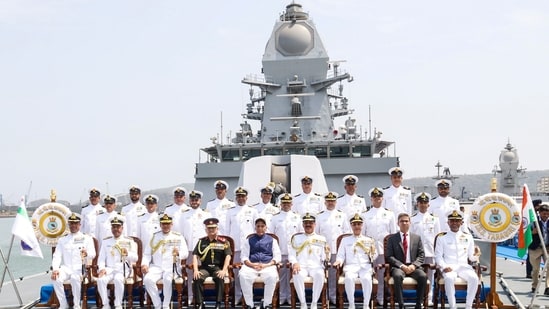
Indian Navy gets two big additions: Nuclear-ready submarine Aridhaman, warship Taragiri
INS Taragiri India’s Naval Might Forged by National Ingenuity Key Takeaways
The Indian Navy recently welcomed a formidable new addition to its fleet, the stealth frigate INS Taragiri. Commissioned by Defence Minister Rajnath Singh, this vessel stands as a proud testament to India’s burgeoning capabilities in indigenous defense manufacturing. Far from being just another warship, INS Taragiri embodies a significant leap towards national self-reliance, with an impressive indigenous content exceeding 75%. This remarkable achievement is the result of collaborative efforts from over 200 Indian enterprises, highlighting the robust ecosystem growing within the nation’s industrial landscape. This development, covered widely by local news outlets, paints a vivid picture of a nation building its strategic future, piece by meticulously crafted piece. Omni 360 News brings you the details of this pivotal milestone.
For those curious about the intricacies of naval power, imagine a modern-day fortress on water, designed to be incredibly hard for enemy radars to detect. That is a stealth frigate. INS Taragiri, the third ship of the Project 17A Nilgiri-class frigates, is precisely such a vessel. Built at the prestigious Mazagon Dock Shipbuilders Limited (MDL) in Mumbai, it represents not just advanced naval engineering but also a powerful symbol of the ‘Make in India’ initiative. Its primary roles will include safeguarding India’s vast maritime interests, conducting anti-submarine warfare, and protecting critical sea lanes.
The heart of INS Taragiri’s story lies in its indigenization. What does ‘indigenous content’ mean in practical terms? It means that more than three-quarters of the ship’s components, from its specialized steel to its propulsion system, sophisticated sensors, and combat management systems, have been designed and manufactured right here in India. This isn’t merely about assembling parts; it’s about deep technological mastery and engineering prowess. Think of everything from complex electronic circuits developed by Indian tech firms to high-grade steel produced in Indian mills, all contributing to the vessel’s strength and operational capabilities. This level of self-reliance significantly reduces dependence on foreign suppliers, ensuring strategic autonomy and cost-effectiveness in the long run.
The construction of INS Taragiri has been a massive collaborative undertaking, involving a network of over 200 Indian enterprises. These aren’t just large public sector undertakings; many are small and medium-sized enterprises (MSMEs) spread across the country. Local news reports have often highlighted how these smaller firms, specializing in everything from specialized valves and pumps to complex wiring and fabrication, have found new opportunities, driving local employment and skill development. This ripple effect extends across various states, fueling economic growth and fostering a culture of innovation. For instance, a small engineering unit in Pune might have supplied a crucial hydraulic component, while a precision manufacturing firm in Bengaluru contributed to its advanced sensor systems. This collective effort underscores the depth of India’s industrial base and its capacity to deliver cutting-edge defense solutions.
Defence Minister Rajnath Singh, while commissioning INS Taragiri (alongside the nuclear-ready submarine INS Aridhaman), underscored the significance of such achievements. He reiterated the government’s steadfast commitment to enhancing India’s defense capabilities through indigenous manufacturing, emphasizing how these efforts not only strengthen national security but also contribute to economic prosperity. His statements, widely reported, echoed the sentiment of national pride associated with seeing sophisticated warships being built entirely within the nation’s borders. These vessels, according to the Minister, are not just symbols of military might but also reflections of India’s growing confidence and technological advancement on the global stage.
The successful integration of such a high percentage of indigenous content in INS Taragiri holds immense strategic importance. It translates into faster maintenance and repairs, as spare parts are readily available within the country. It also protects India from potential geopolitical pressures that might affect the supply of crucial components from abroad. Moreover, this experience builds invaluable knowledge and expertise within the Indian scientific and engineering community, paving the way for even more advanced and complex projects in the future. It’s about building a sustainable defense ecosystem, moving beyond mere imports to becoming a net exporter of defense technologies.
Looking ahead, INS Taragiri is a blueprint for the future of Indian naval shipbuilding. It signals a robust trajectory for projects under the ‘Aatmanirbhar Bharat’ (Self-Reliant India) initiative, showcasing that India is not only capable of designing and building world-class warships but also of innovating and leading in naval technology. The commitment shown by the Indian Navy, Mazagon Dock, and the myriad of Indian industries involved ensures a continuous march towards a truly self-reliant and formidable maritime force.
Key Takeaways:
* Indigenous Dominance: INS Taragiri features over 75% indigenous content, manufactured within India.
* Economic Catalyst: More than 200 Indian enterprises, including numerous MSMEs, contributed to its construction, boosting local economies and employment.
* Strategic Autonomy: The high level of indigenization significantly enhances India’s self-reliance in defense and reduces foreign dependency.
* National Pride: Defence Minister Rajnath Singh commissioned the vessel, highlighting India’s growing naval power and technological prowess.
* Future Blueprint: Taragiri serves as a model for future ‘Make in India’ defense projects, strengthening the nation’s shipbuilding capabilities.
This monumental achievement in indigenous naval construction stands as a beacon of India’s engineering capability and strategic vision. It’s a story of national resolve, intricate engineering, and the collective efforts of countless individuals and enterprises, all working towards a stronger, more self-reliant India on the global maritime stage.





