
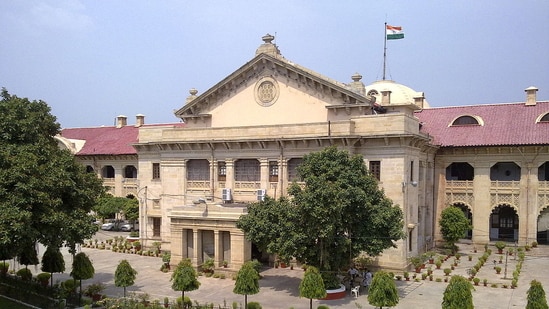
Allahabad HC seeks UP official's explanation for not mentioning 'Hon'ble' for Union minister in FIR| India News
Allahabad High Court Seeks Explanation for Omitted Honorific in Minister’s FIR
The corridors of justice often echo with significant pronouncements, and a recent directive from the Allahabad High Court has garnered attention for its focus on a seemingly subtle, yet crucial, aspect of official documentation. The High Court has issued an order to Uttar Pradesh’s Additional Chief Secretary, Home, demanding a clear explanation regarding the omission of the honorific ‘Hon’ble’ when referring to a Union Minister in an First Information Report (FIR). This judicial inquiry, reported by Omni 360 News, underscores the judiciary’s meticulous oversight of administrative processes and adherence to protocol within the state’s legal framework.
The Court’s Specific Inquiry
In a matter concerning the State of Uttar Pradesh, a division bench of the Allahabad High Court, comprising Justice Rajan Roy and Justice Surendra Singh-I, has sought clarity from the state’s senior-most home department official. The central point of contention is why the word ‘Hon’ble’ was deliberately left out from an FIR that named a Union Minister of State for Home Affairs. This directive came during the hearing of a writ petition, signaling the court’s intent to uphold the dignity and proper decorum associated with high constitutional offices, even in the context of a criminal complaint. The bench has scheduled the next hearing for April 22, 2024, expecting a comprehensive response from the Additional Chief Secretary.
Context of the FIR and Its Significance
While the specific details of the FIR in question were not the primary focus of the court’s current order, it is understood to be linked to the grave incidents of violence that unfolded in Lakhimpur Kheri in October 2021. An FIR, or First Information Report, is the document that sets the criminal law in motion, recording the initial complaint and details of an alleged offense. In India, it is standard practice, born out of courtesy and protocol, to refer to high-ranking constitutional functionaries, including Union Ministers, with appropriate honorifics like ‘Hon’ble’ in official correspondence and documents. The High Court’s interest in this seemingly minor detail highlights a deeper concern about the meticulousness and adherence to established administrative guidelines by the authorities.
Protocol and Administrative Diligence
The judiciary often serves as the guardian of established procedures and principles. The use of honorifics for individuals holding public office is not merely a matter of politeness; it reflects a respect for the institution they represent. Whether a person holds a ministerial portfolio, a judicial position, or serves as a parliamentarian, the designation carries with it a certain gravitas and expectation of decorum in official communication. An FIR, being a critical legal document that can have far-reaching implications, is subject to scrutiny for accuracy, completeness, and adherence to established protocols. The Allahabad High Court’s directive sends a clear message that administrative negligence, even in seemingly small matters of nomenclature, will not go unnoticed. It reinforces the importance of diligence and meticulousness from state officials responsible for drafting and lodging such vital documents.
Why Such Scrutiny on a Single Word?
One might wonder why a high court would focus on the presence or absence of a single word in an FIR. However, the judiciary’s role extends beyond adjudicating major disputes; it also ensures that the machinery of the state operates with precision and within defined boundaries. The omission of an honorific, if found to be intentional or a result of systemic oversight, could raise questions about the respect accorded to public offices and the professionalism of the drafting authority. It could also suggest a breakdown in the standardized operating procedures that govern the preparation of legal documents. By seeking an explanation, the High Court aims to understand the circumstances behind the omission and reinforce the importance of maintaining proper administrative etiquette and respect for constitutional functionaries. This oversight ensures that official processes are conducted without prejudice or impropriety.
Implications for State Administration
This judicial order from the Allahabad High Court carries significant implications for the Uttar Pradesh state administration. It serves as a reminder to all departments, particularly those involved in law enforcement and legal documentation, to exercise utmost care and adhere strictly to established protocols when preparing official documents. The Additional Chief Secretary, Home, is a pivotal figure in the state’s administrative hierarchy, and their response will likely set a precedent for how such matters are addressed in the future. The outcome of this inquiry could lead to a review of internal guidelines for drafting FIRs and other legal documents, ensuring that similar oversights are prevented. It underscores the judiciary’s commitment to accountability and reinforces that even seemingly minor deviations from established norms can attract judicial attention.
Key Takeaways
* The Allahabad High Court has ordered Uttar Pradesh’s Additional Chief Secretary, Home, to explain the omission of ‘Hon’ble’ from an FIR against a Union Minister.
* The directive highlights the judiciary’s role in ensuring administrative protocol and diligence in official documentation.
* The use of honorifics for high-ranking officials reflects respect for the institution and is a standard administrative practice.
* The court’s scrutiny, though seemingly about a single word, signals its commitment to upholding precision and adherence to established norms within the state machinery.
* The case is scheduled for further hearing on April 22, 2024, with the state administration expected to provide a detailed explanation.
As Omni 360 News continues to follow this development, the Allahabad High Court’s directive stands as a strong testament to the judiciary’s vigilance in upholding administrative propriety and the dignity of public office. It is a nuanced reminder that every word in an official document holds weight, reflecting the system’s respect for established norms and the individuals it governs.





