
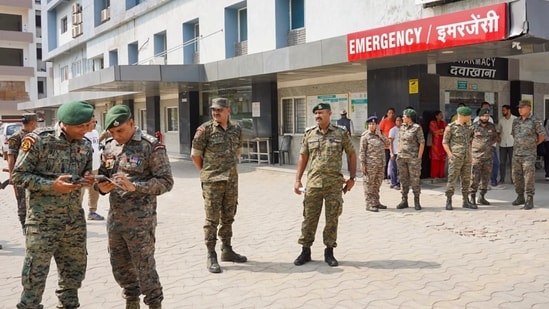
Jailed Maoist leader Prashant Bose, also known as ‘Kishan Da’, dies in Ranchi| India News
Prashant Bose Kishan Da Architect of Attacks Across Eastern India
The passing of senior Maoist leader Prashant Bose, widely known by his alias Kishan Da, in Ranchi marks the end of an impactful and violent chapter in India’s ongoing struggle against left-wing extremism. Bose, a figure whose strategic mind was allegedly behind more than 100 incidents of attack and arson across states including Jharkhand, Bihar, West Bengal, and Odisha, died while in custody, bringing a close to his long and controversial career. His demise, confirmed by sources in the regional prison administration and local intelligence, signals a significant moment for security forces and the communities he influenced.
Prashant Bose’s journey into the heart of the Maoist movement began decades ago. Hailing from Jamshedpur, Jharkhand, he quickly rose through the ranks, becoming a key ideologue and strategist within the Communist Party of India (Maoist) or CPI (Maoist). His intellect and organizational skills propelled him to the highest echelons of the outlawed outfit, eventually securing him a coveted position in the politburo and central committee. Bose was not merely a foot soldier; he was considered the principal brain behind the movement’s strategic planning, often dictating the flow of the “people’s war” in the crucial eastern corridor of India. His influence was particularly pronounced in the Bihar-Jharkhand special area committee, which he once led, and extended significantly into the forest belts of West Bengal and Odisha.
The Shadow of a Strategist Decades of Destabilization
For many years, Bose operated with a stealth that made him one of the most elusive and feared figures in the Naxalite movement. The incidents attributed to his masterminding spanned a wide geographical area and demonstrated a chilling consistency in their objective: destabilizing state authority, disrupting development, and entrenching the Maoist ideology. Local news reports from Jharkhand’s rural districts, Bihar’s sensitive southern regions, the forested areas of West Bengal’s Jangalmahal, and Odisha’s tribal heartlands frequently highlighted attacks on railway infrastructure, police posts, government buildings, and telecommunication towers. These acts of arson and violence, often accompanied by ambushes on security personnel, carried the signature of a calculated strategy designed to instill fear and assert Maoist dominance.
His leadership was instrumental in shaping the CPI (Maoist)’s approach to prolonged insurgency. Bose advocated for deep integration with local populations, particularly tribal communities, leveraging grievances related to land, displacement, and resource exploitation. Under his guidance, the movement focused on expanding its influence in remote, inaccessible areas, transforming them into strongholds where state presence was minimal. This involved not just armed actions but also a concerted effort in propaganda and recruitment, drawing in disillusioned youth and those feeling marginalized. The sheer number of incidents—over a hundred—underscores the breadth and longevity of his operational command, leaving a lasting impact on the socio-political landscape of these states. News outlets like Prabhat Khabar and local editions of Hindustan consistently documented the challenges faced by authorities in countering the elaborate networks he helped build.
A Leader’s Influence and Methods
Bose’s methods went beyond orchestrating physical attacks. He was a proponent of an ideological warfare, emphasizing political education and the establishment of parallel governance structures in areas under Maoist control. His writings and directives, often intercepted by intelligence agencies, revealed a sophisticated understanding of guerrilla warfare and revolutionary theory. He was crucial in maintaining the party’s ideological coherence and ensuring that tactical actions aligned with the broader strategic goal of protracted people’s war. His organizational acumen extended to managing recruitment drives, collecting funds through various means including extortion, and setting up an intricate intelligence network that often outmaneuvered security forces for extended periods.
Capture and Confinement
The long run of Prashant Bose came to an end in November 2021 when he, along with his wife Sheela Marandi—also a senior Maoist leader—was apprehended in a joint operation by Jharkhand and Odisha police forces in Seraikela-Kharsawan district of Jharkhand. His capture was hailed as a significant victory against left-wing extremism, removing one of the most seasoned and influential strategists from the battlefield. Following his arrest, Bose’s health, already fragile due to advanced age and ailments, began to deteriorate significantly during his imprisonment in Ranchi. Despite medical attention, his condition worsened, eventually leading to his death.
The End of an Era Implications for the Movement
Prashant Bose’s death leaves a considerable void in the leadership of the CPI (Maoist). While the movement has faced numerous setbacks over the years, the loss of a figure with Bose’s strategic depth and experience is undoubtedly a major blow. It removes a crucial intellectual and organizational pillar, potentially impacting the group’s ability to plan large-scale operations and maintain its ideological moorings. Security agencies believe that such leadership losses contribute to the gradual weakening of the movement, though the underlying socio-economic issues that fuel Naxalism persist. Local authorities across the affected states are watching closely for any ripple effects or power struggles within the Maoist ranks that might follow this significant demise.
Key Takeaways
* Prashant Bose, also known as Kishan Da, was a top Maoist leader and central committee member.
* He was allegedly the mastermind behind over 100 incidents of attack and arson in Jharkhand, Bihar, West Bengal, and Odisha.
* His death in custody marks the end of a long and impactful career in left-wing extremism.
* Bose was a key ideologue and strategist, instrumental in shaping the movement’s operational methods and ideological direction.
* His capture in 2021 was a major blow to the CPI (Maoist), and his death further weakens its experienced leadership.
The passing of Prashant Bose closes a chapter in India’s complex internal security narrative. While the immediate threat posed by his strategic guidance diminishes, the broader challenge of Naxalism, rooted in issues of development and governance, continues to demand sustained attention and comprehensive solutions. Omni 360 News will continue to bring detailed reports on these critical developments affecting regional stability and national security.





