
Jailed Maoist leader Prashant Bose, also known as ‘Kishan Da’, dies in Ranchi| India News
Prashant Bose Mastermind Allegations Unveiled A Deep Dive into Maoist Operations
The passing of veteran Maoist leader Prashant Bose, known widely by his alias Kishan Da, at the age of 84 in Ranchi, marks a significant moment in the long-standing battle against left-wing extremism in India. While his death closes a chapter on a life dedicated to the insurgency, it also casts a stark light on the extensive web of violence and disruption authorities allege he orchestrated. Bose, a pivotal figure within the banned Communist Party of India Maoist CPI Maoist, stands accused by security forces of being the mastermind behind over a hundred incidents of attack and arson across several states, including Jharkhand, Bihar, West Bengal, and Odisha.
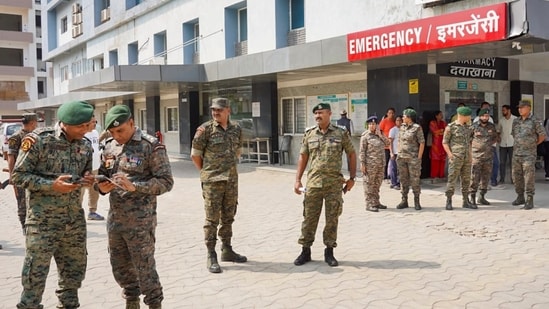
Kishan Da’s demise, following a prolonged illness including cancer and heart complications, at the Rajendra Institute of Medical Sciences RIMS in Ranchi, brings an end to a career spanning decades at the forefront of the Maoist movement. His journey began in West Bengal, leading him to rise through the ranks to become one of the most influential ideologues and strategic planners within the CPI Maoist’s Central Committee. For years, he remained a shadowy figure, operating from the dense forests and remote terrains, directing operations that challenged state authority and often resulted in tragic loss of life and property.
The sheer scale of the alleged orchestrations attributed to Bose is staggering. Law enforcement agencies in the affected states have consistently pointed to his strategic acumen in planning and executing coordinated attacks. These were not random acts of violence but often calculated moves aimed at asserting dominance, crippling infrastructure, and spreading fear among local populations and security personnel. From ambushes on patrolling parties to the torching of construction equipment and government buildings, the incidents bore the hallmark of a meticulous planner.
In Jharkhand, the state where he spent much of his operational years and where he was eventually captured, Bose’s influence was particularly pronounced. The rugged terrain and the presence of tribal populations, often feeling marginalized, provided fertile ground for the Maoist ideology he espoused. Incidents of landmine blasts, targeted killings of informers, and clashes with security forces were tragically common, with authorities frequently linking these to directives emanating from top leaders like Kishan Da. Local news archives from Hazaribagh, Gumla, and Latehar districts often chronicle the immediate aftermath of such violence, revealing the deep impact on community life and development efforts.
Across the border in Bihar, especially in the southern districts bordering Jharkhand, Bose’s strategic directives allegedly contributed to a prolonged period of unrest. Gaya, Aurangabad, and Jamui districts, known for their historical Maoist presence, witnessed numerous acts of sabotage and extortion. Local police reports and judicial proceedings have, over the years, accumulated evidence suggesting Bose’s command and control over area committees responsible for these disruptive activities. These incidents often targeted railway tracks, mobile towers, and polling booths, aiming to disrupt civil administration and project the power of the insurgent group.
West Bengal, his home state, was where Bose first honed his revolutionary ideals. While the intensity of Maoist activity has waned significantly in recent years compared to the peak, especially in areas like Jangalmahal, his early influence and the networks he helped establish were crucial for the movement’s initial spread. Incidents of political violence and attempts to rally support among disenfranchised communities in parts of Purulia and Bankura were often attributed to the ideological guidance provided by leaders of his stature. Local Bengali news outlets have frequently covered the ebb and flow of this struggle, referencing the strategies of senior leaders.
Further east, in Odisha, particularly in the Malkangiri and Koraput districts, Kishan Da’s alleged role in orchestrating attacks on security forces and government assets was also significant. The remote and forested terrain, coupled with socio-economic disparities, made these regions vulnerable to insurgent penetration. Authorities in Odisha have, in various press briefings and charge sheets, detailed specific instances of violence, including encounters and targeted assassinations, that they believe were sanctioned or directly ordered by the CPI Maoist Central Committee, where Bose held considerable sway.
His arrest in September 2021, along with his wife Sheela Marandi, a fellow senior Maoist operative, near Seraikela in Jharkhand, was hailed as a major breakthrough for security forces. It was the culmination of years of intelligence gathering and relentless operations. At the time of his capture, Bose carried a bounty of one crore rupees from the Jharkhand government and a bounty of 25 lakh rupees from the Chhattisgarh government, underscoring his importance to the Maoist hierarchy and the threat he posed. His deteriorating health in custody eventually led to his admission to RIMS, where he passed away.
For Omni 360 News, understanding the life and alleged actions of figures like Prashant Bose is critical to grasp the multifaceted challenges of internal security. His story is not just about a single individual but about the complex interplay of ideology, poverty, governance, and rebellion that fuels such movements. While his death may be seen as a symbolic victory for the state, the underlying issues that Maoism exploits continue to demand attention. The extensive network of violent incidents he is alleged to have directed highlights the destructive capability of entrenched insurgencies and the long shadow they cast over regional development and peace.
Key Takeaways:
- Prashant Bose alias Kishan Da, a key CPI Maoist Central Committee member, died at 84 in Ranchi.
- Authorities allege Bose masterminded over 100 incidents of attacks and arson.
- His operations reportedly spanned Jharkhand, Bihar, West Bengal, and Odisha.
- Incidents included ambushes, landmine blasts, and destruction of property.
- Bose was a significant ideologue and strategist for the Maoist movement.
- His arrest in 2021 was a major success for anti-insurgency operations.
- His passing marks a significant moment in the struggle against left-wing extremism.
The legacy of Prashant Bose is deeply intertwined with the violence and disruption attributed to the Maoist movement across India’s Red Corridor. His alleged role as a mastermind in over 100 incidents across multiple states paints a grim picture of the challenges faced by law enforcement and the communities caught in the crossfire. As the nation continues its efforts to bring peace and development to these regions, understanding the strategic minds behind the insurgency remains a crucial task for analysts and policymakers alike.





