
Delhi earthquake tremors in 5 points: Magnitude, epicentre, impact| India News
Earthquake Strikes Hindu Kush, Eight Deaths Reported in Afghanistan Amid Regional Tremors
An earthquake centered in Afghanistan’s rugged Hindu Kush region recently sent strong tremors across large parts of South Asia, reaching as far as India and Pakistan. The powerful seismic event tragically claimed eight lives in Afghanistan, while prompting widespread panic and evacuations in neighboring countries. Omni 360 News brings you the details of this significant natural calamity.
The United States Geological Survey (USGS) reported the earthquake at a magnitude of 6.2. Its epicenter was located in Afghanistan’s Hindu Kush mountains, a seismically active zone. Crucially, the quake occurred at a depth of approximately 180 kilometers. This deep origin helped distribute the energy widely, causing tremors over a vast geographical area, but also potentially reducing the intensity of shaking at the immediate surface compared to a shallower quake of similar magnitude.
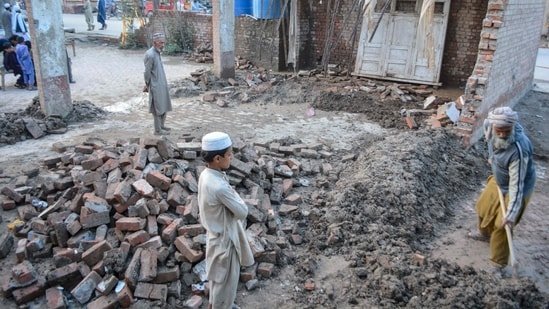
The tremors were felt distinctly on the evening of March 22, around 11:20 PM Indian Standard Time. In Afghanistan, where the quake originated, the impact was most severe. Local disaster management officials confirmed the tragic loss of eight lives, primarily in the Badakhshan province and other northern regions. Reports also indicated several injuries and some damage to structures in the immediate vicinity of the epicenter. Rescue and assessment efforts are ongoing in the affected Afghan communities.
Across the border in Pakistan, residents in major cities including Islamabad, Lahore, and Peshawar experienced significant shaking. Eyewitness accounts from various Pakistani cities described people rushing out of homes and offices into open spaces as buildings swayed for several seconds. Authorities in Pakistan are assessing any potential damage, though initial reports did not indicate widespread destruction or major casualties.
Similarly, in India, particularly the northern regions, the earthquake caused widespread concern. Delhi-NCR, Jammu and Kashmir, Himachal Pradesh, and Punjab felt the tremors. Many residents in multi-story buildings reported feeling dizzy or seeing objects move, prompting immediate evacuations. Local news outlets carried reports of frightened citizens gathering outdoors, waiting for the tremors to subside before returning indoors. Fortunately, no significant damage or injuries were reported from India.
This region of the world, specifically the Hindu Kush range, sits atop the collision zone of the Indian and Eurasian tectonic plates. This geological interaction constantly builds up stress, which is periodically released in the form of earthquakes. Understanding this geological context helps explain why such seismic events are a regular occurrence here. While this particular earthquake was deep, its magnitude was sufficient to impact a wide area.
Government agencies and disaster response teams in all affected nations remain vigilant, advising citizens on earthquake safety protocols. This includes knowing how to “Drop, Cover, and Hold On” during an earthquake, and having emergency kits ready. The swift response of communities seeking safety highlights a growing awareness of natural disaster preparedness.
Key Takeaways:
* A 6.2 magnitude earthquake struck the Hindu Kush region of Afghanistan.
* Eight fatalities were reported in Afghanistan, with several injuries.
* Strong tremors were felt across India (Delhi-NCR, North India) and Pakistan (Islamabad, Lahore, Peshawar).
* The earthquake’s deep origin (180 km) contributed to its widespread reach.
* The region is seismically active due to tectonic plate movement.
* No significant damage or casualties were reported in India or Pakistan.





