
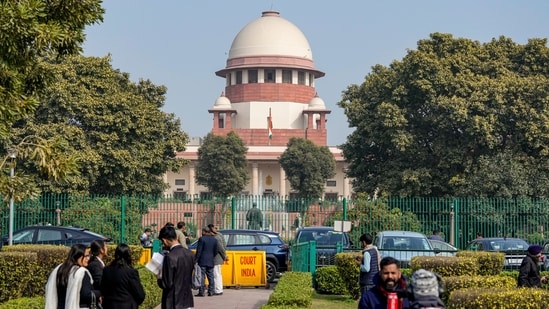
SC restores bank manager’s dismissal, says higher post means higher accountability| India News
Top Court Restores Bank Manager Dismissal Emphasizing Senior Role Responsibility
A significant pronouncement from the nation’s highest judicial authority recently reiterated a fundamental principle of professional conduct: the higher the position, the greater the accountability. In a decision that has resonated across corporate and public sectors, the Supreme Court of India set aside an earlier Delhi High Court order, which had softened the punishment of a bank manager from outright dismissal to compulsory retirement. This ruling underscores the judiciary’s firm stance on maintaining integrity and trust in positions of significant responsibility.
The case at its core involved a bank manager who faced disciplinary proceedings for alleged misconduct. The specific details, widely reported across legal circles and national news outlets, pointed to actions deemed unbecoming of an individual holding a position of trust and financial oversight. Following an internal inquiry, the bank had imposed the harshest penalty: dismissal from service. This meant the manager would lose all post-retirement benefits and effectively end their career with the institution.
However, the Delhi High Court, in its review, had taken a more lenient approach. It intervened in the disciplinary action, modifying the penalty from dismissal to compulsory retirement. This modification, while still a severe consequence, would have allowed the manager to retain some retirement benefits, offering a degree of relief. The High Court’s reasoning often revolves around the proportionality of punishment to the offense, sometimes considering factors like the individual’s past record or mitigating circumstances.
Supreme Court’s Unwavering Stand on Accountability
The bank, however, challenged the High Court’s decision before the Supreme Court. The apex court carefully examined the facts of the case and the legal principles involved. Its verdict was clear and unequivocal: the High Court had overstepped its bounds by substituting the punishment determined by the disciplinary authority. The Supreme Court emphasized that judicial review in disciplinary matters is primarily concerned with the legality and procedural fairness of the inquiry, not with re-evaluating the quantum of punishment itself, especially when the punishment is not shockingly disproportionate.
A key pillar of the Supreme Court’s judgment was the principle that a higher post inherently demands a higher degree of accountability. For a 12th-grade student understanding this, think of it like this: a class monitor has more responsibility than a regular student. If the monitor misbehaves, the consequences might be more serious because they are expected to set an example and manage the class. Similarly, a bank manager holds a position of immense trust, managing public money and representing the institution’s integrity. Any lapse in conduct by such an individual can have far-reaching implications, not just for the bank, but for the public’s confidence in the financial system.
The Supreme Court highlighted that individuals in managerial positions are entrusted with significant power and authority. This trust comes with a corresponding expectation of impeccable conduct and strict adherence to rules. When that trust is breached, especially through acts of misconduct, the disciplinary authority—in this case, the bank—is within its rights to impose severe penalties, including dismissal. The court reasoned that reducing such a penalty could undermine the very fabric of discipline and accountability within organizations.
Implications for the Workforce and Employers
This judgment sends a strong message across all sectors. For employees, particularly those in leadership or sensitive roles, it serves as a stark reminder that professional misconduct at higher echelons will not be taken lightly. The expectation is for a higher standard of ethics and diligence. It reinforces the idea that an elevated position does not just bring privileges, but also greater scrutiny and more severe consequences for dereliction of duty.
For employers, especially public sector undertakings and financial institutions, the ruling offers a clear validation of their authority to impose appropriate disciplinary actions. It reassures them that courts will generally defer to the wisdom of internal disciplinary bodies, provided the inquiry was fair and followed due process. This balance is crucial for maintaining order, efficiency, and integrity within large organizations.
Understanding Legal Concepts
To put this in simpler terms for students:
* Dismissal from Service: This is like being fired from a job with no benefits or future prospects from that employer. It’s a complete termination.
* Compulsory Retirement: This is like being told to retire early, even if you don’t want to. You still get your pension and other retirement benefits you’ve earned, but your employment ends.
* Apex Court: This refers to the Supreme Court, the highest court in the country whose decisions are final and binding.
* High Court: These are the principal civil courts of original jurisdiction in each state or union territory, below the Supreme Court.
* Judicial Review: This is the power of courts to examine laws, decisions, or actions of the government or other bodies (like an employer’s disciplinary committee) to ensure they are legal and fair. The Supreme Court said the Delhi High Court overstepped its judicial review powers by changing the punishment directly, instead of just checking if the punishment was legally decided.
Key Takeaways for Citizens and Professionals
This Supreme Court verdict, reported by Omni 360 News and other reputable media, solidifies several crucial points:
1. Enhanced Accountability for Senior Roles: Individuals in leadership and managerial positions bear a heavier burden of responsibility, and their actions are held to a higher standard.
2. Judicial Restraint in Disciplinary Matters: Courts will generally not interfere with the quantum of punishment imposed by an employer’s disciplinary authority, as long as the process was fair and the punishment isn’t grossly unfair.
3. Preserving Institutional Integrity: The judgment protects the ability of organizations to enforce discipline and maintain public trust, especially in sensitive sectors like banking.
4. Consequences of Misconduct: Employees, particularly in positions of trust, must understand that misconduct can lead to severe career-ending repercussions.
In conclusion, the Supreme Court’s decision to restore the dismissal of the bank manager serves as a vital reminder of the unwavering commitment to accountability, especially within higher echelons of professional life. It reinforces the principle that responsibility escalates with authority, ensuring that trust placed in senior personnel is met with the highest standards of integrity and conduct.





