
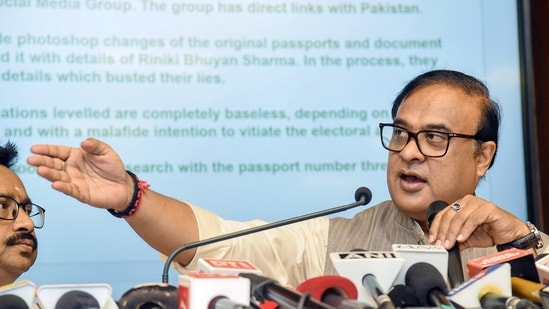
Riniki Bhuyan passport row: What rules say on dual citizenship, multiple passports in India| India News
India’s Single Citizenship Law What It Means for Passports
In a world increasingly connected, where individuals might live, work, and even be born in different countries, the concept of citizenship and its accompanying travel documents often sparks questions. For Indian citizens, the rules are clear-cut and rooted in a foundational principle: India adheres strictly to a policy of single citizenship. This means that a person cannot legally hold both an Indian passport and a passport from any other country simultaneously. This fundamental aspect of Indian law, frequently highlighted in various local news reports and government advisories, underscores the nation’s stance on national allegiance.
The core of this policy is enshrined in The Citizenship Act, 1955. This act dictates that an Indian citizen who acquires citizenship of a foreign country automatically ceases to be a citizen of India. Consequently, holding an Indian passport becomes invalid the moment one pledges allegiance to another nation. This isn’t just a bureaucratic formality; it’s a legal cornerstone designed to prevent potential conflicts of loyalty and ensure singular commitment to the Indian state.
The Legal Framework Explained
Imagine a situation where a young Indian student moves abroad for higher studies, eventually settles there, and decides to become a citizen of that new country. The moment they complete the naturalization process and officially become a citizen of, say, the United States, Canada, or the United Kingdom, their Indian citizenship ceases to exist. This is not a choice or a lengthy process they need to initiate for their Indian citizenship to end; it happens automatically by operation of law.
Upon acquiring foreign citizenship, the individual is legally bound to surrender their Indian passport to the nearest Indian embassy or consulate. This is a crucial step. Failing to surrender the Indian passport can lead to penalties, including fines and potential difficulties in future travel to India or obtaining an Overseas Citizen of India (OCI) card. Local reports from various regions in India, including those focused on diaspora communities, consistently remind citizens of this obligation. These reports often feature advisories from the Ministry of External Affairs, emphasizing the importance of timely surrender.
Why Single Citizenship?
The policy of single citizenship dates back to the very formation of the Indian republic. Leaders at the time believed that a unified nation required its citizens to hold singular allegiance. This approach contrasts sharply with countries that permit dual citizenship, where individuals can legally hold passports from two or more nations. For India, the emphasis remains on a clear, unambiguous national identity.
This principle extends beyond simply holding two passports. It means that an individual cannot enjoy the rights and privileges of Indian citizenship – such as voting, holding public office, or owning agricultural land – while simultaneously being a citizen of another country. The legal system views these two statuses as mutually exclusive.
Navigating for Overseas Indians The OCI Card
While dual citizenship is not an option, India does provide an alternative for persons of Indian origin who have given up their Indian citizenship: the Overseas Citizen of India (OCI) card. The OCI card is not a form of dual citizenship. Instead, it offers certain lifelong benefits, including multiple-entry, multi-purpose lifelong visas for visiting India, exemption from reporting to police authorities for any length of stay in India, and parity with Non-Resident Indians (NRIs) in financial, economic, and educational fields, except for the acquisition of agricultural or plantation properties.
It is crucial to understand that an OCI cardholder is still a foreign citizen and does not possess an Indian passport. They cannot vote, hold Indian government jobs, or enjoy other rights specifically reserved for Indian citizens. The OCI scheme is a pragmatic approach to maintaining ties with the vast Indian diaspora while upholding the single citizenship principle.
Recent discussions, as reported by various local media outlets covering community affairs, sometimes involve confusion between OCI status and dual citizenship. It’s vital to clarify that an OCI card does not grant Indian citizenship or the right to hold an Indian passport. It is a separate immigration status for foreign citizens of Indian origin.
Why This Matters Understanding the Implications
For many, especially those with family ties across borders, understanding India’s citizenship laws is not merely academic; it has practical, real-world implications. Any misunderstanding or oversight can lead to significant legal complications, travel disruptions, and financial penalties. From renewing an Indian passport to applying for visas, the rules surrounding citizenship are paramount.
The government’s stance, widely disseminated through embassies, consulates, and local community newspapers, is consistent: acquire foreign citizenship, surrender your Indian passport. This is not a discretionary rule but a mandatory legal requirement under The Citizenship Act. Omni 360 News continuously monitors such crucial policy directives to keep its readers informed about the evolving landscape of global mobility and national identity.
Key Takeaways
* Single Citizenship Policy: India only recognizes one citizenship. An individual cannot be an Indian citizen and a citizen of another country simultaneously.
* Automatic Loss of Citizenship: Acquiring foreign citizenship automatically terminates Indian citizenship as per The Citizenship Act, 1955.
* Passport Surrender Mandatory: Upon becoming a foreign citizen, one must surrender their Indian passport. Failure to do so can lead to penalties.
* OCI is Not Dual Citizenship: The Overseas Citizen of India (OCI) card is for foreign citizens of Indian origin, granting certain benefits but not Indian citizenship or the right to hold an Indian passport.
* Understand the Rules: It is vital for all Indian citizens living abroad or considering foreign nationality to be fully aware of these legal requirements to avoid complications.
Staying informed about these regulations is essential for anyone with connections to India, ensuring compliance with national laws and smoother international engagements.





