
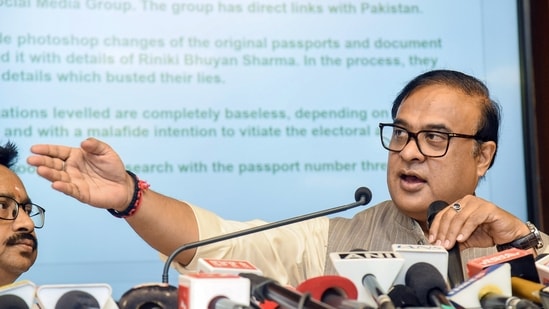
Riniki Bhuyan passport row: What rules say on dual citizenship, multiple passports in India| India News
India’s Citizenship Stance One Nation One Passport
India’s approach to citizenship is clear and unwavering: it adheres to the principle of single nationality. This means that a person cannot legally hold both an Indian passport and a foreign passport simultaneously. This fundamental rule is rooted in the country’s Citizenship Act of 1955 and has significant implications for Indians residing abroad or those considering acquiring foreign citizenship. Understanding this policy is crucial for anyone navigating their national identity, a topic regularly covered by Omni 360 News to keep citizens informed.
The core of this policy dictates that an Indian citizen who voluntarily acquires citizenship of another country automatically ceases to be an Indian citizen. Consequently, they cannot hold an Indian passport. This isn’t merely a bureaucratic formality; it’s a deeply ingrained legal principle that defines a person’s allegiance to the nation.
The Legal Framework
The legal foundation for India’s single citizenship policy lies primarily in Section 9 of the Citizenship Act, 1955. This section explicitly states that if any citizen of India voluntarily obtains the citizenship of another country, they shall cease to be a citizen of India. This provision leaves no room for ambiguity regarding dual nationality. Once foreign citizenship is acquired, the individual’s Indian passport becomes invalid and must be surrendered to the nearest Indian mission or post. Failure to do so can lead to penalties under the Passports Act, 1967.
Regional news outlets often highlight cases where individuals face issues due to a lack of awareness about these regulations. For instance, reports from publications like *The Assam Tribune* or *Deccan Herald* have covered instances of individuals, including business professionals or students, who inadvertently hold onto their Indian passports after becoming naturalized citizens elsewhere, only to face complications during travel or legal procedures. These local stories underscore the need for constant public education on this vital aspect of national law.
Understanding the Implications
For a 12th-grade student, think of it like this: Imagine your school has a rule that you can only be a member of one sports team at a time – either the basketball team or the football team. If you decide to join the football team, you automatically have to leave the basketball team. You can’t be on both rosters simultaneously. Similarly, India believes that your ultimate loyalty should be to one nation. When you become a citizen of another country, India assumes your primary loyalty shifts, and therefore, you cannot remain an Indian citizen.
This policy means that if an Indian citizen, for example, moves to Canada and becomes a Canadian citizen, they are legally required to give up their Indian citizenship and surrender their Indian passport. They are then considered a foreign national by India. This applies to everyone, irrespective of their social standing or public profile. Recent discussions in the public sphere, often picked up by various news services including regional papers like *The Telegraph, India* or *The Shillong Times*, occasionally highlight cases involving prominent figures or their families, bringing renewed focus to these long-standing rules. Such instances serve as stark reminders that the law applies universally.
The Overseas Citizen of India (OCI) Status
It is important to distinguish between dual citizenship and the Overseas Citizen of India (OCI) status. Many former Indian citizens, or those of Indian origin, hold OCI cards. This status grants them many benefits, including multiple entry, multi-purpose lifelong visas to visit India, and exemption from reporting to the police authorities for any length of stay in India. OCI cardholders also enjoy parity with Non-Resident Indians (NRIs) in financial, economic, and educational fields, except in matters relating to the acquisition of agricultural or plantation properties.
However, an OCI card does not grant dual citizenship. OCI cardholders are still citizens of their respective foreign countries and do not hold an Indian passport. They cannot vote in Indian elections, hold public office, or acquire agricultural land. This status is India’s way of maintaining strong ties with its diaspora without compromising the principle of single citizenship. Local community newspapers and Indian diaspora publications frequently explain these nuances to help their readers understand the difference, a practice echoed by Omni 360 News in its global coverage.
Why Single Citizenship?
The rationale behind India’s single citizenship policy is rooted in historical, constitutional, and national security considerations. During the framing of the Indian Constitution, the idea of single citizenship was chosen to foster national unity and cohesion in a diverse country. It was believed that allowing dual citizenship could potentially create divided loyalties, especially during times of conflict or crisis. The nation’s founders envisioned a unified identity for all Indians. This steadfast principle continues to guide policy decisions today.
Key Takeaways
* India strictly follows the principle of single citizenship; dual nationality is not permitted.
* Upon voluntarily acquiring foreign citizenship, an individual automatically ceases to be an Indian citizen and must surrender their Indian passport.
* The Citizenship Act, 1955, specifically Section 9, governs these rules.
* The Overseas Citizen of India (OCI) card is not dual citizenship; it offers benefits to foreign citizens of Indian origin without granting Indian nationality.
* This policy aims to ensure undivided loyalty and national unity, a principle consistently upheld across various government functions and legal interpretations.
These regulations ensure clarity and maintain the integrity of India’s national identity, a topic of enduring relevance for all who engage with the nation, whether as residents or as members of the global Indian diaspora.





