
Arvind Kejriwal to argue own case in Delhi HC over recusal of judge in excise policy case next week| India News
Kejriwal Appears in Delhi High Court Judge Recusal Plea Heard
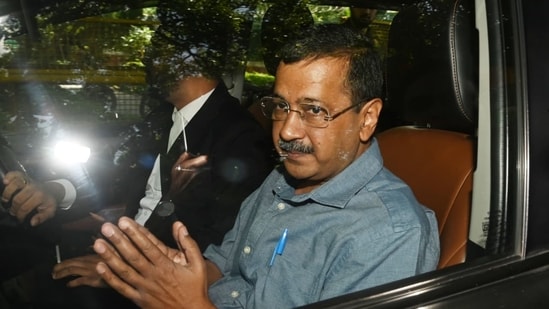
Delhi Chief Minister Arvind Kejriwal made a notable appearance before the Delhi High Court on Monday, April 1, arriving alongside his wife, Sunita Kejriwal. The day’s proceedings centered on a critical plea requesting the recusal of Justice Swarana Kanta Sharma from hearing his petitions that challenge summonses issued by the Enforcement Directorate (ED) in connection with the Delhi excise policy case. The courtroom witnessed a rare moment as the Chief Minister himself addressed the bench, presenting arguments in a bid to have the judge step down.
Understanding the Delhi Excise Policy Case
For those unfamiliar with the complexities, the Delhi excise policy case can be understood simply. In 2021, the Delhi government introduced a new policy for selling alcohol. The idea was to modernize the system and boost government revenue. However, allegations soon surfaced claiming that the policy was designed to unfairly benefit certain private liquor vendors, leading to corruption and money laundering.
The Enforcement Directorate, a central agency tasked with investigating financial crimes, began probing these allegations. Their investigation led to multiple arrests and raised questions about the policy’s formulation and implementation. As part of this inquiry, the ED issued several summonses to Chief Minister Kejriwal, asking him to appear for questioning. Kejriwal, however, challenged these summonses in court, arguing they were illegal and politically motivated.
The Chief Minister’s Courtroom Appearance
Monday’s hearing marked a significant development in this ongoing legal saga. Accompanied by his wife, Kejriwal arrived at the Delhi High Court, drawing considerable attention from legal observers and the media alike. The air of anticipation was palpable, heightened by earlier speculation that he might personally argue portions of his case. This is an uncommon move for a sitting Chief Minister, typically relying solely on a team of seasoned lawyers.
Indeed, during the proceedings, Kejriwal chose to directly engage with the court on the matter of the judge’s recusal. He articulated his concerns and submissions, adding a personal dimension to the legal arguments put forth by his counsel. This decision to address the court himself underscored the high stakes involved in the case and his determination to present his position directly.
The Request for Judicial Recusal Explained
At the heart of Monday’s hearing was the plea for judicial recusal. What does “recusal” mean in a court of law? Simply put, it’s a request asking a judge to step down from hearing a particular case. This usually happens when there’s a belief that the judge might not be able to deliver a completely fair and unbiased judgment. Reasons for seeking recusal can include a past connection to one of the parties, previous rulings that might indicate a pre-conceived notion, or any other factor that could reasonably cast doubt on the judge’s impartiality.
In this instance, Kejriwal’s legal team, supported by his direct address to the court, sought the recusal of Justice Swarana Kanta Sharma. The argument for recusal stemmed from certain observations made by Justice Sharma in a previous order related to the excise policy case. Kejriwal’s lawyers contended that these past observations indicated a pre-judgment on aspects of the case, and therefore, it would be appropriate for another judge to hear his petitions challenging the ED summonses. The core of their argument was to ensure that justice not only is done but also *appears* to be done, free from any perception of bias.
Courtroom Proceedings and Reserved Order
During the hearing, the court heard detailed arguments from both sides regarding the recusal plea. The legal team representing the Enforcement Directorate countered Kejriwal’s arguments, asserting that there was no valid ground for the judge to recuse herself. Justice Swarana Kanta Sharma patiently heard the submissions from both the Chief Minister and the opposing counsel.
Following the extensive arguments, Justice Sharma announced that the court had reserved its order on the recusal application. This means the judge will now take time to consider all the arguments presented and will issue a decision at a later date. Until the order is pronounced, the question of whether Justice Sharma will continue to hear Kejriwal’s petitions remains open.
Broader Implications and The Road Ahead
The unfolding events at the Delhi High Court are closely watched, not just by the legal fraternity but also by the political landscape. The excise policy case itself has significant implications for the Delhi government and its top leadership. A decision on the recusal plea could set an important precedent and directly influence the trajectory of Kejriwal’s ongoing legal challenges against the ED summonses.
The fact that a Chief Minister chose to argue parts of his case personally in court also sends a strong message. It underscores the severity with which the Aam Aadmi Party views the allegations and the legal proceedings. Omni 360 News will continue to monitor this developing story, providing timely updates as the Delhi High Court prepares to deliver its verdict on the recusal application. The outcome will undoubtedly shape the next phase of this high-profile legal and political battle.
Key Takeaways
* Chief Minister Arvind Kejriwal appeared in the Delhi High Court on Monday, April 1, with his wife.
* The primary agenda was a hearing on a plea seeking the recusal of Justice Swarana Kanta Sharma from his petitions.
* Kejriwal personally argued before the court regarding the recusal request.
* The recusal plea is based on concerns about past observations made by the judge in the excise policy case.
* The court has reserved its order on the recusal application, meaning a decision will be announced at a later date.
* This development is a crucial step in Kejriwal’s ongoing challenge against ED summonses related to the Delhi excise policy.





