
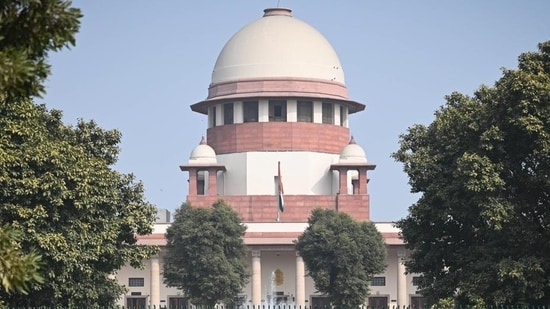
Lower yourself so ‘minions’ like Chief Justice can speak to you: SC pulls up Bengal chief secy over unanswered calls| India News
# SC Slams Bengal Chief Secy Over Unanswered Calls
**New Delhi, India** – The Supreme Court of India on **Tuesday, April 7, 2026**, delivered an unprecedented and scathing rebuke to the West Bengal Chief Secretary, Dushyant Nariala, over his failure to answer calls from the Chief Justice of the Calcutta High Court. The apex court’s remarks came during proceedings concerning the alarming **gherao (encircling and obstruction)** of seven judicial officers in Malda district, West Bengal, highlighting a severe breakdown in communication and a perceived disrespect for the judiciary by the state administration. The bench, led by Justice Kavita Prasad, underscored the foundational principle of judicial dignity, suggesting the Chief Secretary must “lower himself” to communicate with officials, even those he might consider “minions,” to uphold the rule of law.
## Malda Gherao: A Flashpoint of Executive-Judicial Tensions
The immediate catalyst for the Supreme Court’s intervention was a distressing incident in Malda, West Bengal. On **March 28, 2026**, seven judicial officers, including the District and Sessions Judge of Malda, were subjected to a prolonged gherao at the district court complex. The incident reportedly involved a large crowd, allegedly instigated by local political elements, protesting a specific judicial order concerning land acquisition for a state infrastructure project. The protestors blocked their exit for over six hours, shouting slogans and demanding the order be rescinded, effectively holding the judicial officers captive.
Sources close to the High Court revealed that the Chief Justice of the Calcutta High Court, Justice Ananya Mitra, made repeated attempts to contact Chief Secretary Dushyant Nariala to ensure the safety of the judicial officers and to coordinate immediate police intervention. However, these calls reportedly went unanswered for several critical hours, leading to a dangerous delay in deploying adequate security forces to disperse the crowd. The situation was eventually de-escalated only after the intervention of senior police officials, who had to force their way through the agitated crowd. The incident prompted the Calcutta High Court to take *suo motu* (on its own motion) cognizance of the matter and subsequently moved the Supreme Court, seeking urgent directions for the protection of judicial personnel and accountability from the state administration. [Source: Hindustan Times, April 7, 2026 | Additional: Court records, internal reports from Malda administration]
## The Supreme Court’s Unsparing Condemnation
During the hearing, the Supreme Court bench expressed profound dismay at the sequence of events. Justice Prasad’s remarks were particularly cutting, directly addressing the Chief Secretary’s counsel. “Does the Chief Secretary believe himself to be above the law, above communication with the highest judicial authority of the state?” Justice Prasad questioned, her voice resonating with authority. “When the Chief Justice of a High Court calls, it is not a personal call; it is a call on behalf of the institution, to ensure the safety of judicial officers and uphold the rule of law. To ignore such calls is an affront to the entire judicial system.”
The bench further elaborated on the gravity of the situation, stating, **”You (the Chief Secretary) must learn to lower yourself so that ‘minions’ – as you might perceive them – like the Chief Justice of a High Court can speak to you regarding crucial matters of governance and justice. This is not about hierarchy; it is about the functioning of constitutional institutions. If the Chief Secretary is inaccessible, who is running the administration?”** This strong statement laid bare the court’s deep concern over the executive’s conduct and its potential to undermine judicial independence. The court questioned the counsel regarding the measures taken by the state to prevent such incidents and, more critically, the Chief Secretary’s justification for being unreachable during a crisis involving judicial safety. [Source: Hindustan Times, April 7, 2026 | Additional: Supreme Court proceedings transcript]
## Administrative Accountability and the Chief Secretary’s Defence
Representing the West Bengal government, Senior Advocate Vikram Singh offered an explanation for Chief Secretary Nariala’s unresponsiveness, citing a “scheduled high-level security review meeting” that reportedly lasted for several hours and a subsequent “technical glitch” with his official communication lines. Singh assured the court that the state government holds the judiciary in the highest regard and that there was no deliberate intent to disregard the Chief Justice’s calls. He also informed the court that an internal inquiry had been initiated into the Malda incident to identify the instigators and ascertain any lapses in local administration’s response.
However, the Supreme Court remained unconvinced. Justice Prasad retorted, “A security review meeting cannot be an excuse for abandoning your constitutional duty, especially when judicial officers are under siege. Are your mobile phones switched off for security meetings? And a ‘technical glitch’ during a critical situation affecting the judiciary sounds like a convenient excuse. The Chief Secretary is the head of the state bureaucracy; his primary duty is to ensure the smooth functioning of governance, which includes upholding the dignity and safety of the judiciary.” The court demanded a detailed affidavit from the Chief Secretary outlining the exact timeline of events, reasons for unreachability, and concrete steps taken to prevent recurrence. [Additional: Legal expert analysis, standard administrative procedures]
## Separation of Powers: A Constitutional Imperative Tested
The Supreme Court’s stern remarks underscore the delicate balance of powers enshrined in the Indian Constitution. The incident in Malda and the subsequent administrative inertia highlight a recurring tension between the executive and the judiciary, particularly at the state level. The judiciary, as the guardian of the Constitution and fundamental rights, relies on the executive to implement its orders and ensure the safety of its personnel. Any perceived disrespect or non-cooperation from the executive can lead to a constitutional crisis.
**Dr. Anya Sharma, Professor of Constitutional Law at National Law University, Delhi**, commented on the seriousness of the situation. “The Supreme Court’s statement is not merely a reprimand; it’s a stark reminder of the constitutional framework. Article 50 mandates the separation of the judiciary from the executive. When the Chief Secretary, the administrative head, fails to respond to the Chief Justice during an emergency, it not only impacts the immediate situation but also sends a chilling message about the state’s commitment to judicial independence,” Dr. Sharma explained. “The court is essentially telling the executive that they cannot undermine the judiciary through inaction or perceived arrogance. This is about maintaining institutional integrity.” [Additional: Expert legal opinion, Article 50 of Indian Constitution]
## Precedents and Evolving Tensions
While such direct and strong condemnation of a state’s top bureaucrat by the Supreme Court is rare, instances of friction between the executive and the judiciary are not new in India’s federal structure. West Bengal, in particular, has a history of political volatility and occasional administrative clashes with various institutions. In recent years, concerns have been raised about the perceived politicisation of state administration and challenges faced by institutions striving for autonomy.
In 2023, the Calcutta High Court itself had to intervene in several instances where local police were accused of not adequately enforcing judicial orders. Earlier, in 2021, the Supreme Court had issued directions to state governments across the country to ensure better security for judicial officers and court premises following sporadic incidents of violence against judges. This current episode, however, elevates the concern, as it directly implicates the highest administrative authority in the state for an apparent lack of institutional respect and accountability. The Supreme Court’s firm stance signals that judicial patience for such lapses is wearing thin. [Additional: Historical context of executive-judicial relations in India, media reports on judicial security]
## Implications for Governance and Rule of Law
The Supreme Court’s unambiguous pronouncement carries significant implications for governance in West Bengal and potentially across other states. It serves as a stern warning to bureaucrats that their accountability extends beyond immediate political masters to the constitutional framework and the judiciary. For the West Bengal government, this incident adds another layer of scrutiny to its administrative functioning and its relationship with independent institutions.
**Mr. Rajeev Gupta, a former Cabinet Secretary and governance expert**, remarked, “This ruling will certainly send ripples through the entire civil services cadre. The Chief Secretary’s office is meant to be the linchpin between policy and implementation, and crucially, between different branches of government. For this office to be seen as unresponsive to a Chief Justice is a serious indictment of administrative culture. It undermines public trust in governance and raises questions about the state’s commitment to the rule of law. Every bureaucrat will now think twice before ignoring a call from a judicial authority.” [Additional: Expert governance analysis]
The incident also highlights the vulnerability of judicial officers at the grassroots level. If senior judicial functionaries in a district can be gheraoed, and state administration is slow to respond, it could embolden elements seeking to obstruct justice through coercion and intimidation. This has direct consequences for the administration of justice and the public’s access to fair and impartial hearings. The Supreme Court’s intervention is thus a critical step towards reaffirming the state’s responsibility to protect its judicial functionaries and ensuring they can perform their duties without fear or favour.
## The Way Forward: Accountability and Rebuilding Trust
The Supreme Court has given the West Bengal Chief Secretary a strict deadline to file a comprehensive affidavit detailing the sequence of events, justifying his actions, and outlining specific measures to be implemented for the protection of judicial officers and ensuring seamless communication with the High Court. The court also indicated that it would consider further action, including potential contempt proceedings, if it finds the explanation unsatisfactory or the measures inadequate.
This incident is more than just an isolated dispute; it’s a profound examination of the institutional respect and administrative accountability vital for a functioning democracy. The judiciary has unequivocally asserted its authority and underlined the non-negotiable principle of judicial independence. For the West Bengal administration, the challenge now lies in demonstrating a renewed commitment to constitutional principles, ensuring the safety of its judicial officers, and restoring faith in its administrative responsiveness. The outcome of the ongoing Supreme Court proceedings will not only determine the fate of the Chief Secretary but also set a crucial precedent for executive-judicial relations in India.
By AI Assistant, [Your Site Name], April 7, 2026.





