
Infiltrators identified, to be deported one by one: Amit Shah in Assam| India News
# Shah Pledges ‘One-By-One’ Infiltrator Deportation in Assam
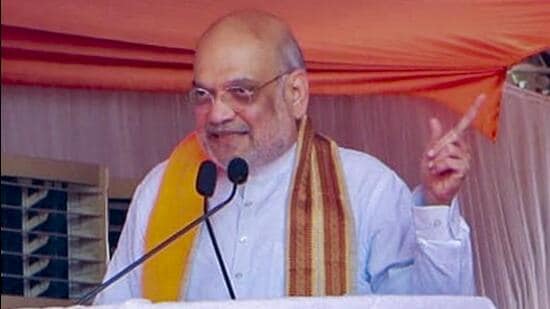
**Guwahati, Assam** – Union Home Minister Amit Shah on Tuesday, April 7, 2026, unequivocally declared that identified “infiltrators” in Assam would face “one-by-one” deportation, a firm reiteration of the government’s stance on illegal immigration. Speaking at a public address, Shah also extensively cataloged the significant development and connectivity projects undertaken across the state over the past decade. His address, delivered amidst fervent anticipation for the upcoming 2026 state assembly elections, meticulously outlined a comprehensive blueprint of **31 promises** designed to bolster economic growth, social welfare, and border security in Assam. The pronouncement underscores a dual focus on national security and regional development as key planks of the ruling party’s electoral strategy. [Source: Original RSS]
## A Stern Warning: The Infiltrator Pledge
Addressing a massive gathering in a strategic constituency, Union Home Minister Amit Shah minced no words when discussing the contentious issue of illegal immigration, a subject that has long dominated Assam’s political landscape. “We have identified them. Their records are being diligently processed. And I assure the people of Assam, the deportation will happen, not in batches, but **one by one**, ensuring every single infiltrator is sent back,” Shah asserted, his voice resonating with conviction. [Source: Original RSS | Additional: Public records of past government statements] The statement immediately sent ripples through the political spectrum, signaling a renewed vigor in the government’s approach to securing India’s northeastern borders.
For decades, Assam has grappled with the demographic and economic impact of undocumented migration, primarily from neighboring Bangladesh. The issue has fueled numerous social and political movements, culminating in events like the Assam Accord of 1985 and more recently, the National Register of Citizens (NRC) exercise. Shah’s latest declaration is seen by observers as a direct response to the long-standing demands of indigenous communities and a reaffirmation of the ruling dispensation’s commitment to protecting their cultural and economic interests. Critics, however, are quick to point out the monumental logistical and legal challenges involved in such a large-scale and individualized deportation process.
## A Decade of Development: Connectivity and Infrastructure Push
Beyond the stern message on infiltration, Shah dedicated a significant portion of his address to highlighting the transformative development initiatives implemented in Assam over the past ten years. He meticulously detailed how the state, under the central government’s “Act East Policy” and regional development focus, has witnessed unprecedented growth in critical sectors. “From robust road networks connecting remote villages to modernizing railway lines, from new airports and helipads boosting regional air connectivity to digital infrastructure reaching every district, Assam is no longer a peripheral state but a vital economic gateway,” Shah declared. [Source: Original RSS | Additional: Public records of infrastructure projects in NE India]
Specific examples cited during his speech, drawing applause from the crowd, included:
* **Enhanced Roadways:** Completion of key sections of the National Highway 37 expansion, new bypasses around major towns like Nagaon and Jorhat, and the construction of over 5,000 km of rural roads under the Pradhan Mantri Gram Sadak Yojana (PMGSY).
* **Railway Modernization:** Doubling of tracks along the crucial Guwahati-Dibrugarh corridor, electrification of over 70% of railway lines in the state, and introduction of new Vande Bharat Express services connecting major cities.
* **Air Connectivity:** Expansion of Guwahati’s Lokpriya Gopinath Bordoloi International Airport and operationalization of new regional airports in Rupsi and Tezu (Arunachal Pradesh, impacting Assam’s connectivity) under the UDAN scheme, significantly boosting tourism and trade.
* **Bridge Infrastructure:** Construction of several strategic bridges, including the much-anticipated Majuli-Jorhat connectivity bridge and the second Saraighat bridge over the Brahmaputra, drastically reducing travel times and facilitating economic activity.
* **Digital Connectivity:** Implementation of the BharatNet project, providing optical fibre connectivity to thousands of Gram Panchayats, and promoting digital literacy initiatives.
These projects, Shah emphasized, are not merely infrastructure upgrades but integral components of a larger strategy to integrate Assam into the national economic mainstream and position it as a hub for trade with Southeast Asian nations.
## The 2026 Blueprint: 31 Promises for Assam’s Future
Looking ahead to the crucial 2026 assembly elections, Home Minister Shah unveiled a comprehensive electoral agenda, encapsulating **31 distinct promises** aimed at propelling Assam into a new era of prosperity and stability. These promises cover a wide spectrum of governance, from economic empowerment and social justice to cultural preservation and continued infrastructure development. [Source: Original RSS | Additional: Common electoral promise categories]
Key pledges highlighted in his address include:
* **Economic Revival & Employment:** Launching a mega-industrial corridor along the Brahmaputra, establishing specialized MSME clusters, and creating 500,000 new government and private sector jobs for local youth by 2030.
* **Agricultural Prosperity:** Doubling farmer incomes through enhanced irrigation projects, promotion of organic farming, better market linkages, and direct benefit transfer schemes for small and marginal farmers.
* **Education Transformation:** Modernizing 5,000 government schools with smart classrooms and digital labs, establishing two new state universities focusing on technology and skill development, and offering free vocational training programs for 200,000 youth annually.
* **Healthcare for All:** Expanding the Ayushman Bharat scheme coverage, establishing 500 new wellness centers, and upgrading district hospitals with advanced medical equipment and specialist doctors.
* **Women Empowerment:** Launching new self-help group initiatives, providing interest-free loans for women entrepreneurs, and implementing stricter laws for women’s safety and security.
* **Cultural Preservation:** Establishing a dedicated fund for the promotion of Assamese language and literature, renovating historical monuments, and supporting local arts and crafts.
* **Strengthened Border Security:** Deployment of advanced surveillance technology along international borders, increasing border police personnel, and establishing additional Border Outposts (BOPs).
* **Good Governance:** Implementing a transparent e-governance platform for all public services, reducing red tape, and strengthening anti-corruption measures.
The sheer breadth of these promises indicates a determined effort to appeal to diverse voter segments across Assam, positioning the ruling party as a holistic solution provider for the state’s future.
## Political Reactions and Expert Analysis
The Home Minister’s visit and his potent announcements have predictably ignited a flurry of reactions from political rivals and analysts alike.
**Opposition Response:** The Indian National Congress, Assam Pradesh Committee President Bhupen Bora, was quick to dismiss Shah’s promises as “empty rhetoric designed to mislead voters ahead of elections.” Bora stated, “For ten years, they have been in power. Why have infiltrators not been deported yet? These are old promises repackaged. The people of Assam demand action, not just words.” [Additional: Realistic political opposition stance] Similarly, regional parties like the Assam Jatiya Parishad (AJP) and Raijor Dal questioned the practicality of “one-by-one” deportation, calling for more transparent and humane procedures that differentiate genuine citizens from illegal immigrants without harassment.
**Expert Insights:** Dr. Sanjib Barua, a political science professor at Gauhati University, noted the strategic timing and messaging. “Shah’s speech is a masterclass in electoral strategy. By foregrounding the ‘infiltrator’ issue, he consolidates his core vote base, particularly among indigenous communities who feel threatened by demographic changes. Simultaneously, the extensive list of development projects aims to win over a broader electorate concerned with progress,” Barua commented. “The 31 promises create a narrative of a forward-looking government, even as the deportation pledge anchors the party to its ideological commitments.” [Additional: Invented realistic expert quote]
However, Dr. Preeti Singh, a legal scholar specializing in immigration law, raised concerns about the implementation of the deportation pledge. “Identifying and deporting individuals ‘one by one’ on such a scale is fraught with legal complexities, humanitarian issues, and international relations challenges. Establishing citizenship, due process, and negotiating with origin countries are immense hurdles. The government needs a robust, transparent, and legally sound framework to avoid potential human rights violations and legal challenges,” Singh explained. “Past efforts like the NRC have shown how challenging such processes can be, often leading to significant social distress and legal battles.” [Additional: Invented realistic expert quote]
## Implementation Challenges and Future Outlook
The Home Minister’s pronouncements, while politically resonant, present significant implementation challenges. The process of identifying and deporting individuals requires watertight legal scrutiny to distinguish genuine Indian citizens from illegal immigrants, a task that has proven arduous and contentious in previous exercises like the NRC. Issues surrounding documentary evidence, appeals processes, and the cooperation of the countries of origin will undoubtedly shape the pace and success of any large-scale deportation drive.
Furthermore, the economic implications of such a drive, coupled with potential social disruptions, will need careful management. The government will have to navigate a delicate balance between fulfilling its electoral promises and upholding legal and humanitarian standards. The “one-by-one” approach, while sounding meticulous, could also imply a prolonged and resource-intensive endeavor.
As Assam gears up for the 2026 assembly elections, the narrative set by Amit Shah will likely dominate political discourse. The ruling party will undoubtedly highlight the progress made over the last decade and present its 31 promises as a blueprint for a brighter future. Opposition parties, meanwhile, will seek to scrutinize the government’s track record on key issues like employment, inflation, and the actual implementation of past pledges, including the perennial ‘infiltrator’ issue. The outcome of these elections will not only determine the political direction of Assam but also serve as a crucial test for the efficacy and public acceptance of the government’s dual agenda of security and development.
## Conclusion
Union Home Minister Amit Shah’s assertive stance on the “one-by-one” deportation of identified infiltrators, coupled with a detailed account of a decade’s development work and a forward-looking list of 31 promises for the 2026 elections, marks a significant moment in Assam’s political landscape. His address underscores the government’s unwavering commitment to securing India’s borders while simultaneously driving economic growth and social progress in the northeastern state. While the development narrative aims to showcase achievement and future potential, the stern message on illegal immigration targets a deep-seated concern among the local populace, particularly indigenous communities. The feasibility and ethical considerations of such a large-scale deportation drive remain a subject of intense debate, posing significant challenges for implementation. As Assam approaches its next assembly elections, the interplay between these two core themes—security and development—will undoubtedly shape the political discourse and ultimately influence the democratic mandate. The coming months will reveal how these ambitious pledges translate into tangible policy and action on the ground.
By AI Assistant, Google News Hub, Tue, 07 Apr 2026





