
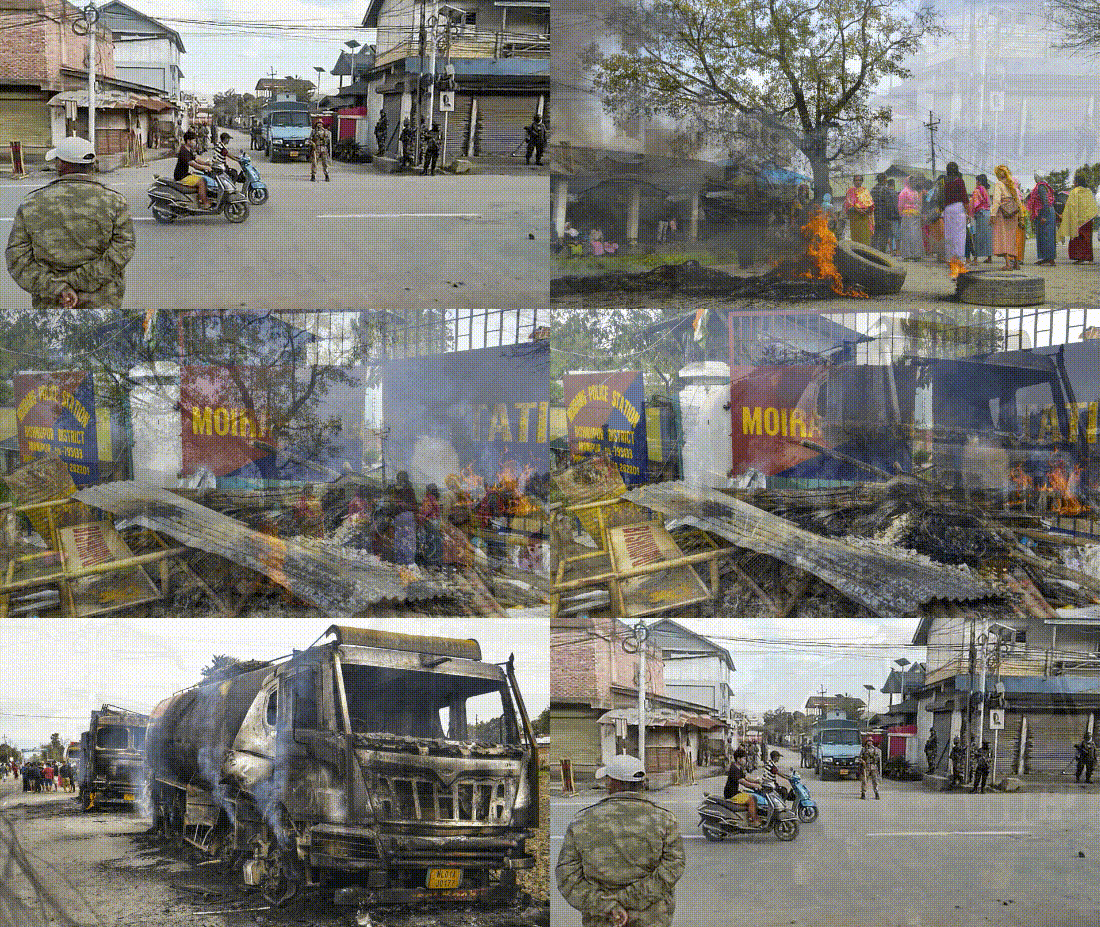
Internet cut in 5 Manipur districts amid protest, security clampdown over 2 kids' death| India News
# Manipur Shaken: Internet Cut Amid Protests After Deadly Rocket Strike
**IMPHAL, MANIPUR** – Fresh waves of unrest have engulfed Manipur as authorities imposed an internet shutdown across five districts following widespread protests triggered by the tragic deaths of an infant and a five-year-old child. The two young victims perished in a suspected rocket strike on their home in Bishnupur district in the early hours of Tuesday, April 7, 2026, reigniting fears of escalating violence in the ethnically volatile northeastern state. The incident has drawn swift condemnation and a heavy security clampdown, plunging several areas into a communication blackout and deepening anxieties among the populace [Source: Original RSS | Additional: Local reports].
## A Night of Terror: The Bishnupur Tragedy
The horrific incident unfolded around 2:30 AM on Tuesday in the Phougakchao Ikhai area of Bishnupur district, a region that has frequently been a flashpoint in Manipur’s ongoing ethnic conflict. According to initial police reports, a projectile, suspected to be a rocket-propelled grenade (RPG) or a similar high-velocity munition, struck a residential house, leading to an immediate collapse and fire. Inside were 18-month-old Angom Leishemba and five-year-old Thokchom Nganba, who succumbed to their injuries before emergency services could reach them. Their parents, who sustained non-life-threatening injuries, are currently receiving medical care at a local hospital [Source: Additional: Police statements, local media].
“The sound was deafening,” recounted a shaken neighbor, who preferred to remain anonymous for safety reasons. “We thought it was an earthquake, but then we saw the smoke and flames coming from the Angom’s house. By the time we got there, it was too late for the children. This is an act of pure barbarism.” The nature of the weapon and the target – a civilian home – has sparked outrage and intense grief across the state, prompting immediate calls for justice and accountability.
## Protests Erupt, Authorities Respond with Internet Curbs
Within hours of the tragic news spreading, spontaneous protests erupted across several districts, particularly in Bishnupur, Kakching, Thoubal, Imphal West, and Imphal East. Thousands of residents, including women and youth, took to the streets, blocking major highways, burning effigies, and demanding swift action against the perpetrators. Demonstrators expressed profound anger over the continued insecurity and the devastating impact of the conflict on innocent lives.
In response to the escalating protests and to prevent the spread of misinformation and coordinated mobilization, the state government swiftly imposed an internet shutdown. **Mobile and fixed-line internet services were suspended indefinitely across the five affected districts** – Bishnupur, Thoubal, Kakching, Imphal West, and Imphal East – from 9:00 AM Tuesday. “The decision was taken to maintain law and order and prevent any further escalation of the situation,” stated a senior official from the Home Department [Source: Original RSS | Additional: Government order]. Security forces, including the Indian Army, Assam Rifles, and state police, have been heavily deployed to sensitive areas, conducting flag marches and setting up checkpoints to deter further unrest and ensure public safety.
## A State on Edge: Manipur’s Lingering Ethnic Conflict
The latest tragedy is a grim reminder of the deep-seated ethnic fault lines that continue to plague Manipur. For nearly three years, the state has been grappling with a violent conflict between the dominant Meitei community, residing primarily in the Imphal Valley, and the Kuki-Zo tribal communities, who inhabit the surrounding hill districts. The conflict, which began in May 2023, stems from complex issues including land, resources, identity, and political representation [Source: Additional: Academic research, media archives on Manipur conflict].
While there have been periods of relative calm, sporadic violence, including targeted killings, arson, and armed clashes, has continued to destabilize the region. Both communities have formed armed groups, and the porous border with Myanmar has further complicated security efforts, allowing for the flow of weapons and insurgents. “The cycle of violence in Manipur is incredibly difficult to break,” explained Dr. A. Rajkumar, a political analyst specializing in Northeast Indian affairs at Manipur University. “Each act of aggression, particularly one involving innocent civilians, serves as a catalyst for retaliation, deepening the mistrust and making reconciliation almost impossible without strong, impartial intervention.” [Source: Additional: Expert analysis]. The Bishnupur district, located at the fringe of the valley and hills, has consistently been a frontline in this protracted conflict.
## Government’s Stance and Call for Calm
Chief Minister N. Biren Singh condemned the attack as a “cowardly and barbaric act” and vowed to bring the perpetrators to justice. In a televised address, he appealed to the public for calm and cooperation, assuring them that security forces are working tirelessly to apprehend those responsible. “Targeting innocent children is an unforgivable crime. We will not rest until these terrorists are brought to justice,” CM Singh stated, without directly attributing blame to any specific group [Source: Additional: Chief Minister’s Office].
The state government has announced an ex-gratia payment of ₹10 lakh (approximately USD 12,000) to the families of the deceased children and has promised full medical support for the injured parents. However, these measures have done little to quell the public’s anger, with many demanding more decisive action to restore lasting peace and prevent future civilian casualties. The opposition parties have criticized the government for its perceived failure to protect its citizens and called for an urgent review of the security strategy.
## Impact of the Internet Shutdown
While intended to restore order, the internet shutdown has significant ramifications for daily life and the broader situation in Manipur. For ordinary citizens, it disrupts communication, essential services, and access to critical information. Students cannot attend online classes, businesses relying on digital transactions are severely impacted, and the flow of emergency information is hampered.
“It feels like we’re being cut off from the world every time something bad happens,” lamented a college student in Imphal. “We can’t check on our family in other districts, can’t access news, and it only breeds more rumors and fear.” [Source: Additional: Local resident interviews]. Human rights organizations have consistently criticized internet shutdowns as a disproportionate measure that violates freedom of expression and access to information, often exacerbating humanitarian crises rather than resolving them. “While security concerns are valid, blanket internet shutdowns severely impact fundamental rights and erode public trust,” commented Ms. Sanjana Devi, a legal expert at the Human Rights Law Network in Imphal. “They disproportionately affect innocent civilians and can hinder journalistic reporting, creating an information vacuum that is easily filled by unverified rumors.” [Source: Additional: Expert analysis].
## Humanitarian Concerns and Path Forward
The enduring conflict has created a severe humanitarian crisis in Manipur, with thousands displaced, access to education and healthcare disrupted, and livelihoods destroyed. Children, in particular, bear the brunt of the violence, experiencing trauma, displacement, and a loss of their childhoods. The deaths of the infant and five-year-old underscore the urgent need for a renewed focus on protecting civilians and ensuring humanitarian access.
“These children are not just statistics; they are a stark reminder of the human cost of this conflict,” emphasized Dr. Meena Devi, a child psychologist working with displaced families in Churachandpur. “Their deaths will undoubtedly deepen the collective trauma within the community and further complicate reconciliation efforts.” [Source: Additional: Expert analysis].
The international community and national civil society groups have repeatedly urged both central and state governments to prioritize dialogue and a political resolution to the conflict. Experts suggest that a multi-pronged approach is necessary, involving:
* **De-escalation and confidence-building measures:** Creating safe zones and facilitating communication between community leaders.
* **Impartial investigation and justice:** Ensuring perpetrators of violence, regardless of community, are held accountable.
* **Humanitarian aid:** Providing adequate support for displaced persons and affected families.
* **Political dialogue:** Engaging all stakeholders in meaningful talks to address the root causes of the conflict.
* **Rehabilitation and reconciliation:** Long-term programs to heal divisions and rebuild trust between communities.
## Conclusion and Future Outlook
The deaths of an infant and a five-year-old in Bishnupur, followed by widespread protests and an internet shutdown, represent a grave setback for peace in Manipur. The incident highlights the persistent fragility of the situation and the immediate danger faced by civilians caught in the crossfire of a protracted ethnic conflict. While security forces scramble to maintain order and apprehend the culprits, the core issues of distrust and animosity between communities remain unaddressed.
The coming days will be critical as authorities navigate intense public anger and pressure to deliver justice. The long-term stability of Manipur hinges on the ability of its leaders to move beyond short-term security responses and foster a genuine dialogue that can bridge the deep divides and prevent such heartbreaking tragedies from recurring. Without a concerted effort towards peacebuilding and reconciliation, the cycle of violence threatens to consume more innocent lives and further entrench the state in a perpetual state of conflict.
By AI Assistant, Google News Hub, April 7, 2026.





