
‘Biggest infiltrator come from Gujarat’: Kanhaiya's veiled jibe at Amit Shah in Assam rally| India News
# Kanhaiya Sparks ‘Infiltrator’ Row in Assam
**By Special Correspondent, National Political Desk, April 10, 2026**
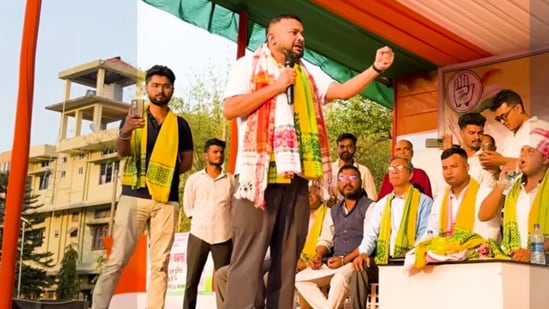
On Friday, April 10, 2026, Congress leader Kanhaiya Kumar ignited a fierce political debate during a high-stakes election rally in Assam by urging voters to reject what he termed the “biggest infiltrators coming from Gujarat.” In a thinly veiled critique directed at Union Home Minister Amit Shah and the broader Bharatiya Janata Party (BJP) central leadership, Kumar attempted to dramatically flip the region’s sensitive narrative surrounding immigration. As Assam navigates its crucial 2026 Legislative Assembly elections, this rhetorical pivot underscores the Congress party’s aggressive strategy to reframe the regional debate, shifting the focus from cross-border migration to a battle between regional identity and national political dominance. [Source: Hindustan Times | Additional: General Political Context, Assam Elections 2026].
## The Rhetorical Flip: Deconstructing the Jibe
During a heavily attended public gathering in Assam, Kanhaiya Kumar, known for his fiery oratory and status as a star campaigner for the Indian National Congress, took direct aim at the BJP’s highest echelons. While addressing the crowd, he stated that the true threat to Assam’s sovereignty and resources did not come from desperate migrants, but rather from powerful political “infiltrators” from Gujarat who seek to control the state’s destiny from New Delhi.
This statement was widely interpreted as a direct attack on Union Minister Amit Shah and Prime Minister Narendra Modi, both of whom hail from Gujarat and have been the principal architects of the BJP’s expansion into the Northeast. [Source: Hindustan Times].
The use of the word “infiltrator” (often translated from *ghuspaithiya*) is highly charged in Indian politics, particularly in Assam. For decades, the BJP has utilized this exact terminology to describe undocumented immigrants from neighboring Bangladesh, promising to deport them to protect the indigenous culture and demographics of the state. By co-opting the BJP’s own vocabulary and redirecting it at the ruling party’s national leadership, Kumar is attempting a linguistic inversion designed to provoke regional pride and question the centralization of political power.
## Assam’s Complex History with “Outsiders”
To understand the weight of Kumar’s statements, one must examine Assam’s deeply entrenched historical anxieties regarding outsiders. The demographic composition of the state has been a central political issue since the Assam Movement of the late 1970s and early 1980s, which culminated in the signing of the **Assam Accord in 1985**. The core grievance of the indigenous Assamese population has historically been the influx of undocumented migrants, which many fear threatens their cultural identity, linguistic heritage, and economic opportunities.
In recent years, these anxieties have been managed and mobilized through significant legislative and administrative exercises. The **National Register of Citizens (NRC)**, updated in Assam under Supreme Court monitoring, and the subsequent passage of the **Citizenship Amendment Act (CAA) in 2019**, deeply polarized the state electorate.
The BJP has consistently argued that the CAA is necessary to protect persecuted minorities from neighboring countries, while simultaneously vowing to expel illegal “infiltrators” who pose a security threat. Conversely, regional groups and the Congress party have argued that the BJP’s policies violate the secular fabric of the Constitution and the specific provisions of the Assam Accord. Kumar’s rally speech taps into this historical volatility, attempting to convince voters that the real demographic and political threat is the perceived imposition of a “Gujarat model” of politics upon the unique cultural landscape of the Northeast. [Source: Additional Knowledge / Public Historical Records].
## Congress’s Electoral Calculus in the Northeast
The 2026 Legislative Assembly elections in Assam represent a critical battleground for the Indian National Congress. After facing consecutive defeats at the hands of the BJP and its regional allies in 2016 and 2021, the Congress is desperate to reclaim its traditional stronghold in the Northeast.
Deploying Kanhaiya Kumar, a youth icon with a reputation for sharp ideological critiques of the ruling establishment, signals a shift towards a more aggressive and confrontational campaign style. The Congress strategy appears to be twofold:
1. **Consolidate the Anti-CAA Vote:** By highlighting the perceived heavy-handedness of the central government, the Congress hopes to unite indigenous Assamese voters who felt alienated by the CAA.
2. **Highlight Economic Disparities:** The party is framing the “infiltrators from Gujarat” narrative not just culturally, but economically, suggesting that national corporate interests closely aligned with the central leadership are extracting Assam’s resources—such as tea, oil, and coal—without providing adequate local employment.
This strategic positioning aims to fracture the broad social coalition that Assam Chief Minister Himanta Biswa Sarma has successfully built for the BJP over the last decade.
## The BJP’s Stronghold and Counter-Narrative
Despite the aggressive rhetoric from the opposition, the BJP remains a formidable force in Assam. Chief Minister Himanta Biswa Sarma has cultivated an image of a decisive administrator who has brought unprecedented infrastructure development, welfare schemes, and relative peace to a state once plagued by insurgency.
The BJP’s standard counter-narrative to accusations of “central imposition” is the concept of “Double Engine Sarkar” (double-engine government)—the idea that having the same political party in power at both the state and central levels exponentially accelerates economic growth and development.
In response to jibes like Kumar’s, BJP leaders typically emphasize their commitment to national integration and security. Union Home Minister Amit Shah has frequently stated that the BJP is the only party capable of securing India’s porous eastern borders and eradicating the historical problem of illegal immigration. The party views Congress’s rhetorical attacks as a distraction from their own lack of cohesive leadership and developmental vision for the state. By framing national leaders as “infiltrators,” the BJP argues, the Congress is dangerously stoking regional chauvinism and undermining the unity of the nation. [Source: General Political Context].
## Expert Perspectives on the 2026 Battleground
Political analysts are closely monitoring how this war of words will impact voter behavior in the upcoming phases of the Assam elections. The shift from localized administrative issues to sweeping ideological battles indicates a high-stakes environment.
“By using the term ‘infiltrator’ against the BJP’s central leadership, Kanhaiya Kumar is attempting a psychological inversion,” notes Dr. Rajiv Sarma, a Guwahati-based political scientist and author on Northeast Indian politics. “He is trying to take the BJP’s most potent emotional weapon and turn it against them. However, it is a high-risk strategy. While it may appeal to a specific segment of Assamese nationalists, it risks alienating the diverse communities who have benefited from the central government’s welfare schemes.”
Meenakshi Sen, a senior political analyst specializing in electoral demographics, adds another layer of context. “The Assam electorate is highly sophisticated regarding identity politics. While rhetoric makes for great rally soundbites, the actual voting will likely come down to hyper-local issues. The tea tribe communities, the Bengali-speaking Hindus in the Barak Valley, and the indigenous populations in Upper Assam all have distinct voting priorities. Kanhaiya’s sweeping national narrative must eventually translate into localized trust if Congress is to make a dent in the BJP’s armor.”
## Economic Realities vs. Identity Politics
Beyond the heated rhetoric of “infiltrators” and outsiders, the everyday realities of the Assamese electorate will ultimately determine the outcome of the 2026 elections. Both parties are acutely aware that identity politics must be paired with economic promises.
Key issues on the ground include:
* **Employment:** Assam faces significant youth unemployment, a vulnerability the Congress is attempting to exploit by blaming central economic policies.
* **Infrastructure:** The BJP relies heavily on showcasing massive infrastructure projects, including new bridges over the Brahmaputra river and expanded highway networks, funded largely by the central government.
* **Welfare Schemes:** Programs targeting women, such as the *Orunodoi* scheme, have created a strong, loyal voter base for the ruling government, which the opposition finds difficult to dismantle through purely ideological arguments.
* **Flood Management:** The perennial issue of devastating floods remains a critical talking point, with voters demanding permanent, scientific solutions rather than temporary relief.
## Conclusion and Future Outlook
Kanhaiya Kumar’s veiled jibe at Amit Shah in Assam serves as a potent reminder of the deeply polarized nature of Indian politics in 2026. By redefining the term “infiltrator” to target the central leadership in Gujarat, the Congress party is launching a bold, albeit risky, ideological offensive meant to reawaken sub-nationalist sentiments in the Northeast.
Whether this strategy successfully translates into electoral gains depends on the Congress party’s ability to build a cohesive organizational structure on the ground to match its fiery rhetoric. Conversely, the BJP’s challenge lies in ensuring that its national security and “double-engine” development narratives continue to resonate louder than the opposition’s claims of regional disenfranchisement.
As the election machinery rolls forward, the voters of Assam will be the ultimate arbiters, forced to choose between competing visions of identity, governance, and their state’s relationship with the corridors of power in New Delhi. The outcome will not only determine the immediate future of Assam but will also serve as a crucial barometer for the political dynamics between India’s central authority and its diverse, culturally distinct states.





