
‘Biggest infiltrator come from Gujarat’: Kanhaiya's veiled jibe at Amit Shah in Assam rally| India News
# Kanhaiya Targets Shah in Assam
*By Staff Correspondent, National Political Desk, April 11, 2026*
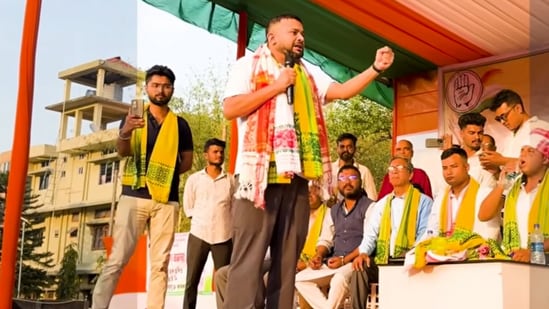
On April 10, 2026, Congress leader **Kanhaiya Kumar** delivered a sharp, veiled attack aimed at Union Home Minister **Amit Shah** during a high-stakes election rally in **Assam**. Addressing a massive gathering, Kumar urged voters to politically oust what he described as the “biggest infiltrators from Gujarat,” effectively attempting to flip the Bharatiya Janata Party’s (BJP) long-standing narrative on illegal immigration. This provocative rhetoric, delivered as Assam gears up for its crucial state assembly elections, highlights the intensifying battle between the opposition’s focus on regional autonomy and the ruling BJP’s platform of national integration and border security.
## The Rhetorical Flip: Redefining the ‘Infiltrator’
For years, the political discourse in Assam has been heavily dominated by the issue of cross-border infiltration. The BJP has historically utilized the term *ghuspaithiya* (infiltrator) to describe undocumented immigrants from neighboring Bangladesh, promising strict action to protect the demographic and cultural integrity of the indigenous Assamese population.
During his address, Kanhaiya Kumar seized this highly emotive vocabulary and redirected it toward the central BJP leadership. By calling upon the electorate to drive out “infiltrators from Gujarat”—a thinly veiled reference to Prime Minister Narendra Modi and Home Minister Amit Shah—Kumar sought to reframe the political contest. The Congress leader’s strategy is designed to portray the central government not as protectors of Assam, but as outsiders attempting to impose a centralized, corporate-driven agenda on a politically sensitive border state [Source: Hindustan Times | Additional: National Political Desk Analysis].
This linguistic subversion is a calculated gamble. Kumar’s speech aimed to tap into historical anxieties regarding the exploitation of Assam’s natural resources—such as tea, oil, and timber—by non-Assamese business interests, while simultaneously critiquing the centralization of political power in New Delhi.
## Contextualizing Assam’s Demographic Sensitivities
To understand the weight of Kumar’s comments, one must delve into the complex demographic and political history of Assam. The state has been the epicenter of anti-foreigner movements for decades, most notably during the **Assam Agitation (1979-1985)**. The movement culminated in the signing of the **Assam Accord**, which established midnight of March 24, 1971, as the cut-off date for detecting and deporting undocumented immigrants.
In recent years, the debate has been reignited by the updating of the **National Register of Citizens (NRC)** and the passing of the **Citizenship Amendment Act (CAA)**. The BJP has championed the CAA as a humanitarian effort to provide refuge to persecuted minorities from neighboring countries, while local Assamese nationalist groups have heavily opposed it, fearing it violates the Assam Accord by potentially regularizing Bengali Hindu immigrants and altering the state’s linguistic balance.
By weaponizing the term “infiltrator” against the BJP’s central leadership, the Congress is attempting to bridge the gap between anti-CAA Assamese nationalism and broader anti-incumbency sentiments. The opposition hopes to convince voters that the true threat to Assam’s identity comes from political and economic domination by “outsiders” from Western India, rather than the groups traditionally targeted by the BJP’s rhetoric.
## Congress Strategy: Regional Identity vs. National Control
Kanhaiya Kumar’s remarks in Assam are not isolated; they represent a broader strategic pivot by the Indian National Congress for the 2026 electoral cycle. Under the guidance of its national leadership, the Congress has increasingly sought to frame the BJP as a “monopoly” that disregards India’s federal structure and regional identities.
Dr. Arindam Barua, an independent political sociologist specializing in Northeast Indian elections, explains the underlying mechanics of this tactic. “The appropriation of the term ‘infiltrator’ by the Congress is a deliberate attempt to pivot the discourse from religious and communal lines back to regional anxieties,” Dr. Barua states. “By labeling powerful national leaders as ‘outsiders,’ the Congress is trying to invoke a sense of sub-national pride. It is an aggressive rhetorical tool meant to put the BJP on the defensive regarding federalism.”
The Congress party’s manifesto and campaign trail rhetoric heavily emphasize the protection of state resources, localized employment generation, and the safeguarding of indigenous cultures against perceived homogenization by the central government. Kumar, known for his fiery oratory and ability to connect with younger demographics, is a key messenger for this narrative.
## The BJP’s Dominance and Counter-Narrative
Despite the aggressive posturing from the Congress, dislodging the BJP in Assam remains a formidable challenge. Under the leadership of Chief Minister **Himanta Biswa Sarma** and the strategic oversight of Amit Shah, the BJP has established a powerful political machinery in the Northeast.
The ruling party’s counter-narrative to claims of “outsider interference” is rooted in tangible administrative and infrastructural achievements. The BJP consistently highlights the unprecedented influx of central funding into Assam since 2014, leading to the rapid construction of bridges across the Brahmaputra, expanded highway networks, and modernized railway connectivity.
Furthermore, the BJP has successfully managed to consolidate a diverse coalition of voters, including various indigenous tribes, tea garden workers, and urban middle-class Assamese. They have achieved this by positioning themselves as the ultimate defenders of *Khilonjiya* (indigenous) rights against historical demographic shifts.
In response to Kanhaiya Kumar’s jibe, local BJP leaders have been quick to point out the irony of a leader from Bihar (Kumar’s home state) traveling to Assam to label the nation’s Home Minister an “infiltrator.” The BJP’s communication strategy frequently dismisses such attacks as the desperate theatrics of a marginalized opposition lacking a cohesive development agenda [Source: Political Analysis Review].
## The Role of Star Campaigners in the 2026 Polls
The deployment of Kanhaiya Kumar in Assam underscores the evolving nature of political campaigning in India. Transitioning from a controversial student leader at Jawaharlal Nehru University (JNU) to a mainstream political star campaigner, Kumar has become one of the Congress party’s most potent weapons for crowd mobilization. His ability to deliver viral, headline-grabbing soundbites is specifically utilized to combat the BJP’s dominance in the media narrative.
Conversely, Amit Shah remains the chief architect of the BJP’s electoral success. Shah’s rallies in Assam have consistently focused on macro-level security issues, border management, and the eradication of armed insurgency—themes that resonate deeply in a state that has suffered decades of violence.
The clash between Kumar’s ideologically charged, anti-establishment rhetoric and Shah’s pragmatic, security-first messaging offers voters two distinctly different visions for the state’s future. While Kumar relies on emotional appeals to regional autonomy, Shah relies on the track record of the “double-engine government” (referring to the BJP being in power both at the Center and in the State).
## Electoral Implications for Assam
As the 2026 Assam legislative elections approach, the impact of these competing narratives will be tested across highly fractured demographic lines. Assam’s electoral map is not homogenous.
* **Upper Assam:** Dominated by indigenous Assamese and the influential tea tribe communities, this region will test whether Congress’s “outsider” rhetoric can override the welfare schemes (like the Orunodoi scheme) implemented by the BJP state government.
* **Lower Assam & Barak Valley:** Here, linguistic and religious demographics play a more prominent role. The discourse around the CAA and the NRC remains highly polarizing, with varying interpretations of who belongs and who does not.
* **Bodoland Territorial Region (BTR):** Alliance politics and commitments to regional peace accords will likely dictate the outcome in these critical constituencies.
By introducing the “Gujarat infiltrator” narrative, the Congress is attempting to unite disparate voter blocks under a common umbrella of anti-centralization. However, political analysts warn that this strategy risks alienating moderate voters who prioritize political stability and economic development over identity politics.
## Conclusion: A High-Stakes Political Chess Match
Kanhaiya Kumar’s veiled jibe at Amit Shah is more than just a fleeting moment of campaign trail bravado; it is a microscopic view into the macro-strategy of the 2026 Indian elections. The Congress party is making a concerted effort to redefine the parameters of patriotism, citizenship, and belonging, attempting to shift the focus from international borders to inter-state power dynamics.
Whether this rhetorical gamble pays off at the ballot box remains to be seen. Assam’s electorate has historically shown a nuanced understanding of both regional necessities and national imperatives. As voting days draw near, the ultimate decision will rest on whether the citizens of Assam feel more threatened by perceived demographic shifts at their borders, or by the centralization of economic and political power in the national capital.
For now, the political temperature in Assam continues to rise, guaranteeing a fierce, closely contested battle that will undoubtedly shape the political trajectory of the Northeast for years to come.





