
‘Vishwaguru's huglomacy’: Cong questions PM Modi as Pakistan plays US-Iran peacemaker| India News
# Cong Mocks Modi ‘Huglomacy’ Over Pak Truce Role
**By Special Correspondent, Strategic Affairs Desk | April 11, 2026**
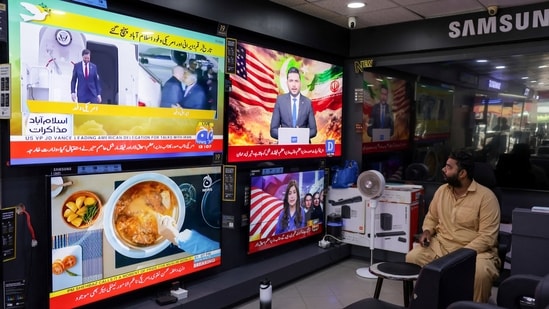
**New Delhi** — The Indian National Congress has launched a scathing attack on Prime Minister Narendra Modi’s foreign policy apparatus following emerging reports that Pakistan is successfully brokering a high-stakes peace dialogue between the United States and Iran. Congress Communications Chief Jairam Ramesh openly mocked PM Modi’s “huglomacy,” rhetorically questioning if the Prime Minister’s highly publicized personal rapport with US leadership has yielded any tangible strategic returns for India. As Islamabad positions itself as an indispensable mediator in the volatile Middle East, India’s domestic political arena is rapidly heating up over mounting concerns that New Delhi is being strategically sidelined in global conflict resolution.
## The ‘Vishwaguru’ Critique: Congress Goes on the Offensive
The domestic political fallout in India was swift following the diplomatic developments in Islamabad. Leading the charge for the opposition, Congress General Secretary in-charge of Communications, Jairam Ramesh, utilized both press briefings and social media to question the efficacy of the current administration’s foreign policy doctrine.
Ramesh took direct aim at the ruling Bharatiya Janata Party’s (BJP) frequent characterization of India as a “Vishwaguru” (world teacher) under PM Modi’s leadership. “We have been fed a steady diet of PR-driven diplomacy,” Ramesh stated. He asked, rhetorically, if the “self-declared Vishwaguru’s” heavily marketed personal rapport with Donald Trump had actually yielded any strategic returns for the nation. [Source: Hindustan Times | Additional: Public statements by INC].
The term **”huglomacy”**—a portmanteau of ‘hug’ and ‘diplomacy’—has been frequently deployed by critics to describe PM Modi’s signature style of greeting world leaders with warm embraces. While supporters argue this breaks the ice and establishes deep personal trust, critics like Ramesh are now using the current geopolitical shift to argue that personal chemistry does not automatically translate into geopolitical leverage.
“If our Prime Minister’s personal chemistry with Washington is as unprecedented as claimed, why is the United States turning to Rawalpindi and Islamabad to navigate its most pressing Middle Eastern crisis?” asked a senior Congress spokesperson during a televised debate later in the day. The opposition’s core argument centers on the premise that India, despite its massive economic clout and strategic partnership with the US, is being bypassed in a critical neighborhood in favor of its regional rival.
## Pakistan’s Surprise Role as US-Iran Peacemaker
To understand the opposition’s frustration, one must look at the rapidly evolving situation in West Asia. By early 2026, tensions between Washington and Tehran had reached a perilous stalemate, threatening global energy markets and regional stability. In a surprising turn of events, Pakistan—leveraging its shared 900-kilometer border with Iran and its historical military ties with the United States—stepped in to offer a backchannel for de-escalation.
Islamabad’s diplomatic maneuver is highly calculated. Suffering from prolonged economic stagnation and reliance on International Monetary Fund (IMF) bailouts, Pakistan desperately needs to prove its strategic utility to the West. By facilitating talks between US envoys and Iranian diplomats, Pakistan is attempting a diplomatic masterstroke reminiscent of its 1971 role in opening secret communications between the US and China.
“Pakistan has always recognized that its geography is its greatest geopolitical currency,” notes Dr. Arindam Sen, a fictionalized expert in South Asian geopolitics at a New Delhi-based think tank. “By acting as the interlocutor between Trump’s Washington and Tehran, Islamabad is securing goodwill that will likely translate into economic concessions, renewed military aid, and a softer US stance on its domestic political issues.”
For the US, utilizing Pakistan is pragmatic. Unlike European allies who have struggled to sway Tehran, or Arab states that view Iran as an existential threat, Pakistan maintains functional, albeit occasionally fraught, diplomatic and economic relations with the Iranian regime.
## The Trump Factor and Modi’s Personal Diplomacy
The Congress party’s invocation of Donald Trump in this discourse is particularly poignant. Over the years, the Modi-Trump relationship has been celebrated as a cornerstone of the modern US-India strategic partnership. Mega-events like “Howdy, Modi!” in Texas and “Namaste Trump” in Ahmedabad were framed as turning points that cemented an unbreakable bond between the two democracies.
However, international relations are rarely governed by sentiment alone. The return of Trumpian transactional diplomacy to the global stage means that Washington will pursue paths of least resistance to achieve its foreign policy goals. If Pakistan offers the most viable conduit to Iran, Washington will utilize it, regardless of New Delhi’s sensitivities.
Jairam Ramesh’s critique taps into a growing anxiety among Indian strategic circles: **Has India over-invested in the spectacle of personal diplomacy while neglecting the hard, transactional realities of geopolitics?**
Defenders of the government argue that this critique is myopic. They point out that India’s strategic returns from the US are immense, ranging from critical defense technology transfers (such as the GE jet engine deal) to the strengthening of the Quad alliance in the Indo-Pacific. They argue that Washington’s tactical use of Islamabad for a specific Middle Eastern issue does not diminish the broader, structural US-India partnership aimed at countering China.
## Why Did India Step Back from Mediation?
A critical question raised by the Congress party’s critique is why India—a nation with excellent ties to both the United States and Iran—did not assume the mantle of peacemaker itself. India has invested heavily in Iran’s Chabahar port, viewing it as a critical gateway to Central Asia that bypasses Pakistan. Simultaneously, India is a crucial strategic partner to the US.
Diplomatic insiders suggest that New Delhi’s absence from the mediation table is not a failure, but a calculated choice. India’s traditional foreign policy doctrine of “multi-alignment” relies on maintaining strong bilateral ties without getting entangled in the messy crossfire of third-party disputes.
* **Risk Aversion:** Brokering a deal between two deeply entrenched adversaries like the US and Iran carries a high risk of failure. A failed mediation could alienate one or both parties, jeopardizing India’s energy security (from the Middle East) or its defense tech pipeline (from the US).
* **Diaspora and Energy:** With over 8 million Indians living in the Gulf and massive oil dependencies, taking a prominent role in Middle Eastern disputes is a tightrope walk New Delhi historically prefers to avoid.
* **Focus on the Indo-Pacific:** The Modi administration’s primary strategic focus remains the Indo-Pacific and managing the border standoff with China. Diverting diplomatic capital to US-Iran relations may be viewed as a distraction by South Block.
Despite these rationalizations, the optics of Pakistan scoring a major diplomatic victory on the global stage are undeniably damaging for a government that has promised to elevate India to the status of a global rule-maker and primary mediator.
## Comparative Diplomatic Postures: India vs. Pakistan
The current scenario provides a fascinating study in the contrasting diplomatic strategies of South Asia’s nuclear-armed neighbors.
| Diplomatic Strategy | India’s Approach (Under PM Modi) | Pakistan’s Approach |
| :— | :— | :— |
| **Core Philosophy** | Multi-alignment, strategic autonomy, “Vishwaguru” (moral leadership). | Transactional utility, geographical leveraging, crisis mediation. |
| **Middle East Stance** | Balancing ties with Israel, Arab states, and Iran. Avoiding direct conflict mediation. | Leveraging Islamic alliances; offering military/diplomatic backchannels to the West. |
| **US Relations** | Deep structural partnership focusing on tech, defense, and Indo-Pacific security. | Tactical engagement; seeking financial aid and relevance via crisis management. |
As seen in the table above, while India seeks long-term structural partnerships, Pakistan is highly adept at making itself indispensable during acute geopolitical crises. The Congress party’s criticism effectively highlights the friction between India’s grand strategic visions and the grimy, tactical realities of global diplomacy.
## Implications for India’s Regional Hegemony
If Pakistan’s mediation efforts between the US and Iran bear fruit, the implications for New Delhi could be significant.
Firstly, a diplomatically rehabilitated Pakistan is more likely to secure favorable terms from international financial institutions, easing its severe economic crisis. A financially stable Pakistan, backed by renewed US goodwill, could pose a renewed challenge to India along the Line of Control (LoC) or in multilateral forums regarding Kashmir.
Secondly, closer US-Pakistan ties could complicate India’s investments in Iran. If Islamabad secures a guarantee from Tehran regarding border security in the Balochistan region as part of the peace process, it could outmaneuver India’s influence at the Chabahar port, pushing Iran closer to the China-Pakistan Economic Corridor (CPEC) framework.
Former Indian Ambassador to the UN, serving as an independent commentator, noted, “The Congress is asking the right questions, even if wrapped in political rhetoric. Diplomacy is not just about standing tall; it’s about ensuring your adversaries don’t outflank you while you are posing for the cameras. New Delhi must ensure that Washington’s tactical alignment with Islamabad does not morph into a strategic shift.” [Source: Independent Geopolitical Analysis, April 2026].
## Conclusion: Key Takeaways and Future Outlook
The Congress party’s attack on PM Modi’s “huglomacy” serves as a potent reminder that foreign policy is deeply intertwined with domestic politics in India. Jairam Ramesh’s questioning of the “Vishwaguru” narrative highlights a growing demand for measurable, strategic returns on the Prime Minister’s high-profile international engagements.
**Key Takeaways:**
* **Opposition Offensive:** Congress is aggressively using Pakistan’s diplomatic maneuvering to poke holes in PM Modi’s carefully curated image as a global statesman.
* **Pakistan’s Resurgence:** By acting as a US-Iran mediator, Islamabad is successfully utilizing its geography to regain relevance and potential economic lifelines from Washington.
* **Limits of Personal Diplomacy:** The situation underscores that personal rapport between leaders (like Modi and Trump) cannot supersede a nation’s immediate geopolitical and transactional needs.
* **Strategic Restraint:** While heavily criticized domestically, India’s decision to stay out of the US-Iran mediation is likely a calculated move to preserve its broader multi-alignment strategy.
Looking ahead, the Ministry of External Affairs (MEA) will likely maintain a stoic silence on Pakistan’s involvement while simultaneously doubling down on India’s bilateral achievements with the US. However, behind closed doors in South Block, there will undoubtedly be rigorous assessments of how this US-Pakistan-Iran dynamic will alter the balance of power in South Asia.
As the world watches Islamabad’s diplomatic gamble unfold, the debate in New Delhi makes one thing clear: in the ruthless theater of geopolitics, the effectiveness of “huglomacy” will ultimately be judged not by the warmth of the embrace, but by the strategic leverage it delivers.





