
Courts often wary of removing arbitrators, need dedicated forum: Justice BV Nagarathna| India News
# Supreme Court Judge Calls for ADR Forum Overhaul
By Senior Legal Correspondent, The National Law Desk, April 11, 2026
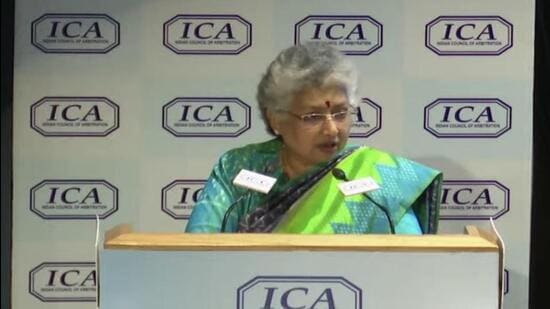
Supreme Court Justice B.V. Nagarathna has stressed the urgent necessity for a dedicated legal forum to handle disputes involving the removal of arbitrators, highlighting that constitutional courts remain increasingly wary of intervening in such proceedings. Speaking at a high-level legal symposium on Saturday, April 11, 2026, the senior judge advocated for a sweeping modernization of India’s Alternative Dispute Resolution (ADR) ecosystem. She emphasized that a mature legal system must support diverse, complementary dispute-resolution mechanisms to deliver swift, efficient, and business-friendly solutions without overburdening the traditional judiciary. [Source: Hindustan Times]
## The Judicial Reluctance to Intervene
The core of Justice Nagarathna’s address touched upon a long-standing friction point within Indian arbitration jurisprudence: the threshold for judicial intervention. Under the Arbitration and Conciliation Act, 1996, the fundamental premise is to ensure minimal judicial interference to allow parties a speedy resolution outside the traditional court system. However, this “hands-off” approach creates distinct challenges when allegations of arbitrator bias, inefficiency, or conflicts of interest arise.
Currently, parties seeking to terminate an arbitrator’s mandate must navigate complex procedural hurdles, often resorting to Section 14 or Section 15 of the Act. However, courts are notoriously hesitant to grant such removals. “Courts often wary of removing arbitrators,” Justice Nagarathna noted, pointing out that routine judicial interference defeats the very purpose of choosing arbitration in the first place. [Source: Hindustan Times | Additional: Indian Arbitration and Conciliation Act, 1996]
The reluctance stems from the doctrine of *kompetenz-kompetenz*, which dictates that an arbitral tribunal should be the first judge of its own jurisdiction and competence. When regular courts step in to remove an arbitrator, it invariably stalls the proceedings, leading to the very delays the ADR mechanism was designed to avoid. Yet, when legitimate grievances regarding an arbitrator’s neutrality are ignored, faith in the entire arbitration process erodes.
## The Proposal for a Dedicated ADR Forum
To bridge this gap, Justice Nagarathna proposed the establishment of a dedicated forum strictly tasked with overseeing arbitral appointments, challenges, and removals. Rather than clogging the dockets of High Courts or the Supreme Court with interim arbitration appeals, a specialized regulatory or judicial body could streamline these specific administrative and procedural bottlenecks.
Such a forum would possess the specialized expertise required to evaluate whether an arbitrator has genuinely breached the bounds of neutrality, as outlined in the international IBA Guidelines on Conflicts of Interest in International Arbitration, or if the challenge is merely a dilatory tactic employed by a losing party.
“A dedicated forum would serve a dual purpose,” explains Dr. Rajeev Menon, a senior partner specializing in international commercial arbitration at a New Delhi-based law firm. “First, it insulates the mainstream judiciary from the massive influx of arbitration-related interim applications. Second, it ensures that challenges to an arbitrator’s mandate are heard by experts who understand the commercial sensitivities and urgency of the matter, rather than generalist judges managing a mixed roster.” [Source: Independent Legal Analysis]
## Building a “Diverse and Complementary” Framework
Beyond the specific issue of arbitrator removal, Justice Nagarathna advocated for a holistic evolution of the broader dispute resolution landscape. According to the judge, a “mature legal system” is one that successfully supports a “diverse and complementary ADR framework.” [Source: Hindustan Times]
This statement comes at a crucial juncture for India’s legal economy. In recent years, the legislature has pushed aggressively to institutionalize ADR. The passage of the Mediation Act, 2023, and the ongoing efforts to bolster the Arbitration Council of India (ACI) represent a paradigm shift from litigation-first strategies to consensus-building approaches. However, the ecosystem remains fragmented.
A complementary framework implies that arbitration, mediation, conciliation, and Lok Adalats should not operate in silos, nor should they be viewed merely as waiting rooms for inevitable litigation. Instead, they must be integrated seamlessly. For instance, the promotion of multi-tiered dispute resolution clauses (Med-Arb or Arb-Med-Arb)—where parties first attempt mediation, move to arbitration if unsuccessful, and have the option to return to mediation—requires an infrastructural backbone that India is currently building.
By calling for diversity in ADR, the Supreme Court judge also indirectly highlighted the need for diversity among the practitioners themselves. Historically, Indian arbitration has been dominated by retired judges, leading to what some critics call “ad-hoc litigation.” Transitioning to a mature system means empowering subject-matter experts—engineers, chartered accountants, and industry specialists—to act as arbitrators and mediators, thereby enriching the quality and practical applicability of the awards rendered.
## Economic Implications of Efficient Arbitration
The push for a more robust and dedicated ADR framework is not merely a matter of legal housekeeping; it is directly tied to India’s macroeconomic ambitions. As India positions itself as a dominant hub for global manufacturing and foreign direct investment (FDI) in 2026, international investors demand legal certainty.
Foreign corporations are notoriously cautious about entering jurisdictions where contract enforcement is heavily delayed by judicial backlogs. According to recent economic data, billions of dollars remain locked in domestic infrastructure and commercial disputes. If an investor believes that an arbitration proceeding can be infinitely stalled by frivolous challenges to an arbitrator in local courts, their willingness to inject capital diminishes.
“Capital is a coward; it flees from uncertainty,” notes Meera Sanyal, an economic policy analyst focusing on foreign trade. “Justice Nagarathna’s remarks are incredibly timely. By advocating for a dedicated forum that protects the arbitration process from both bad arbitrators and bad-faith delays, the judiciary is sending a strong signal to global markets: India respects contract enforcement and is willing to modernize its institutions to prove it.” [Source: Economic Policy Insight]
Furthermore, the emphasis on institutional arbitration over ad-hoc arbitration aligns with global best practices. Institutions like the Singapore International Arbitration Centre (SIAC) or the London Court of International Arbitration (LCIA) have their own internal mechanisms to handle arbitrator challenges swiftly. A dedicated Indian forum could serve as the domestic equivalent for ad-hoc arbitrations, pulling India closer to the standards of global arbitration hubs.
## Navigating the Legislative Bottlenecks
While the judiciary’s vision is clear, realizing a dedicated forum requires substantial legislative maneuvering. The Arbitration Council of India (ACI), envisioned under the 2019 amendments to the Arbitration Act, was meant to be a step in this direction—tasked with grading arbitral institutions and promoting ADR. However, expanding a body’s mandate to quasi-judicially evaluate the removal of arbitrators across the country would require parliamentary action.
Legal experts suggest that an amendment to Section 14 (Failure or impossibility to act) and Section 15 (Termination of mandate and substitution of arbitrator) of the Act might be necessary. Currently, these sections compel parties to approach the “Court” for terminating an arbitrator. Shifting this jurisdiction to a specialized National Arbitration Tribunal or an empowered ACI could fulfill Justice Nagarathna’s vision.
Moreover, there is the challenge of ensuring this new forum does not become just another layer of bureaucracy. “If we create a dedicated forum to remove arbitrators, we must strictly cap the timeline for its decisions,” warns advocate Dr. Menon. “If the dedicated forum itself takes six months to decide whether an arbitrator should be removed, the patient—the arbitration process—will die on the operating table.” [Source: Independent Legal Analysis]
## The Burden on Traditional Courts
Justice Nagarathna’s comments also underscore a silent crisis within the Indian judiciary: the crushing burden of commercial dockets. The Supreme Court and the various High Courts are inundated with Section 11 applications (for the appointment of arbitrators) and Section 34 applications (for setting aside arbitral awards).
By expressing the courts’ wariness to intervene in the middle of arbitration proceedings, the judge is affirming a boundary. The constitutional courts must reserve their bandwidth for questions of constitutional interpretation, fundamental rights, and complex statutory appeals, rather than micromanaging commercial disputes between private entities.
Delegating these issues to a specialized forum effectively democratizes the dispute resolution process, allowing the mainstream judiciary to breathe while ensuring commercial actors get the speedy, expert attention their contracts demand.
## Conclusion: A Paradigm Shift for Indian Jurisprudence
Justice B.V. Nagarathna’s timely intervention serves as a clarion call for the future of dispute resolution in India. Slated to become India’s first female Chief Justice in 2027, her judicial philosophy carries immense weight for the trajectory of the nation’s legal reforms.
Her advocacy for a dedicated forum to handle arbitrator disputes directly addresses the friction between party autonomy and judicial oversight. By acknowledging that courts are rightly wary of removing arbitrators, she highlights the limitations of the current statutory framework.
**Key Takeaways:**
* **Minimal Judicial Interference:** Traditional courts must continue to distance themselves from mid-arbitration interventions to preserve the speed and efficacy of the ADR process.
* **Need for Specialized Oversight:** A dedicated forum or tribunal is urgently required to process grievances regarding arbitrator bias or inefficiency, ensuring disputes are handled by subject-matter experts.
* **Holistic ADR Ecosystem:** India must cultivate a mature, complementary framework where arbitration, mediation, and conciliation work in tandem rather than in isolation.
* **Economic Imperative:** A robust, transparent, and swift dispute resolution mechanism is critical for maintaining investor confidence and bolstering India’s economic growth on the global stage.
As India moves deeper into 2026, the collaboration between the judiciary, the legislature, and the legal fraternity will be paramount. Translating this vision into actionable legislation will not only unclog the national courts but will decisively elevate India’s status as a premier global destination for commercial dispute resolution.





