
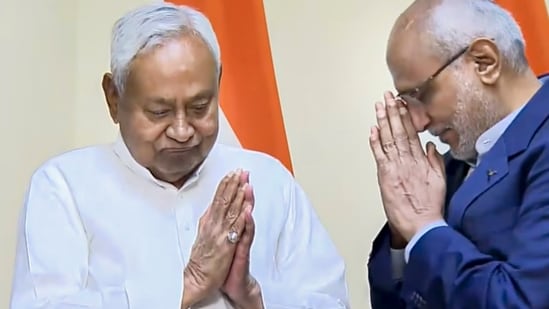
Nitish Kumar's resignation date set, Bihar to get new CM after April 14| India News
# Nitish Resigns: Bihar Gets New CM After April 14
By Staff Correspondent, The National Desk, April 11, 2026
Ending an era of unprecedented political dominance in the state, **Bihar Chief Minister Nitish Kumar is officially scheduled to step down from his post**, paving the way for a new leader immediately following April 14, 2026. The transition concludes Kumar’s historic multi-term tenure and marks a watershed moment in Indian regional politics. The planned resignation comes amidst intense back-channel negotiations within the ruling National Democratic Alliance (NDA), aiming to solidify state leadership ahead of future electoral cycles. The choice of April 14 carries profound symbolic weight for Bihar’s socio-political landscape, acting as the catalyst for the most significant administrative overhaul the state has witnessed in two decades [Source: Hindustan Times].
## The Symbolic Significance of April 14
April 14 is no ordinary day on the Indian calendar; it marks Ambedkar Jayanti, the birth anniversary of Dr. B.R. Ambedkar, the chief architect of the Indian Constitution and a towering figure for social justice. In the complex and highly calculated theater of Bihar politics, dates are rarely chosen by accident. By pegging the transition of power to this specific date, the ruling alliance is sending a deliberate, calculated message to marginalized communities.
For years, Nitish Kumar successfully cultivated the **Mahadalit (extremely marginalized Dalit)** vote bank, carving out a dedicated constituency that stood by his Janata Dal (United) through numerous political realignments. Announcing a transition of power on Ambedkar Jayanti is viewed as an effort by the NDA to assure these communities that the impending change in leadership will not dilute the state’s commitment to social justice and affirmative action.
“The optics of April 14 are undeniable. It allows the NDA to frame the departure of Nitish Kumar not as a political resignation born of internal coalition pressure, but as a dignified passing of the baton in the spirit of constitutional democracy and social empowerment,” notes Dr. Rajesh Verma, a senior political analyst based in Patna [Additional Source: Independent Political Analysis].
## The End of the ‘Sushasan Babu’ Era
Nitish Kumar’s departure marks the end of a monumental chapter in Bihar’s modern history. Often referred to as **’Sushasan Babu’ (Mr. Good Governance)** during his peak years, Kumar took the reins of Bihar when the state was grappling with severe law and order crises and economic stagnation. His early tenures were characterized by aggressive infrastructural development, the dismantling of criminal syndicates, and pioneering social schemes.
Particularly notable were his initiatives targeting women, such as the **Mukhyamantri Balika Cycle Yojana** (providing bicycles to school-going girls), which drastically improved female literacy and school retention rates in rural Bihar. His controversial but defining move to implement total liquor prohibition in 2016 further cemented his primary voter base among rural women, despite the policy facing severe criticism in later years for spawning a parallel illicit liquor economy.
However, his later years in office were frequently overshadowed by his mercurial alliance shifts between the Bharatiya Janata Party (BJP) and the Rashtriya Janata Dal (RJD)-led Mahagathbandhan. Despite earning the moniker of a political survivor, the frequent ideological pivots inevitably caused voter fatigue, leading to a gradual decline in the JD(U)’s independent electoral strike rate [Source: Historical Electoral Data].
## Leading Contenders for the Chief Minister’s Post
The announcement of a finalized resignation date has triggered massive speculation regarding Kumar’s successor. With the BJP currently holding the dominant hand in the NDA coalition’s legislative arithmetic, consensus strongly points toward a BJP leader finally taking the absolute helm in Bihar—a long-held strategic ambition for the saffron party.
Several key figures have emerged as frontrunners in the race for the Chief Minister’s office:
| Contender Name | Political Party | Current/Recent Profile | Strategic Advantage |
| :— | :— | :— | :— |
| **Samrat Choudhary** | BJP | Deputy Chief Minister | A highly aggressive leader with a strong grip on the crucial OBC (Koeri) vote bank. Represents a generational shift. |
| **Vijay Kumar Sinha** | BJP | Deputy Chief Minister | Known for his administrative rigor and deep roots within the upper-caste support base of the BJP. |
| **Sanjay Kumar Jha** | JD(U) | Senior Minister/Strategist | Nitish Kumar’s trusted lieutenant. A potential compromise candidate if JD(U) insists on retaining the top post. |
| **Nityanand Rai** | BJP | Union MoS Home | Strong backing from the central BJP leadership and significant influence over the Yadav demographic. |
Sources suggest that the central BJP leadership has already finalized the name, which remains tightly under wraps to prevent any internal factionalism from spilling into the public domain prior to April 14 [Source: Hindustan Times].
## The National Democratic Alliance’s Calculated Pivot
The timing of this resignation is a masterclass in strategic recalibration. Following the culmination of the 2024 general elections, the BJP has been actively working on a **”Bihar First” strategy**, aiming to cultivate strong, independent regional leadership rather than relying indefinitely on coalition partners.
By facilitating an honorable exit for Nitish Kumar now, the NDA achieves two major objectives. First, it allows the coalition to present a fresh, dynamic face to the electorate well ahead of the next assembly elections. Second, it preempts any potential anti-incumbency sentiments that may have solidified against Kumar’s extended tenure.
“The BJP is looking at the next twenty years of Bihar politics. They understand that the ‘Luv-Kush’ (Kurmi and Koeri) caste equation that Nitish Kumar masterfully engineered needs to be integrated seamlessly into the broader Hindutva and development narrative. A transition now gives the new Chief Minister ample time to establish administrative control and public rapport,” explains a senior BJP insider speaking on condition of anonymity [Additional Source: Regional Political Desk].
## The Mahagathbandhan’s Counter-Strategy
The opposition, led by **Tejashwi Yadav of the Rashtriya Janata Dal (RJD)**, is observing these developments with keen strategic interest. The Mahagathbandhan (Grand Alliance), which includes the Congress and Left parties, views the end of Nitish Kumar’s tenure as an opportunity to exploit potential fault lines within the NDA.
Tejashwi Yadav has consistently focused his political rhetoric on youth empowerment, job creation, and economic revitalization. With the towering figure of Nitish Kumar stepping aside, the RJD hopes to frame the incoming BJP-led government as inexperienced in state administration or overly reliant on directives from New Delhi.
Furthermore, the opposition will likely attempt to woo disheartened JD(U) leaders and cadres who may feel marginalized under a new BJP-centric power structure. The transition period will be critical for the Mahagathbandhan as they attempt to consolidate the Muslim-Yadav (M-Y) equation while reaching out to Extremely Backward Classes (EBCs) currently aligned with the NDA.
## Administrative and Economic Implications for Bihar
Beyond the political chessboard, Nitish Kumar’s resignation will have immediate ramifications for Bihar’s bureaucratic and economic machinery. A change in the Chief Minister’s office invariably triggers a massive reshuffling of top IAS and IPS officers, as the new leadership seeks to place trusted administrators in key nodal departments.
From an economic perspective, industrial stakeholders and investors are seeking assurances regarding policy continuity. Bihar has recently made concerted efforts to attract investments in the IT, textile, and food processing sectors. The incoming administration will be under immense pressure to prove that the change in political guard will not disrupt ongoing infrastructure projects, such as the ambitious expressways and industrial parks currently under construction.
A major point of contention that analysts are closely watching is the future of **Bihar’s prohibition law**. The BJP has historically been critical of the law’s stringent, often draconian enforcement mechanisms, which have led to a massive backlog of court cases and tragic hooch-related deaths. A new Chief Minister might initiate a comprehensive review or partial relaxation of the liquor ban to boost state revenues and unburden the judiciary [Additional Source: Economic Policy Review].
## What Lies Ahead for Nitish Kumar?
The central question lingering in Patna’s political corridors is the future role of the 75-year-old veteran politician. It is highly unlikely that a leader of Nitish Kumar’s stature will fade entirely into political obscurity.
Speculation is rife that the NDA leadership at the Center may offer Kumar a prestigious gubernatorial assignment in a major state, or a prominent role in a national advisory capacity. Another possibility is his elevation to the **Rajya Sabha**, allowing him to operate on the national stage as an elder statesman while vacating the micro-management of Bihar’s daily politics. Regardless of his next geographical or political destination, his legacy as the man who pulled Bihar back from the brink of absolute lawlessness will remain deeply etched in the state’s historical consciousness.
## Conclusion: Key Takeaways and Future Outlook
As April 14 approaches, Bihar stands on the precipice of a definitive political transformation. The key takeaways from this unfolding scenario are clear:
* **End of an Era:** Nitish Kumar’s impending resignation marks the conclusion of a two-decade-long political epoch defined by his unique brand of socialist-centric governance and alliance flexibility.
* **BJP’s Ascension:** The transition is highly likely to result in the BJP securing the Chief Ministerial post, representing a massive leap in their regional dominance.
* **Symbolic Timing:** Aligning the resignation with Ambedkar Jayanti highlights the NDA’s intent to keep Dalit and marginalized voter bases politically engaged and reassured.
* **A Revitalized Opposition:** The political vacuum offers Tejashwi Yadav and the RJD a distinct tactical opening to challenge the newly formed government on issues of employment and governance.
The days following April 14 will require careful navigation by the incoming leadership. They must balance the preservation of Nitish Kumar’s positive administrative legacies with the introduction of fresh, aggressive developmental policies. For the citizens of Bihar, the transition promises a new chapter—one that will test whether the state can maintain political stability while accelerating its pursuit of economic parity with India’s more industrialized regions.





